


A New Phase in High-Speed EV Charging
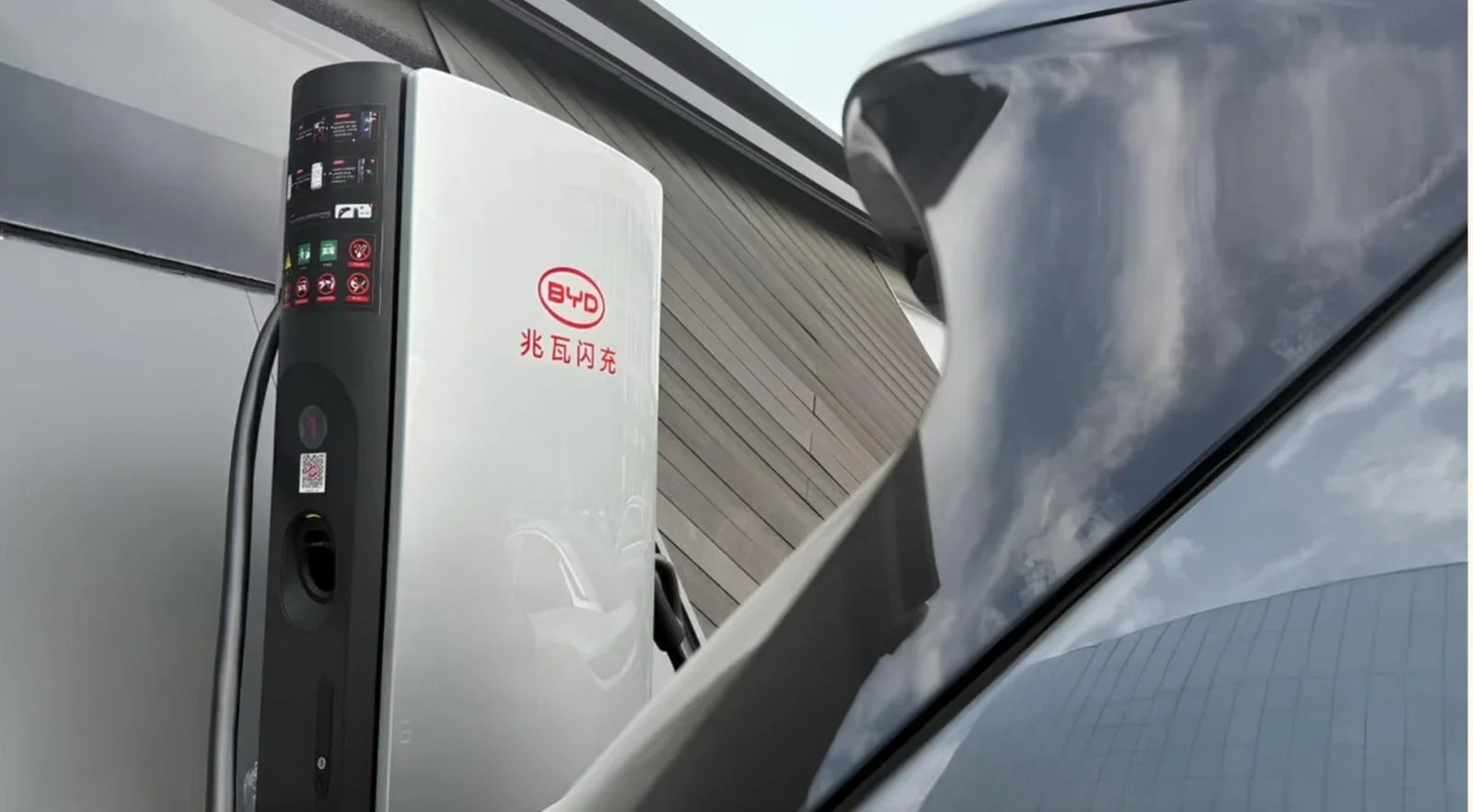
BYD is preparing to bring its 5-minute Flash Charging technology to markets beyond China, marking one of the most significant advancements yet in reducing EV charging times to levels comparable with traditional refueling. The system, recently demonstrated on one of BYD’s latest models in Beijing, boosted the vehicle’s battery from low state to over 50% in under five minutes—an achievement that could reshape expectations for public fast-charging.

Expansion Plans Are Underway in Europe
The automaker has previously signaled intentions to introduce Flash Charging in Europe next year, and recent hiring efforts suggest the plan is accelerating. BYD has begun recruiting specialists to support the buildout of its high-power charging infrastructure and manage network operations across the continent.
According to a new LinkedIn job posting, BYD is establishing a Network Operations Center in the Netherlands and seeking professionals capable of leading end-to-end deployment of High-Power Charging (HPC) and Flash Charging stations across multiple regions. The company is targeting individuals with deep experience in EV infrastructure and battery energy storage systems (BESS), reflecting the system’s reliance on both grid connection and on-site storage.
The roles involve nearly every stage of a charging station rollout, from securing real estate agreements and obtaining permits to coordinating civil engineering and BESS installation. BYD did not disclose salary ranges, but the job descriptions indicate a high level of responsibility and strategic importance.
How BYD’s Flash Charging Technology Works
Flash Charging operates in tandem with the company’s new Super e-Platform, the first mass-produced 1,000-volt EV architecture. Built entirely in-house, the platform currently powers two models—the Han L EV and Tang L EV—with more vehicles scheduled to join the lineup.
Both of these models can charge using two DC fast chargers simultaneously, although Flash Charging does not require dual-port charging to reach its top capabilities. Instead, the system uses on-site BESS to reduce stress on the local grid and maintain stability during ultra-high-power output.
Each Flash Charging unit can deliver up to 1 megawatt (1,000 kW), roughly double the strongest public chargers currently available in the United States. While more EVs—especially from European brands—are gaining the ability to charge at 400 kW or higher, Chinese automakers like BYD still hold a clear advantage in both battery technology and peak charging speeds.
Compatibility With Other EVs
At a recent launch event in the United Kingdom, BYD’s executive vice president Stella Li confirmed that the charging stations will be open to all EV brands. However, only vehicles built on the Super e-Platform will be capable of reaching the system’s maximum speeds.
Other EVs will still be able to use the chargers, but their own voltage limits will cap charging speed, preventing them from experiencing the five-minute charging capability. BYD currently does not sell any Super e-Platform vehicles in Europe, but future models—including those under the Denza brand—are expected to arrive starting in 2026.
Aggressive Charging Network Plans in the UK
BYD’s fast-charging push includes an ambitious plan to expand across the UK. The company aims to install 300 high-power charging stations across major highways by the end of next year. According to Li, this network will allow seamless long-distance travel for BYD drivers and significantly expand charging availability for all EV users.

BYD’s Broader International Strategy
The Flash Charging rollout comes as BYD accelerates global expansion. This year, the company launched a kei-car EV in Japan, introduced new plug-in hybrid models in Europe, and continued its rapid sales growth across markets including Mexico. Although steep tariffs are likely to keep BYD out of the U.S. market in the near term, the company shows no signs of slowing its technological innovation.
Recommend Reading: Ionna Expands Its U.S. Fast-Charging Network With Major California Investment
Share:
Equinox EV vs. New Leaf: Which Is the Better Budget EV?
Waymo Faces Growing Pushback Over Noisy Overnight Charging