



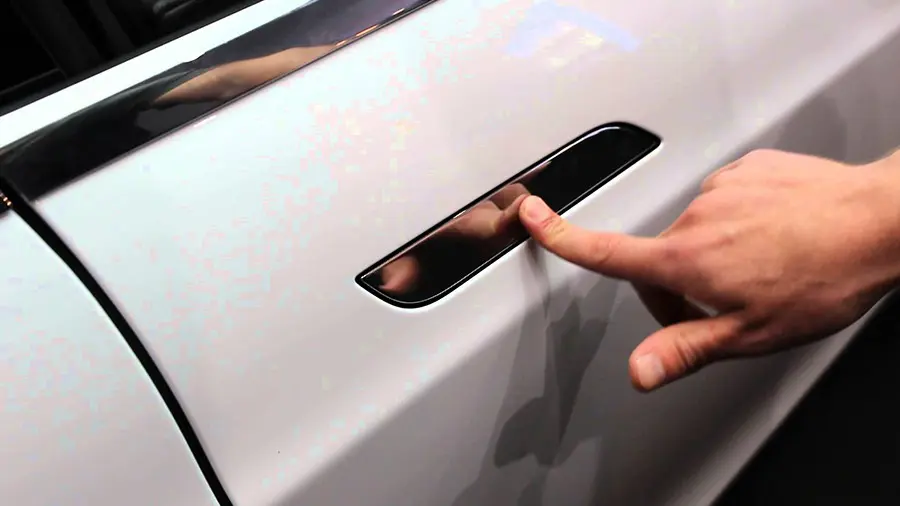
Flush Handles: Style Over Substance?
Flush-mounted door handles have become a common feature on many electric vehicles, especially Teslas, where sleek lines and futuristic design are key selling points. But not everyone is convinced they improve the driving or ownership experience. Volkswagen brand CEO Thomas Schäfer has now joined a growing number of critics, calling flush handles “terrible to operate” and promising customers that VW will prioritize usability over flashy design.
At the IAA Mobility show in Munich, Schäfer told Deutsche Welle that customer feedback has been consistent: drivers want practical, familiar features, not experimental gimmicks.

Volkswagen’s Shift Toward Usability
Schäfer made it clear that Volkswagen’s next generation of EVs will focus on convenience and intuitive operation. That means saying goodbye to hidden or recessed handles that confuse new users or frustrate owners in daily use.
“People expect familiarity with the brand and the car they purchase,” Schäfer said. “Functions must be simple. Flush handles might look attractive, but they are inconvenient. We are committed to offering proper, easy-to-grab handles on our cars because that’s what customers prefer.”
The Safety Debate Around Flush Handles
The controversy over flush-mounted door handles goes beyond aesthetics. Safety experts have flagged serious concerns:
-
In the United States, some emergency crews have reported delays in reaching accident victims because flush handles were difficult to operate under pressure.
-
In China, regulators are reportedly considering restrictions or bans on flush designs due to similar concerns.
Supporters of flush handles often point to aerodynamic advantages, since fewer protruding parts can reduce drag. However, studies suggest the impact is minimal. According to ArsTechnica, flush handles add only about one mile of extra range—a benefit many argue is not worth the trade-off in safety and usability.
Correcting Course at Volkswagen
Schäfer has admitted that Volkswagen made missteps in recent years by chasing futuristic trends that did not resonate with mainstream consumers. Since taking the CEO role, his mission has been to “make true Volkswagens again.”
That effort goes beyond door handles. Under his leadership, VW has:
-
Reintroduced physical buttons to steering wheels, replacing unpopular capacitive touch controls.
-
Simplified the infotainment interface to reduce driver distraction.
-
Put greater emphasis on intuitive design and build quality.
Schäfer believes these changes will help Volkswagen regain trust and broaden its EV appeal beyond early adopters.
The Future of VW’s EV Lineup
Volkswagen’s recent concepts and production vehicles reflect this shift in direction. The ID. Every1 concept, unveiled earlier in the year, still showcased recessed handles. However, the more production-ready ID. Polo and ID. Cross models revealed at the IAA show were equipped with traditional grab handles.
Notably, the ID.4 crossover, already on sale in the U.S., avoided going fully flush in its design, showing that Volkswagen has been cautious even as competitors embraced the trend more aggressively.

Balancing Design and Everyday Use
The debate over flush handles highlights a larger tension in the auto industry: balancing futuristic aesthetics with real-world practicality. Automakers initially adopted flush handles to create a high-tech look and maximize aerodynamics, but feedback shows that consumers value ease of use and safety above minor efficiency gains.
For Volkswagen, the path forward is clear. As Schäfer summarized, “It’s about design, quality, and intuitive operation.” His comments suggest that VW will continue refining its EVs not just to attract early adopters, but also to convince everyday drivers that electric cars can be both modern and user-friendly.
Recommend Reading: Audi Concept C Redefines EV Sports Car Design

Share:
Porsche’s Wireless EV Charger: Convenience at a High Price
Rivian Rolls Out Smart Charging to Lower Home Charging Costs