



A shift away from ultra-sleek EV shapes
Electric vehicle design has increasingly favored smooth, rounded silhouettes to reduce air resistance and maximize driving range. Many models have adopted streamlined forms that prioritize efficiency, sometimes at the expense of visual appeal or practicality.
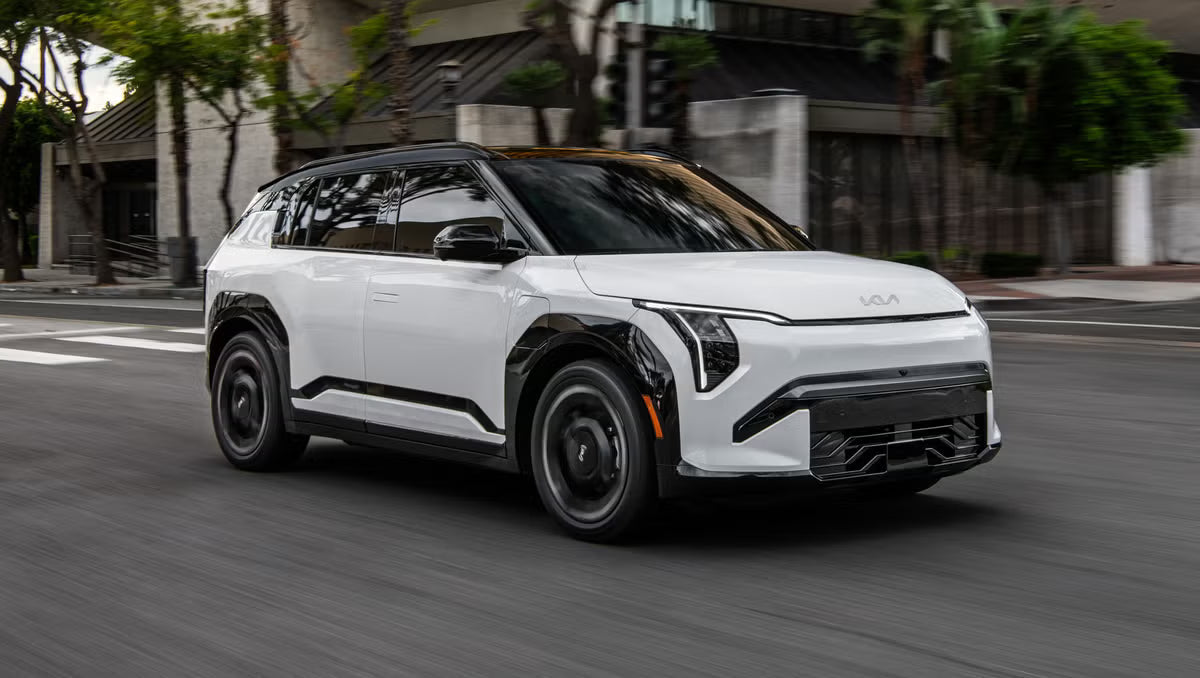
Kia is taking a different direction with the EV3, a compact electric crossover that embraces a more upright, traditional profile. Despite its squared-off proportions, the company claims the vehicle can travel over 320 miles on a single charge with its larger battery configuration. This raises a key question: how does a less aerodynamic shape still achieve competitive efficiency?

Aerodynamics beyond first impressions
Although the EV3 does not follow the teardrop-like styling seen in some EVs, its design incorporates multiple subtle airflow optimizations. According to company representatives, the vehicle achieves a drag coefficient of 0.275, a figure that places it within a competitive range for crossovers.
This result is not driven by shape alone but by a combination of engineered details. The front end includes active air flaps that open when cooling is required and close during steady driving to reduce drag. Along the sides, aero-optimized wheels and low-resistance tires help maintain smoother airflow.
At the rear, a roof-mounted spoiler directs air more cleanly off the vehicle, while a fully enclosed underbody minimizes turbulence beneath it. Together, these elements compensate for the less tapered body, allowing the EV3 to maintain efficiency levels close to more streamlined competitors.
Battery technology and range figures
The EV3 will be offered with two battery options, both using updated nickel-manganese-cobalt (NMC) chemistry. While Kia has not disclosed detailed changes to the cell composition, it describes them as part of its latest battery generation.
The larger pack, rated at 81.4 kWh, enables a projected range exceeding 320 miles in a front-wheel-drive setup. A smaller 58.3 kWh battery is expected to deliver approximately 220 miles per charge.
These figures suggest that improvements in energy density and system efficiency are playing a key role. Rather than relying solely on aerodynamics, the EV3 benefits from optimized battery performance and overall vehicle integration.
Positioning within the EV market
Compared with highly aerodynamic sedans, the EV3’s efficiency still reflects the limitations of its shape. However, within the crossover category, its performance is notable. Its drag coefficient is comparable to larger and more premium electric SUVs, such as those with values around 0.25–0.26 Cd, even though those vehicles often come at higher price points.
Importantly, the EV3 is expected to enter the market as one of Kia’s most affordable electric offerings. The company aims to bring features and efficiency strategies from higher-end models into a smaller, more accessible product.
This approach could help the EV3 compete in a segment where design preference, practicality, and cost all influence purchasing decisions.
Design strategy and user appeal
Beyond technical considerations, the EV3 reflects a deliberate shift in styling philosophy. Its two-box design emphasizes usability and familiarity, which may resonate with buyers who prefer conventional SUV proportions over more experimental EV shapes.
This contrasts with some earlier electric models that leaned heavily into futuristic aesthetics. By balancing efficiency with a more approachable appearance, Kia appears to be targeting a broader audience.
The EV3 also arrives at a time when the brand’s electric lineup in the United States is undergoing changes. With some existing models seeing mixed market performance, the new crossover is positioned to play a central role as an entry-level option.
Broader implications for EV design
The EV3 highlights an important trend in electric vehicle development: efficiency is no longer tied exclusively to extreme aerodynamics. Advances in battery technology, thermal management, and detailed airflow engineering allow manufacturers to explore more diverse shapes without sacrificing usability.
This could signal a shift toward greater design flexibility in future EVs. Instead of converging on a single “ideal” form, automakers may increasingly tailor vehicle shapes to specific use cases while maintaining competitive range figures.

Conclusion
The Kia EV3 demonstrates that achieving strong electric range does not require abandoning traditional SUV design. By combining targeted aerodynamic features, modern battery systems, and careful engineering, the vehicle reaches over 320 miles of range despite its boxy profile.
As the EV market continues to evolve, models like the EV3 suggest that efficiency gains can come from multiple directions—not just from reshaping the entire vehicle. This approach may broaden consumer choice and redefine expectations for what an efficient electric crossover can look like.
Recommend Reading: Kia Discontinues Niro EV as Brand Refocuses Its EV Lineup


Partager:
Rivian R2 vs Tesla Model Y: EPA Data Shows Efficiency Gap
Tesla Sales Jump in South Korea After Price Cuts on EVs