



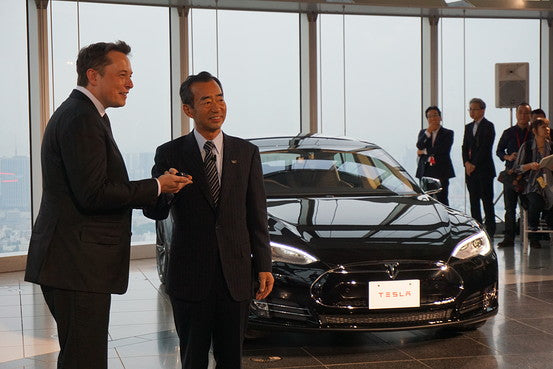
While Tesla struggled in several of its largest markets last year, Japan quietly became one of its rare growth stories. Even as deliveries declined across the U.S. and China, Tesla nearly doubled its sales in a country long known for its resistance to battery-electric vehicles.
That contrast offers a practical lesson for automakers still trying to unlock EV demand—especially in markets where electric cars remain unfamiliar, misunderstood, or underexposed.

Japan Remains a Small EV Market—But One With Room to Grow
Japan is still far behind other major economies when it comes to EV adoption. Out of roughly 3.8 million vehicles sold nationwide last year, only about 60,000 were fully electric, according to local reports. Hybrids continue to dominate, while battery-electric vehicles remain a niche purchase.
Even so, Tesla delivered around 10,600 vehicles in Japan, nearly double its sales from the year before. That growth came despite limited charging infrastructure, conservative consumer preferences, and intense competition from domestic brands.
The takeaway is clear: Tesla didn’t grow because the market suddenly changed—it grew because its strategy did.
A Shift Away From Online-Only Sales
For years, Tesla leaned heavily on online-only ordering, a model that works well in EV-mature regions but struggles in markets where consumers want hands-on reassurance.
In Japan, Tesla adjusted. Rather than relying solely on digital sales, the company expanded physical retail presence, offering customers something closer to a traditional dealership experience—without franchising or price negotiation.
These locations function as education hubs as much as sales floors, allowing shoppers to see, touch, and test-drive vehicles before committing.
High-Traffic Showrooms Made the Difference
A major turning point came in late 2024, when Tesla appointed Richi Hashimoto, formerly of Red Bull Japan, as its country manager. Under his leadership, Tesla opened 16 permanent showrooms last year.
Crucially, these showrooms were placed inside busy shopping malls, not on distant auto rows. Test drives were conducted directly in mall parking areas, lowering the barrier for curious but hesitant consumers.
This approach reframed Tesla as accessible and familiar, rather than niche or intimidating.
Education Became the Core Sales Tool
Japan’s slow EV adoption means many consumers lack even basic knowledge about electric vehicles. Tesla recognized that selling EVs without education was a losing battle.
Under Hashimoto, the company invested heavily in staff training, focusing on charging basics, cost-of-ownership comparisons, and real-world usage scenarios. At the time, only about 10% of Tesla’s Japanese sales staff met internal knowledge standards, highlighting how underprepared the retail channel had been.
Instead of pushing features, Tesla focused on removing uncertainty, one conversation at a time.
A Problem That Extends Beyond Japan
Tesla’s experience highlights a broader industry issue. In many markets, dealerships remain poorly incentivized to sell EVs. Electric vehicles require less maintenance, reduce after-sales revenue, and demand higher upfront training costs.
As a result, EVs are often undersold—or actively discouraged—even though they deliver lower operating costs, better refinement, and more advanced software for consumers.
With dozens of new EV models launching globally over the next two years, automakers that fail to invest in retail education and exposure risk falling behind, regardless of product quality.
Context Matters for Tesla’s Global Results
It’s important to note that Tesla’s Japan success does not erase its broader challenges. An aging product lineup, rising competition, and brand polarization tied to Elon Musk have weighed on demand in more mature EV markets.
Japan, by contrast, remains an early-stage market where choice is limited and novelty still matters. Tesla has also seen growth in places like Norway and Turkey, where local conditions remain favorable.
Still, Japan shows that execution can outweigh market headwinds, especially when consumers are still forming opinions about EVs.

The Broader Lesson for EV Makers
Tesla’s Japan playbook is not revolutionary. It is fundamentally retail-focused: visibility, education, and human interaction.
For automakers struggling with EV demand, the lesson is simple but uncomfortable—technology alone doesn’t sell cars. People do.
Recommend Reading: Japan Carmakers Hit Hard by U.S. Tariffs


Aktie:
Canada’s Tariff Shift Cuts Prices on Chinese-Built EVs, Starting With Lotus
What Geely Could Bring to the U.S. Market