



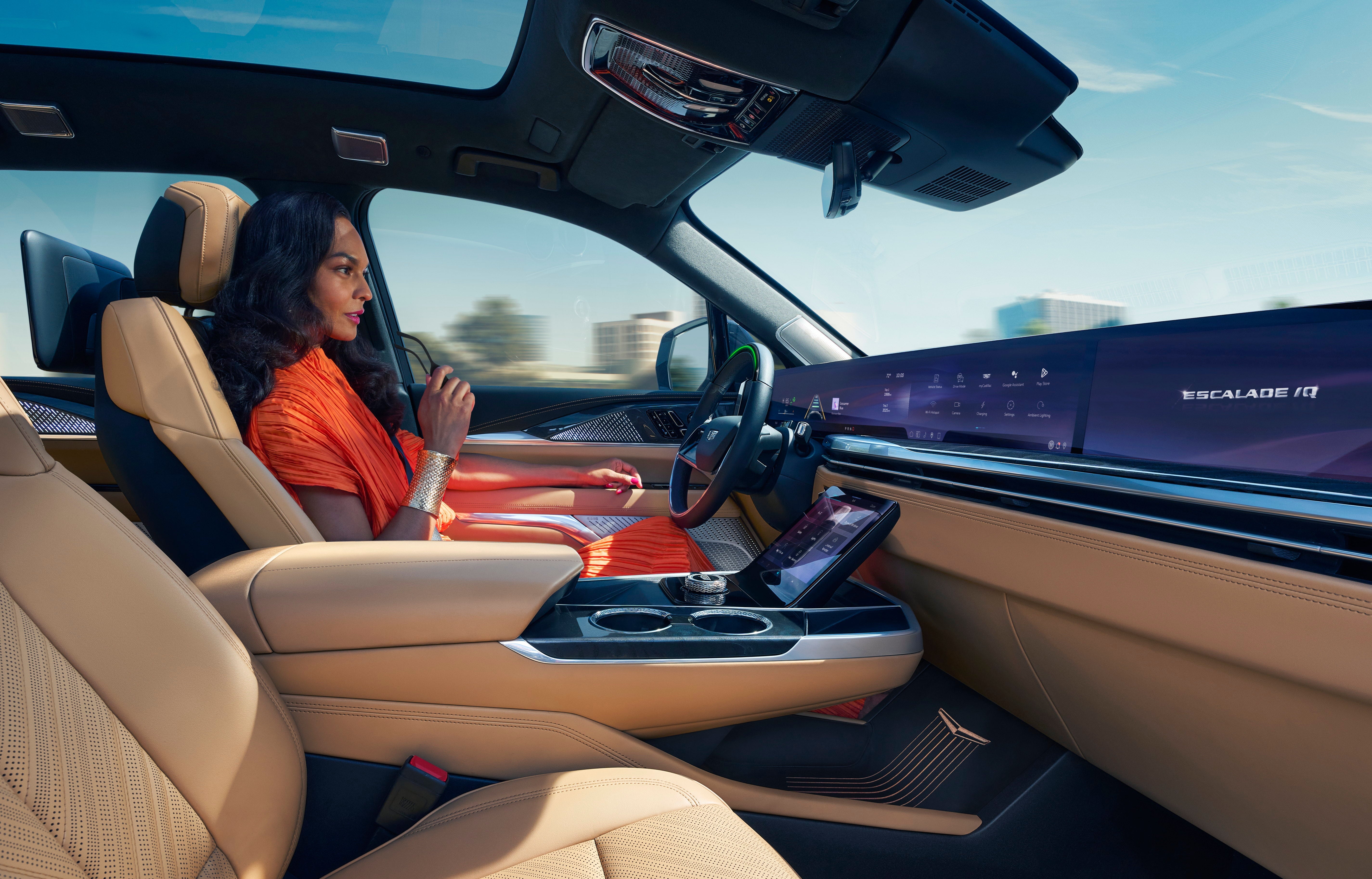
General Motors is using massive volumes of real-world and simulated driving data to accelerate its autonomous driving roadmap, with plans to introduce a Level 3 hands-off, eyes-off system by 2028. Despite financial setbacks tied to its EV strategy, the company is doubling down on software-driven features like Super Cruise.

Super Cruise Becomes a Strategic Focus
While General Motors reported $1.1 billion in charges related to scaling back parts of its electric vehicle plans in early 2026, its advanced driver assistance technology continues to gain traction internally.
Super Cruise, GM’s hands-free driving system, has emerged as a central pillar in the company’s long-term strategy. Executives see it not just as a safety feature, but as a foundation for future autonomous capabilities across both electric and gasoline-powered vehicles.
The system is already deployed across multiple models, ranging from premium Cadillac vehicles to more mainstream Chevrolet offerings. Its expansion reflects GM’s broader shift toward software-enabled differentiation.
Data at Scale: Real Driving Meets Simulation
A key advantage for GM lies in the sheer scale of data it has accumulated. Customers have collectively driven over one billion miles using Super Cruise, providing a significant real-world dataset for system refinement.
In parallel, GM is running extensive virtual simulations. According to CEO Mary Barra, the company’s testing environment can replicate the equivalent of 100 years of human driving every single day. This combination of live data and digital modeling is designed to accelerate development cycles and identify edge cases more efficiently.
Additionally, the system has begun undergoing real-world testing in locations such as California and Michigan, further validating its performance outside controlled environments.
Path Toward Level 3 Autonomy
GM has set its sights on introducing a higher level of automation. The upcoming system, expected to debut on the Cadillac Escalade IQ in 2028, will allow drivers to disengage both hands and attention under certain conditions.
This represents a shift from current Level 2 systems, where drivers must remain attentive at all times. The new platform will also incorporate LiDAR sensors, enhancing the vehicle’s ability to perceive its surroundings with greater accuracy.
The move places GM among a group of automakers competing to commercialize conditional autonomy, a space that is rapidly becoming as important as electrification.
AI Integration and Software Development
Artificial intelligence is playing an increasingly prominent role in GM’s development process. The company claims that nearly 90% of the code used in its autonomous systems is now generated with the help of AI tools.
This approach is intended to streamline development and enable faster iteration. It also reflects a broader industry trend, where automakers are investing heavily in software capabilities to complement hardware advancements.
For GM, integrating AI across its operations is seen as essential to maintaining competitiveness in both autonomy and connected vehicle services.
Subscription Model and Revenue Potential
Super Cruise is not just a technical feature—it is also part of GM’s evolving business model. While the system is included as standard equipment on some high-end vehicles, most customers must subscribe after an initial trial period.
Pricing typically stands at around $40 per month or $400 per year, creating a recurring revenue stream. This model aligns with the industry’s push toward software-based monetization, where features can generate income long after the initial vehicle sale.
Executives believe that autonomy-related services could eventually deliver higher margins than traditional vehicle manufacturing.
Competitive Landscape and Challenges
Despite its progress, GM still trails competitors in certain areas. Tesla’s Full Self-Driving system, for example, has logged nearly 10 billion miles and has over 1.28 million active users, giving it a significant data advantage.
However, GM is pursuing a different approach. Rather than focusing exclusively on electric vehicles, it aims to deploy its autonomous technology across both EVs and internal combustion models. This multi-platform strategy could allow broader adoption across various price points.
That said, implementing advanced autonomy in gasoline-powered vehicles presents technical hurdles. Many existing platforms were not designed to support the high computing demands and sensor arrays required for next-generation systems.
GM has not yet fully detailed how it will overcome these limitations, leaving open questions about scalability.

FAQ
What is GM’s goal for Super Cruise?
GM plans to evolve Super Cruise into a Level 3 autonomous system by 2028, allowing drivers to take their eyes off the road in certain conditions.
How much data has Super Cruise collected?
Drivers have logged over one billion miles using the system, providing valuable real-world insights for development.
What role does AI play in GM’s autonomy efforts?
AI is heavily integrated, with around 90% of software code for autonomy being AI-assisted, helping accelerate development and testing.
How does GM test its autonomous systems?
The company combines real-world driving data with simulations that replicate 100 years of driving per day, along with road testing in U.S. states.
How does Super Cruise generate revenue?
After a trial period, users typically pay $40 monthly or $400 annually, making it part of GM’s subscription-based business model.
Can Super Cruise work on both EVs and gas cars?
Yes. GM aims to deploy the system across both electric and internal combustion vehicles, although this presents additional engineering challenges.
Recommend Reading: GM’s Super Cruise Reaches 500,000+ Users with Zero Reported Crashes

Share:
Audi Q4 e-tron Update: More Range, Faster Charging, New Tech