



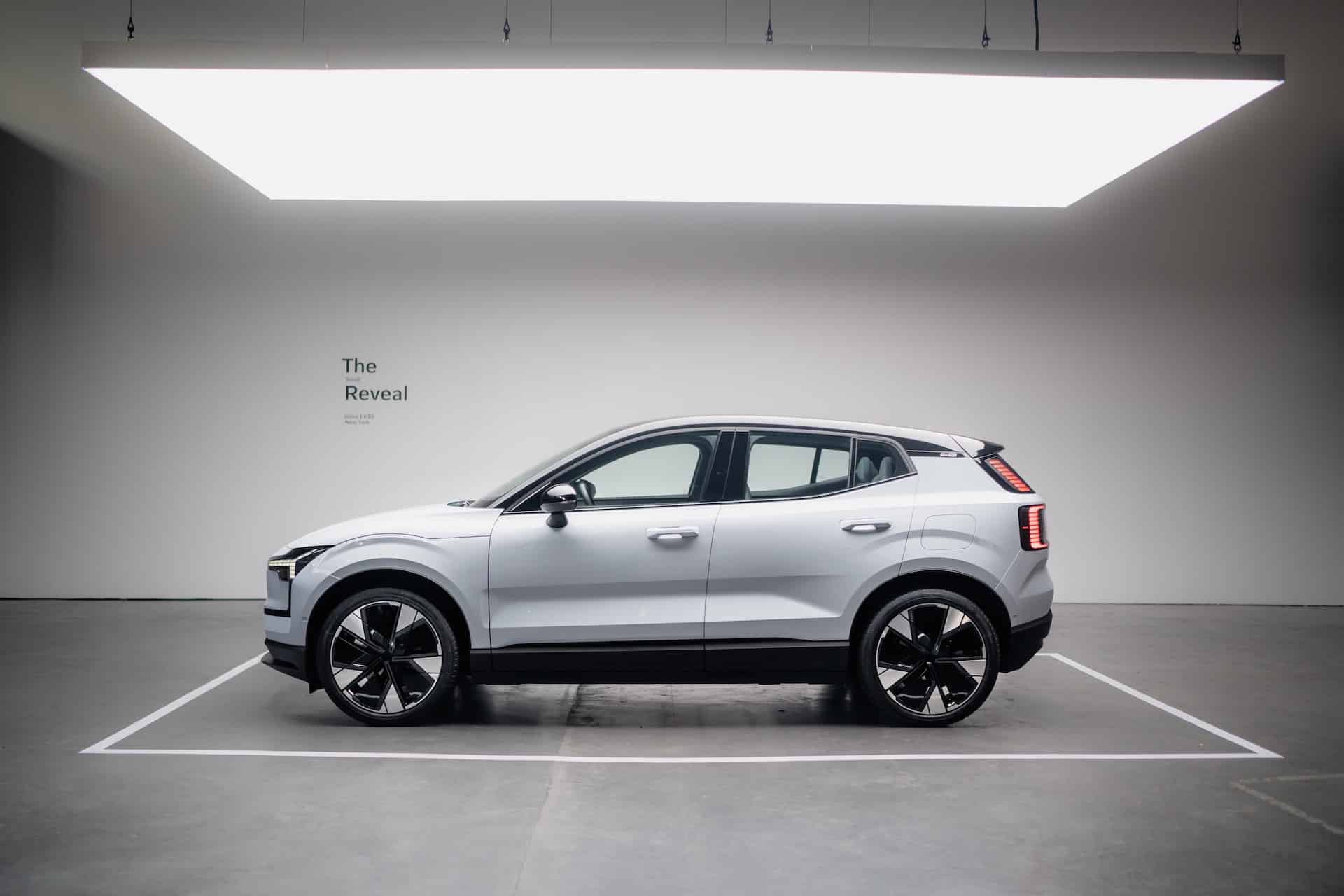
Bidirectional Charging Comes to the EX30
Volvo is adding a feature many EV owners have been waiting for: the ability to use the car’s battery to power external devices. The compact Volvo EX30 will gain vehicle-to-load (V2L) capability as part of a mid-cycle update, allowing energy stored in the battery to run other equipment when needed.
With V2L functionality, the EX30 can supply electricity to items such as electric bikes, power tools, audio equipment, or camping appliances. To access this feature, drivers will need a dedicated adapter that connects through the charging port. Volvo says the capability effectively turns the vehicle into a mobile energy source.
Importantly, the upgrade will not be limited to future buyers. The company plans to deliver the feature to existing owners through an over-the-air software update scheduled for this summer. That same update will refresh the infotainment system with the latest operating software. Volvo has not confirmed which markets—including the United States—will receive every element of the update.

Expanded Battery and Powertrain Options
Alongside the new charging functionality, Volvo is broadening the EX30 lineup. A newly introduced 51-kilowatt-hour battery offers a WLTP-rated range of 210 miles (339 km). This smaller pack provides a lower entry point for customers who prioritize affordability over maximum driving distance.
At the opposite end of the spectrum, Volvo has added a new entry-level single-motor configuration producing 148 horsepower, down from the previously available 268-hp version. When paired with the larger 69 kWh battery, this variant achieves a WLTP range of 295 miles (476 km), giving buyers additional flexibility between performance and efficiency.
The more rugged EX30 Cross Country trim also gains expanded options. Previously offered only with the 422-hp dual-motor setup, it can now be configured with the 268-hp single-motor powertrain, widening its appeal to customers who want off-road styling without the highest-output drivetrain.
Subtle Design Changes and Interior Updates
Visually, the refreshed EX30 remains largely unchanged. However, Volvo has introduced new exterior colors, updated wheel designs, and additional interior themes. Two new cabin environments—Harvest and Black—offer contrasting aesthetics. Harvest features lighter tones inspired by Scandinavian summer evenings, while Black emphasizes darker materials and detailed stitching for a sportier appearance.
Although these updates are modest, they reflect Volvo’s effort to keep the two-year-old model competitive without a full redesign.
Software Improvements and User Experience
Software refinements form another key part of the update. Owners have previously reported glitches and usability issues with the EX30’s digital interface. The upcoming update promises a more intuitive layout and improved responsiveness, bringing the system in line with Volvo’s latest operating platform.
By delivering improvements via remote update, Volvo avoids requiring dealership visits, reinforcing the growing role of software in modern EV ownership.
A Model With a Complicated Start
The EX30’s rollout has not been without obstacles. Originally promoted as an affordable electric crossover with a starting price near $35,000, its U.S. launch faced complications after increased tariffs on China-built vehicles. Pricing and availability shifted as a result.
More recently, the EX30 was subject to a recall related to a potential battery fire risk, adding further scrutiny. While Volvo has taken steps to address safety and technical concerns, such developments have slowed momentum for what was intended to be a high-volume global model.

Positioning for the Next Phase
The addition of V2L functionality signals Volvo’s intent to enhance the EX30’s practical appeal. As more automakers introduce bidirectional charging, the feature is becoming an expected part of the EV experience rather than a novelty.
By combining hardware options, software enhancements, and expanded trim flexibility, Volvo appears to be repositioning the EX30 for broader market relevance. Whether these changes will significantly boost sales remains uncertain, but the model now offers greater versatility than at launch.
For current owners, the most meaningful development is the pending software update that enables energy export capability. In a market where differentiation increasingly comes from features beyond range and acceleration, the ability to power external devices could prove to be a useful advantage.
Recommend Reading: Volvo Revamps EX30 With Single-Motor and Cross Country Versions


Aktie:
Why Stellantis Reported a $22 Billion Loss After EV Missteps
Donut Lab Solid-State Battery Test Results Raise New Questions