



Hyundai Prepares to Scale Back the Electric Sedan
Hyundai appears ready to wind down U.S. sales of the Hyundai Ioniq 6, an electric sedan that has earned praise for efficiency and design but struggled to find a large customer base in the American market.
Industry reports indicate the company does not plan to import 2026 model-year versions of the vehicle to the United States. Dealers will continue offering 2025 models while remaining inventory lasts, but the sedan is expected to disappear from Hyundai’s domestic lineup afterward.
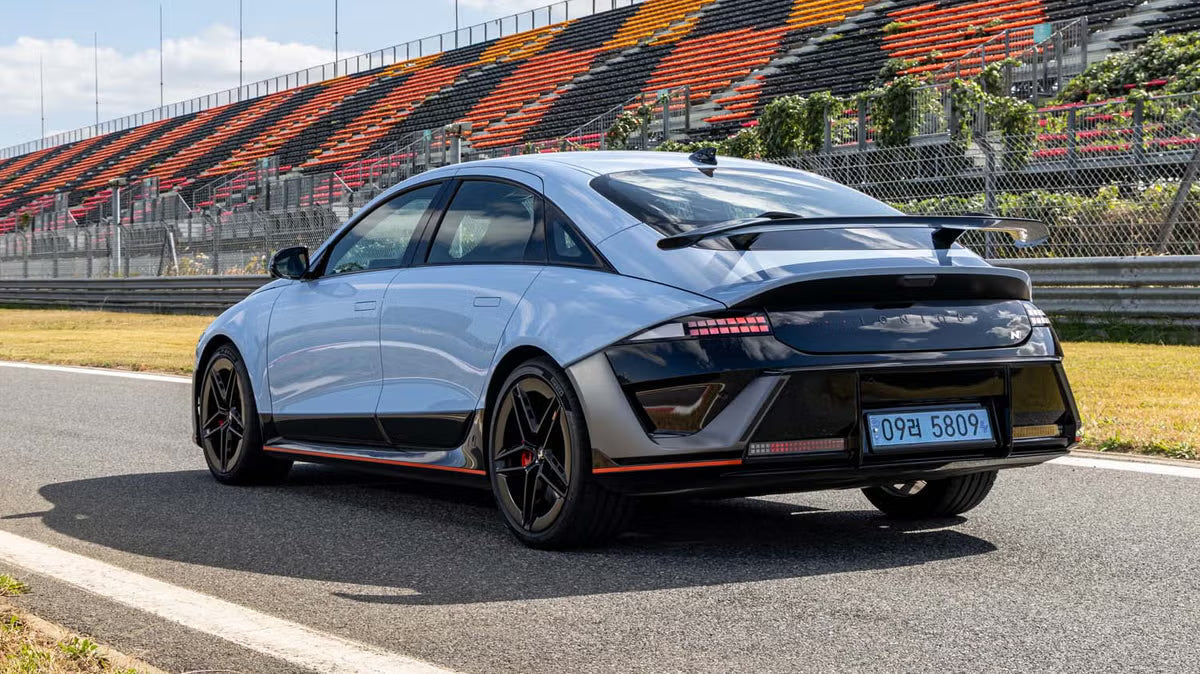
There is one notable exception. Hyundai still intends to introduce the high-performance Ioniq 6 N, though production is expected to remain limited. That model is anticipated to carry a price close to $70,000, placing it in a very different segment from the standard version.

Production Location and Trade Policy Complications
One factor influencing the decision may be manufacturing logistics. The Ioniq 6 is produced in South Korea, meaning vehicles shipped to the U.S. market could face additional cost pressures tied to tariffs or shifting trade policies.
By contrast, Hyundai has increasingly prioritized electric models built domestically. Both the Ioniq 5 and the upcoming Ioniq 9 are assembled at the company’s Metaplant America facility in Georgia, allowing them to avoid certain import-related costs and better align with U.S. incentives and supply chains.
With automakers working to localize EV production wherever possible, the location of assembly can have a significant impact on pricing and profitability. That reality likely weighed heavily on the long-term viability of the Ioniq 6 in North America.
Weak Sales Momentum in the United States
Demand data also reveals why Hyundai may be reassessing the model’s future. During 2024, the company delivered roughly 10,000 units of the Ioniq 6 in the U.S., representing a 15% decline compared with the previous year.
The start of 2025 has been even slower. In the first two months of the year, Hyundai reportedly sold only about 573 examples of the sedan nationwide.
Those figures contrast sharply with the performance of the Ioniq 5 crossover, which has remained significantly more popular. More than 5,000 units of that model have already been delivered this year, underscoring the strong consumer preference for SUV-style vehicles in the American market.
The broader EV environment has also become less predictable. After the $7,500 federal tax credit expired last September, many buyers rushed to purchase vehicles beforehand. That surge created a temporary boost followed by a steep drop in demand across much of the electric-vehicle segment.
A Technically Strong EV That Faced Market Headwinds
Despite its disappointing sales, the Ioniq 6 was widely regarded as a well-engineered electric car.
The sedan offers an EPA-rated driving range of 342 miles, placing it among the more efficient battery-powered vehicles currently available in the United States. Charging performance has also been a key highlight. Thanks to its 800-volt electrical architecture, the vehicle can replenish its battery from 10% to 80% in roughly 18 minutes when connected to high-power charging equipment capable of delivering up to 350 kilowatts.
Performance and handling have also drawn positive feedback from automotive reviewers. Many outlets praised the model for combining strong efficiency with engaging road manners, something that remains relatively rare among electric sedans.
In other words, the Ioniq 6 did not suffer from obvious technical shortcomings. Instead, its challenge appears to be market positioning rather than engineering capability.
Design That Stood Out From the Crowd
Another defining characteristic of the Ioniq 6 is its distinctive styling. Hyundai has described the car as an “Electrified Streamliner,” referencing its smooth body shape designed to minimize aerodynamic drag.
The vehicle’s profile is marked by a sloping roofline and sculpted rear end featuring two stacked spoilers, a design choice that has become one of its most recognizable visual elements. This focus on aerodynamics contributes directly to the car’s impressive efficiency figures.
While the design received strong reactions from enthusiasts and reviewers, unconventional styling can sometimes limit mass-market appeal—especially in a segment where practicality and interior space often take priority.
Part of a Broader Shift in the EV Market
If the Ioniq 6 ultimately disappears from the American lineup, it would join a growing list of electric vehicles being discontinued or reconsidered in recent years.
Several other models have either been canceled or had their U.S. plans scaled back, including the Acura ZDX, Ford F-150 Lightning, Volkswagen ID.Buzz, and both the Mercedes-Benz EQS and EQE. Some of these vehicles remain available in markets outside the United States, highlighting how regional demand can vary dramatically.
For manufacturers, the current EV transition remains complex. Automakers must balance regulatory pressure, changing incentives, production costs, and evolving consumer preferences—all while competing against established leaders and emerging global rivals.

A Capable EV That May Depart Too Soon
For buyers interested in the Ioniq 6, the opportunity to purchase one may be limited. Remaining 2025 model-year inventory will likely represent the final wave of the sedan available through U.S. dealerships.
The model’s possible departure is notable because it never felt like a compliance product created merely to meet regulatory targets. On paper and in real-world driving, it remains a competitive electric vehicle.
Nevertheless, in a market increasingly dominated by crossovers and SUVs, even well-executed sedans can struggle to survive.
Recommend Reading: Hyundai Enters the Robotaxi Race With Motional and the Ioniq 5


Aktie:
Volvo EX60 Orders Surge, Forcing Higher 2026 Production Plans
Study Ranks Automakers by Environmental Impact of EV Production