

Overview

Tesla’s Full Self-Driving (FSD) continues to face regulatory hurdles—especially in Europe—but its real-world behavior remains a subject of intense interest. Designed to manage city streets using only onboard cameras, FSD often goes beyond the capabilities of typical highway-assist systems. A recent controlled experiment demonstrates how the system reacts when confronted with simulated aggressive driving, and the results show both progress and ongoing concerns.

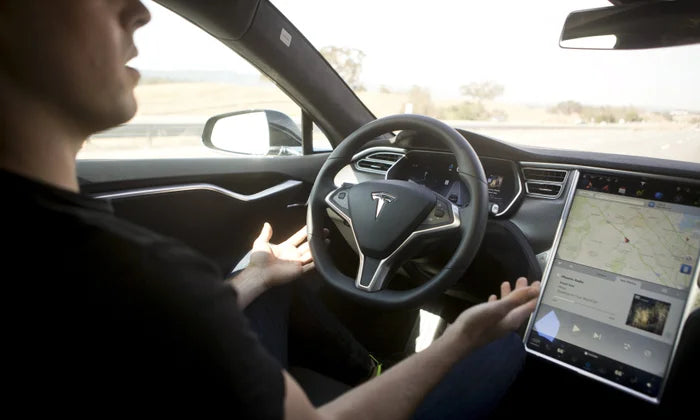
A man is using Tesla FSD.


How the Test Was Conducted

Out of Spec Reviews and Dirty Tesla collaborated to evaluate FSD’s reactions in a closed track environment. With no other traffic present, the team staged multiple scenarios involving a second car behaving aggressively toward an FSD-enabled Model 3.

Their goal was to push the system’s perception and collision-avoidance logic. The outcome? FSD responded more dynamically than many human drivers might under similar pressure.


FSD’s Defensive Steering and Swerving

In one test, the second car repeatedly attempted to sideswipe the Model 3. Rather than freezing or braking in place, the Tesla quickly moved laterally to avoid contact. The evasive maneuver was smooth, controlled, and more decisive than what an average driver might achieve in the same moment.

After several confrontations, the Model 3 made an even more unexpected decision: it executed a full U-turn to avoid continuing in the same direction as the hostile vehicle. This suggests that FSD’s path-planning logic may weigh repeated threats and choose a new route when the current one becomes unsafe.


Response to Tailgating and Head-On Approaches

When the second vehicle overtook the Tesla and then slowed down aggressively, FSD increased its following distance—sometimes by easing off the accelerator, other times by braking gently.

The system also reacted early to an oncoming head-on approach. It braked well in advance, showing strong hazard detection at long range, even with no radar or lidar support.

In lower-intensity simulations, like a parked vehicle suddenly pulling out, the Tesla again demonstrated prompt and controlled stopping behavior.


Off-Road Evasion and Edge-Case Performance

Perhaps the most striking moment came when the aggressor forced the Model 3 toward the edge of the roadway. Instead of maintaining its lane and risking collision, the Tesla steered onto the grass—still under driver-applied accelerator pressure—to maintain forward motion while avoiding impact.

Although such circumstances are rare, they highlight FSD’s ability to prioritize collision avoidance over strict lane discipline, a principle consistent with safe defensive driving.


Software Version and Industry Context

The test vehicle was running FSD Supervised 14.1.7, not the most recent build (14.2). Tesla remains the only automaker deploying this kind of advanced assisted-driving system at scale. While Tesla has expressed willingness to license FSD to other manufacturers, there have reportedly been no industry partners willing to adopt it, with Elon Musk citing “unworkable requirements” from potential collaborators.


Regulatory Roadblocks and Safety Concerns

Despite technical improvements, FSD remains controversial. It is still under multiple U.S. federal investigations and faces criticism over its branding, which some argue overstates its capabilities. Regulatory agencies maintain that constant human supervision is essential and warn that misuse could lead to severe consequences.

Nowhere is skepticism stronger than in Europe, where approval for public-road operation remains uncertain. It’s unclear if FSD will ever meet the region’s strict safety standards, but for now, the system continues to evolve through real-world use in the U.S.

Tesla Autopilot


Conclusion

Tesla’s latest FSD behaviors—especially its ability to evade hazards and adapt dynamically to threats—showcase meaningful progress. Yet the technology’s future depends not only on engineering improvements but also on public trust and regulatory acceptance. For now, FSD remains a powerful but closely scrutinized tool that is still far from fully autonomous driving.

Recommend Reading: Tesla HW3 Owners Await FSD Upgrade Commitment in 2025

1 Kommentar

  • Robert Donohue
    • Robert Donohue
    • 12. Januar 2026 um 10:10

    Great reading

Hinterlassen Sie einen Kommentar

Bitte beachte, dass Kommentare vor der Veröffentlichung freigegeben werden müssen.

Diese Website ist durch hCaptcha geschützt und es gelten die allgemeinen Geschäftsbedingungen und Datenschutzbestimmungen von hCaptcha.

FAQs – Tesla FSD (vollständig autonomes Fahren)

1. Was ist Tesla Full Self-Driving (FSD)?

Tesla FSD ist ein fortschrittliches Fahrerassistenzsystem, das autonome Funktionen wie automatischen Spurwechsel, Autobahnnavigation, Stadtverkehr und Ampelerkennung ermöglicht. Es basiert auf Teslas Autopilot-Plattform und nutzt Kameras, Ultraschallsensoren und neuronale Netzwerke.

2. Wie unterscheidet sich FSD vom Autopiloten?

Der Autopilot bietet grundlegende Fahrerassistenz, darunter adaptive Geschwindigkeitsregelung und Spurzentrierung. FSD erweitert die Funktionen um die Funktionen „Navigieren mit Autopilot“, „Smart Summon“, automatisches Abbiegen an Kreuzungen und umfassendere Unterstützung beim Fahren in der Stadt.

3. Ist Tesla FSD vollständig autonom?

Nein. Tesla FSD ist derzeit als SAE-Level-2-System klassifiziert. Das bedeutet, dass der Fahrer aufmerksam bleiben und die Hände am Lenkrad behalten muss. Tesla strebt Autonomie der Stufe 4 oder 5 an, benötigt aber noch die behördliche Zulassung und die technische Reife.

4. Welche Hardware wird für FSD benötigt?

Derzeit werden die meisten chinesischen Elektrofahrzeuge aufgrund von Handelsbeschränkungen und 25-prozentigen Zöllen auf importierte Fahrzeuge nicht offiziell in den USA verkauft. Amerikanische Verbraucher können sie jedoch weiterhin über unabhängige Importeure oder in Regionen wie Mexiko und Kanada erwerben, in denen chinesische Hersteller von Elektrofahrzeugen expandieren.

5. Wie viel kostet FSD?

FSD kann direkt erworben werden (Preis variiert je nach Markt) oder in ausgewählten Regionen als Monatsabonnement abgeschlossen werden. Tesla passt die Preise regelmäßig an, wenn neue Funktionen eingeführt werden.

6. Verbessert sich FSD durch Over-the-Air-Updates?

Ja. Tesla verbessert FSD kontinuierlich durch drahtlose Software-Updates und verbessert so Wahrnehmung, Entscheidungsfindung und Kontrolle. Besitzer erhalten neue Funktionen und Sicherheitsverbesserungen, ohne eine Servicewerkstatt aufsuchen zu müssen.

7. Ist Tesla FSD weltweit verfügbar?

Die Verfügbarkeit hängt von lokalen Vorschriften und Straßendaten ab. FSD Beta wird hauptsächlich in Nordamerika angeboten, während in Europa und Asien aufgrund von Sicherheitszertifizierungsprozessen der Zugang eingeschränkt oder noch aussteht.

8. Wie sicher ist FSD im Vergleich zu menschlichen Fahrern?

Tesla veröffentlicht vierteljährlich Sicherheitsberichte, in denen die Unfallraten pro Meile verglichen werden. Obwohl FSD unter bestimmten Bedingungen vielversprechende Ergebnisse gezeigt hat, ist in komplexen oder unvorhersehbaren Umgebungen weiterhin eine Überwachung des Fahrers erforderlich, um die Sicherheit zu gewährleisten.

9. Ist FSD für lange Autofahrten geeignet?

Ja, FSD ist besonders nützlich für Autobahnabschnitte auf langen Fahrten, da es Spurwechsel, Ausfahrten und Geschwindigkeitsanpassungen ermöglicht. Fahrer sollten jedoch aufmerksam bleiben und bei Bedarf die Kontrolle übernehmen, insbesondere in Baustellen oder bei schlechtem Wetter.

10. Wird mein Tesla durch FSD wertvoller?

Fahrzeuge mit FSD behalten aufgrund des zusätzlichen Komforts und der potenziellen zukünftigen Aufrüstbarkeit im Zuge der Weiterentwicklung der Autonomievorschriften häufig einen höheren Wiederverkaufswert.

EV-Neuigkeiten

Alle anzeigen

Stellantis EVs Gain Access to Tesla Supercharger Network

Stellantis EVs Gain Access to Tesla Supercharger Network

Stellantis enables Jeep, Dodge, Ram, Fiat, and Maserati EVs to use Tesla Superchargers. With adapter support and future native NACS ports, charging access expands significantly across North America.

Weiterlesen

Uber to Deploy Rivian R2 Robotaxis in Major Cities by 2028

Uber to Deploy Rivian R2 Robotaxis in Major Cities by 2028

Uber and Rivian partner to launch up to 50,000 R2 robotaxis by 2031. With major investment and advanced autonomy tech, the deal signals a shift toward scalable, driverless mobility services.

Weiterlesen

Washington State Direct EV Sales Law: What It Means for Rivian Buyers

Washington State Direct EV Sales Law: What It Means for Rivian Buyers

Washington’s new legislation enables more EV makers to sell directly to consumers, reducing reliance on dealerships. The move could simplify buying and support upcoming models like the Rivian R2.

Weiterlesen