



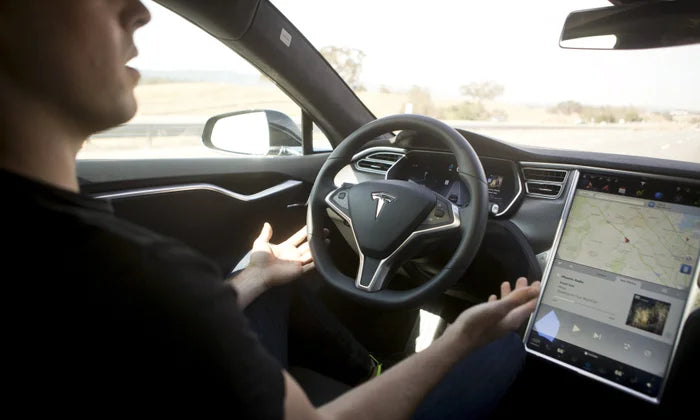
Tesla’s autonomous driving ambitions are entering a new phase. CEO Elon Musk says the company’s Robotaxi fleet is preparing to operate without safety drivers by the end of this year—but there’s still a long road ahead before true self-driving becomes reality.

Testing Expansion Across U.S. Cities
During Tesla’s third-quarter earnings call, Musk confirmed that the company aims to remove safety drivers from its Austin fleet and expand Robotaxi operations to 8–10 metro areas across the United States, pending regulatory approval.
“We expect to be operating in Nevada, Florida, and Arizona by the end of the year,” Musk said. Tesla is currently active in Austin, Texas, and California’s Bay Area, with hiring efforts suggesting future launches in Illinois and Colorado as well.
So far, Tesla’s Robotaxi vehicles have logged over 250,000 miles in Texas and more than one million miles in California. Across its Full Self-Driving (FSD) platform, Tesla claims an impressive 6 billion miles of total driving data collected from customers worldwide—a key resource for improving autonomous performance.
Safety Drivers Remain for Now
Despite the bold goals, Musk struck a cautious tone regarding complete autonomy. “Even if regulators didn’t require it, it makes sense to keep a safety driver for a while,” he said.
Tesla plans to keep human monitors in vehicles for roughly three months when entering new markets, ensuring the system adapts to local road conditions before allowing cars to operate fully driverless.
Musk emphasized that Tesla is still in the data validation phase, balancing real-world testing with safety oversight. Removing drivers too soon could undermine public trust—a lesson learned from earlier self-driving mishaps in the industry.
Full Self-Driving Still a Work in Progress
Tesla’s FSD Supervised feature, priced at $8,000, is currently available to customers and requires active driver attention. Musk admitted that early software versions can be “rough around the edges,” prioritizing safety and learning over comfort.
He recommended that drivers wait for incremental updates like version 14.2.1 or later if they prefer smoother operation. For those seeking early access to the latest features, Tesla’s “Advanced” update setting allows users to test experimental releases—a trade-off between stability and innovation.
Next Step: Smarter, More Human-Like Driving
Looking ahead, Tesla’s upcoming FSD version 14 will introduce what Musk calls “reasoning”—a step toward more human-like decision-making. The system will allow cars to interpret complex scenarios, such as choosing where to park after dropping off a passenger or navigating crowded lots intelligently.
This reasoning layer could mark a turning point in how Tesla vehicles process real-world environments, reducing reliance on pre-mapped routes and expanding functionality in urban settings.

Balancing Ambition with Reality
While Musk remains confident that Tesla’s autonomous software will eventually be safer than human drivers, he avoided setting a specific timeline. For now, the company continues to geofence operations to limited areas with heavy monitoring.
Tesla’s vision for Robotaxi autonomy is bold, but execution will hinge on regulatory cooperation, public perception, and the steady refinement of FSD.
The company’s technology is evolving quickly—yet it still requires alert human supervision every mile of the way.
As Musk put it, “The destination is full autonomy, but getting there means proving safety one city at a time.”
Recommend Reading: GM Plans “Eyes-Off” Super Cruise with LIDAR by 2028
Share:
GM Plans “Eyes-Off” Super Cruise with LIDAR by 2028
GM to Phase Out Apple CarPlay and Android Auto Across All Models