





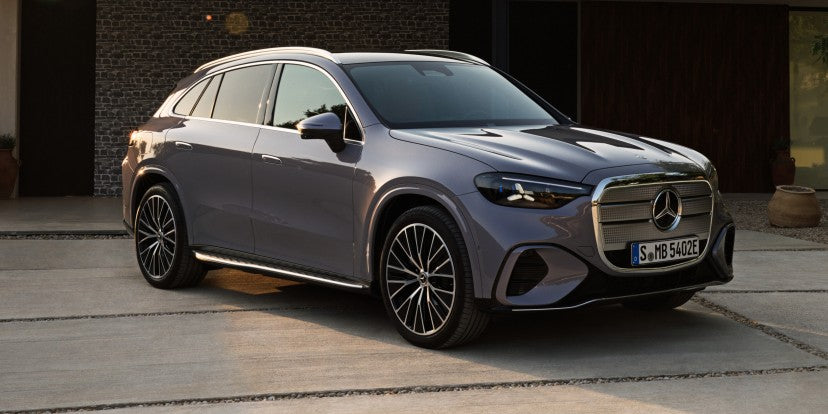
Mercedes-Benz’s latest electric SUV appears to be an early commercial success. The all-new GLC EV, built on a next-generation electric platform, is seeing demand exceed internal expectations just months after its European debut.
For Mercedes, this model represents more than just another EV launch. It is a test case for whether a well-known premium nameplate, reengineered from the ground up for electrification, can attract buyers at scale in an increasingly crowded market.

Strong Early Orders Signal Market Confidence
According to Mercedes-Benz executives, customer interest in the electric GLC has been stronger than anticipated. Mathias Geisen, Member of the Board of Management responsible for Marketing and Sales, confirmed that orders have already extended well into the second half of 2026.
The GLC EV launched in Germany in September, with order books opening shortly thereafter across several European markets. Buyers appear drawn to a combination of long driving range, rapid charging capability, and familiar GLC branding—an SUV nameplate that has historically been one of Mercedes’ global bestsellers.
This early traction follows a similar pattern seen with the electric CLA, suggesting growing confidence in Mercedes’ latest EV strategy.
Production Ramps Up to Meet Unexpected Demand
To keep pace with incoming orders, Mercedes-Benz has already increased production intensity. The GLC EV is currently assembled at the company’s Bremen plant in Germany, where three full shifts are now operating, along with additional Saturday production.
Mercedes has also indicated that if demand continues to outstrip capacity, manufacturing will be expanded to other facilities. While the automaker has not released exact production volumes, the operational response suggests that demand is materially higher than forecast.
This situation mirrors recent reports surrounding BMW’s next-generation iX3, highlighting how legacy automakers with mature supply chains may be better positioned to scale successful EV launches quickly.
Range and Charging Address Core EV Buyer Concerns
A major selling point of the GLC EV is its technical balance. Mercedes claims a maximum driving range exceeding 400 miles on a full charge, placing it firmly among the longest-range electric SUVs in its segment.
Equally important is charging performance. Both GLC EV variants can recharge from 10% to 80% in under 24 minutes, thanks to a peak charging rate of up to 330 kW. For many buyers, this combination directly addresses two of the most persistent EV pain points: range anxiety and charging downtime.
Rather than chasing extreme specifications, Mercedes appears to have focused on delivering usable, real-world performance, a strategy that may resonate with mainstream premium buyers.
Powertrain Options and Performance Breakdown
The GLC EV lineup will initially include two configurations. The rear-wheel-drive GLC 300+ produces 369 horsepower and 371 lb-ft of torque, positioning it as the more efficiency-focused option.
At the higher end, the GLC 400 4Matic features dual electric motors delivering a combined 483 horsepower and 596 lb-ft of torque. This setup enables a 0–60 mph acceleration time of just 4.4 seconds, placing it firmly in performance SUV territory.
Despite the performance gap, both versions share the same fast-charging capability and long-range credentials.
Pricing and U.S. Market Timeline Remain Open Questions
While European pricing has been announced, U.S. customers will need to wait. In Germany, the GLC 400 4Matic starts at €67,716.95, or roughly $79,500 at current exchange rates.
Mercedes plans to begin U.S. deliveries of the GLC 400 4Matic in late 2026, followed by the more affordable GLC 300+ in early 2027. Official U.S. pricing has not yet been disclosed, leaving some uncertainty about how competitive the model will be against rivals from Tesla, BMW, and Audi.

A Promising Start for Mercedes’ Next EV Phase
Early indicators suggest that the GLC EV is striking the right balance between technology, usability, and brand familiarity. If Mercedes can maintain production momentum and price the vehicle competitively in the U.S., the GLC EV could become a cornerstone of its global electric lineup.
For now, the strong order backlog points to a simple conclusion: buyers are responding positively to EVs that prioritize range, charging speed, and everyday practicality over novelty alone.
Recommend Reading: Mercedes-Benz Builds a Charger Network Designed for a No-Adapter Future


Share:
Scout’s Direct Sales Plan Faces Legal Challenge Over Hybrid EV Definition
Tesla Drops Lane-Centering From New Model 3 and Model Y Orders in the U.S.