





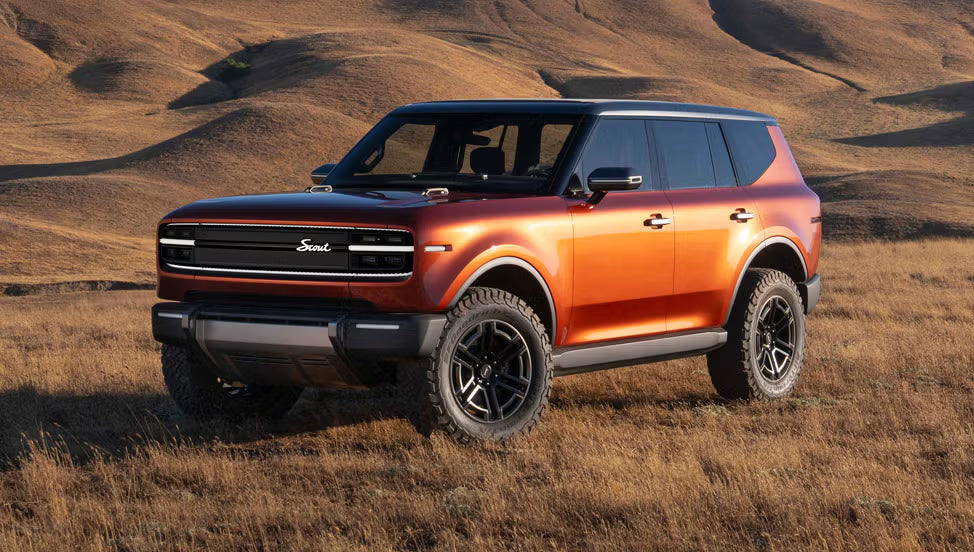
Scout Motors, the Volkswagen Group–backed brand preparing to launch electric and extended-range SUVs and pickups in the United States, is facing a new legal challenge that could complicate its go-to-market strategy—before production even begins.
Unlike previous disputes aimed directly at the company, this lawsuit targets the state of Colorado, raising questions about how electric vehicles are defined under dealer franchise law and whether Scout qualifies for direct-to-consumer sales.

A Lawsuit Focused on Licensing, Not Vehicles
In January, a coalition representing more than one-third of Volkswagen, Audi, and Porsche dealers in Colorado filed suit against the state’s Department of Revenue. The dealers argue that the state wrongly granted Scout a license to sell vehicles directly to consumers, bypassing the traditional franchise system.
The central claim is that regulators misinterpreted Colorado law by treating Scout as a standalone electric-only manufacturer, while allegedly overlooking Volkswagen Group’s financial backing and existing dealer network in the state.
If Scout is considered part of Volkswagen rather than an independent automaker, dealers argue that direct sales would violate franchise protections designed to prevent manufacturers from competing with their own retailers.
Why Extended-Range EVs Are at the Center of the Dispute
A key complication is Scout’s decision to sell extended-range electric vehicles (EREVs) alongside fully battery-electric models.
EREVs rely primarily on electric drive but include a gasoline-powered generator that recharges the battery when needed. Scout plans to offer “Harvester” versions of its Terra pickup and Traveler SUV, pairing a smaller battery with a four-cylinder engine to deliver up to 500 miles of total range, compared with roughly 350 miles for its pure EVs.
Dealers argue that these vehicles resemble plug-in hybrids and therefore disqualify Scout from legal exemptions intended for EV-only manufacturers such as Rivian and Lucid.
Scout disagrees, maintaining that EREVs still meet the definition of electric vehicles under Colorado law because they can operate entirely on electric power without gasoline input.
Colorado’s Dealer Law and the Definition Problem
Colorado amended its dealer franchise laws in 2020, allowing manufacturers to own and operate dealerships only if they produce exclusively electric vehicles and have no franchised dealers of the same brand in the state.
The legal dispute hinges on how “electric vehicle” is interpreted. While a bill summary describes EVs as vehicles capable of operating solely on electricity, that phrasing does not appear explicitly in the statutory language.
Scout has stated that both battery-electric and extended-range electric vehicles fall within the law’s scope, noting that the state’s Dealer Board approved its license by a wide margin.
EREVs Gain Momentum as EV Demand Softens
Scout’s embrace of EREVs aligns with a broader industry shift. Large electric trucks and SUVs have struggled with cost, weight, and charging limitations, making range-extended designs increasingly attractive.
Several automakers are moving in the same direction. Ford has pivoted future truck plans toward range-extended platforms, while Hyundai, Ram, and Jeep all have EREV models scheduled for U.S. launches between 2025 and 2027.
Scout appears well-positioned in this trend. According to company leadership, roughly 80% of its 130,000 reservations are for extended-range models, suggesting strong consumer demand for flexibility over full electrification.

What’s at Stake for Scout and the Industry
The outcome of the Colorado case could influence how other states interpret dealer laws as EV architectures diversify. A ruling against Scout may force the brand to delay or restructure its retail strategy in a key market for electric vehicles and off-road-capable trucks.
More broadly, the lawsuit underscores the tension between direct-to-consumer sales models and legacy dealership systems, especially as electrification blurs traditional vehicle categories.
For Scout, the legal fight arrives at a critical moment, with production of the Terra and Traveler scheduled to begin in South Carolina in 2027.
Recommend Reading: Scout Motors’ 130,000 Reservations Show Drivers Still Want Gas Backup


Share:
Tesla Launches Robotaxi Rides in Austin Without Safety Monitors
Mercedes GLC EV Demand Surges as Orders Stretch Into 2026