



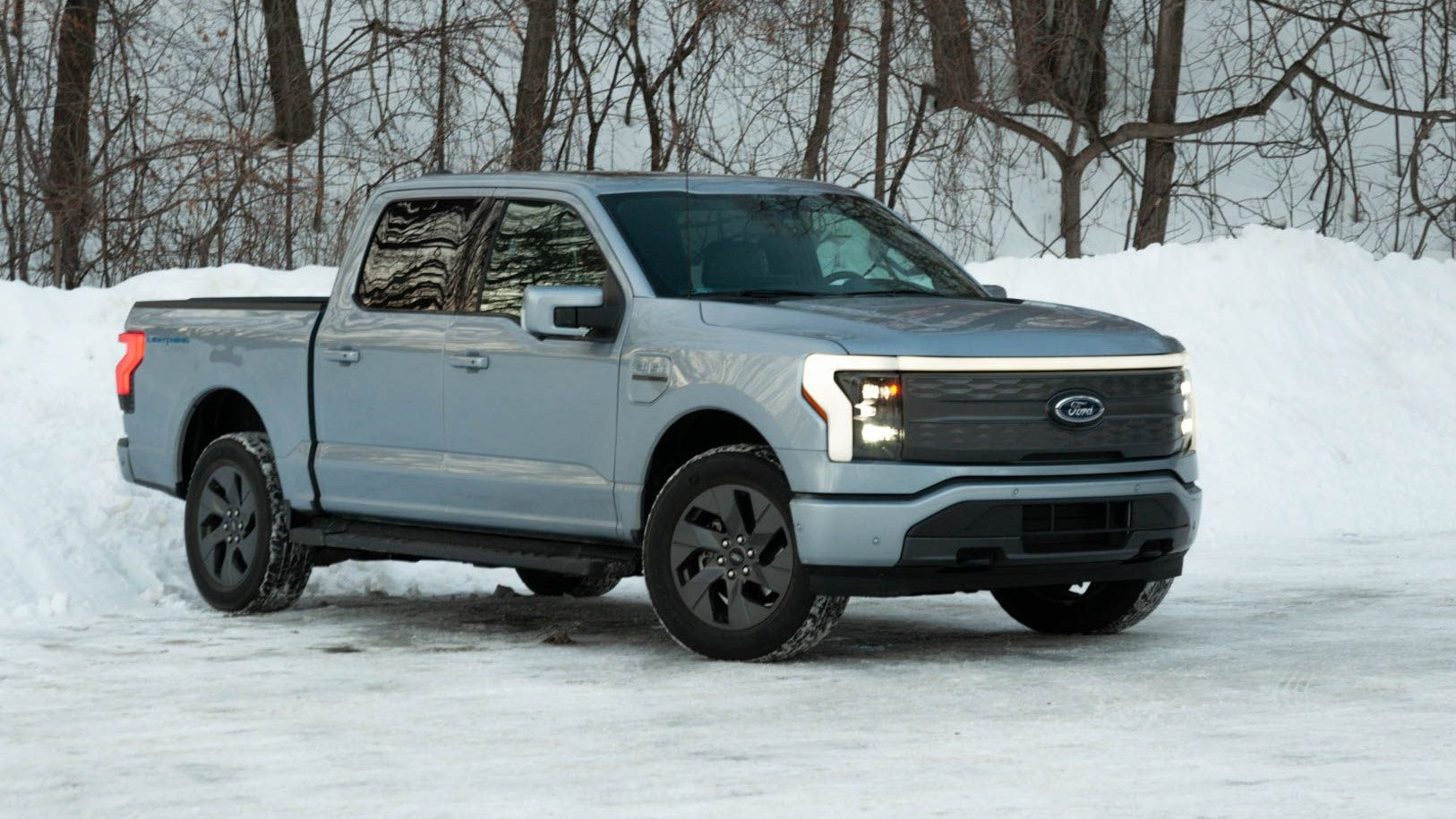
Ford is rethinking the future of its electric pickup lineup. After several years of mixed results with the all-electric F-150 Lightning, the automaker has confirmed that its next-generation Lightning will add a gasoline engine—not to drive the wheels, but to generate electricity and dramatically extend driving range.
The move reflects a broader recalibration of Ford’s EV ambitions as adoption slows, incentives fade, and truck buyers continue to prioritize towing capability and long-distance usability.

Why the Original Lightning Fell Short
When the F-150 Lightning launched, it promised to electrify America’s best-selling truck without compromising capability. It delivered instant torque, zero tailpipe emissions, and standout features like the ability to power a home during outages.
Yet the truck also exposed the challenges of fully electric pickups. High prices and steep range losses while towing turned off many traditional truck buyers. Compared with gas and hybrid F-150s, Lightning sales remained modest, and Ford acknowledged that it often sold the vehicle at a loss.
Those realities ultimately forced a strategic rethink.
Ford Shifts to an Extended-Range EV Pickup
Ford now says production of the current Lightning will end permanently. In addition, the company has canceled development of its next-generation full-size electric truck platform, internally known as T3.
In its place, Ford will introduce an extended-range electric vehicle (EREV) version of the F-150 Lightning. This configuration pairs a large battery and electric drivetrain with a gasoline engine that acts solely as a generator. Ford expects the setup to deliver more than 700 miles of total range.
According to Ford executives, the truck will operate as an EV for most daily driving while eliminating anxiety around long-distance towing and hauling.
Targeting Real-World Truck Use
Ford says the EREV Lightning is designed around how pickup owners actually use their vehicles. Most drivers are expected to rely on electricity alone for everyday commuting, while the gas engine steps in during extended trips or heavy towing.
The truck will retain key Lightning features, including the ability to power tools, worksites, and household devices. However, Ford has not yet disclosed pricing, production timing, or detailed specifications.
What is clear is that Ford sees range confidence as non-negotiable for full-size truck buyers—especially as charging infrastructure remains uneven in rural and work-oriented markets.
The End of the Current Lightning
Ford confirmed that production of the existing all-electric Lightning will not resume, effectively closing the chapter after roughly three and a half years on sale. The decision follows earlier production pauses and reflects lower-than-expected EV demand.
Executives pointed to multiple headwinds, including slower battery cost declines, changes in emissions regulations, and the expiration of consumer EV tax credits. Together, those factors have reduced urgency for buyers to switch to fully electric trucks.
EREVs Gain Momentum Globally
While extended-range EVs are not yet sold in the U.S., they are gaining traction elsewhere—particularly in China. Automakers increasingly view EREVs as a bridge technology that combines modern EV platforms with familiar refueling convenience.
When it launches, Ford’s EREV Lightning could compete with upcoming models such as the Scout Harvester and the Ram 1500 REV, both of which also emphasize extended usability over pure electrification.

Ford’s Broader EV Reset
The Lightning shift is part of a wider pullback. Ford has canceled a planned electric commercial van for Europe and repurposed parts of its BlueOval City campus to focus on affordable gas-powered trucks. A Kentucky battery facility will now also produce stationary energy storage systems.
Despite these changes, Ford insists it has not abandoned EVs entirely. The company reaffirmed its commitment to its Universal EV Platform, a U.S.-built lineup aimed at affordability, starting with a $30,000 electric truck planned for 2027.
For now, Ford is betting that a hybridized approach—not an all-electric one—offers the clearest path forward for America’s most important pickup.
Recommend Reading: Why the F-150 Lightning’s Market Troubles Reveal a Bigger EV Problem


Share:
Tesla Begins Unsupervised Robotaxi Tests in Austin, Raising Stakes for Autonomy
Ford Ends the Current F-150 Lightning as It Reworks Its EV Pickup Strategy
2 comments
I’m on my 4th Ford F350 XLT. Everyone keeps complaining about towing with the lightning cutting the range down by half, that would be 165 miles on a charge (extended range 330 miles) towing the maximum weight. I get 14 -15 miles per gallon on my 2024 Ford F350 on the highway not towing anything. This goes down to 7 – 8 miles per gallon when towing 13000 lbs. My point is I’m cutting my mpg down by half, just like the lightning’s range goes down by half when towing the maximum weight. Pricing, I would love to see the pricing maxed out at 50k for the high end electric pickup trucks as Jack states, that’s not reality just like you won’t find many Ford pickup trucks for 50k unless you want to settle for a ford f150 xl.
The range is what we all want to see, not just for trips but towing as well. If I can’t pull a camper more than a hundred miles, this thing is NEVER going to work. I need to see 350 at a minimum for it to work as a true towing vehicle. Second, Ford needs to bring DOWN the price. You’re not going to sell these at 100k or even 70k. People want to see them at 50k on the high end. Beyond that, you just have the rich and extremely stupid people buying them.