



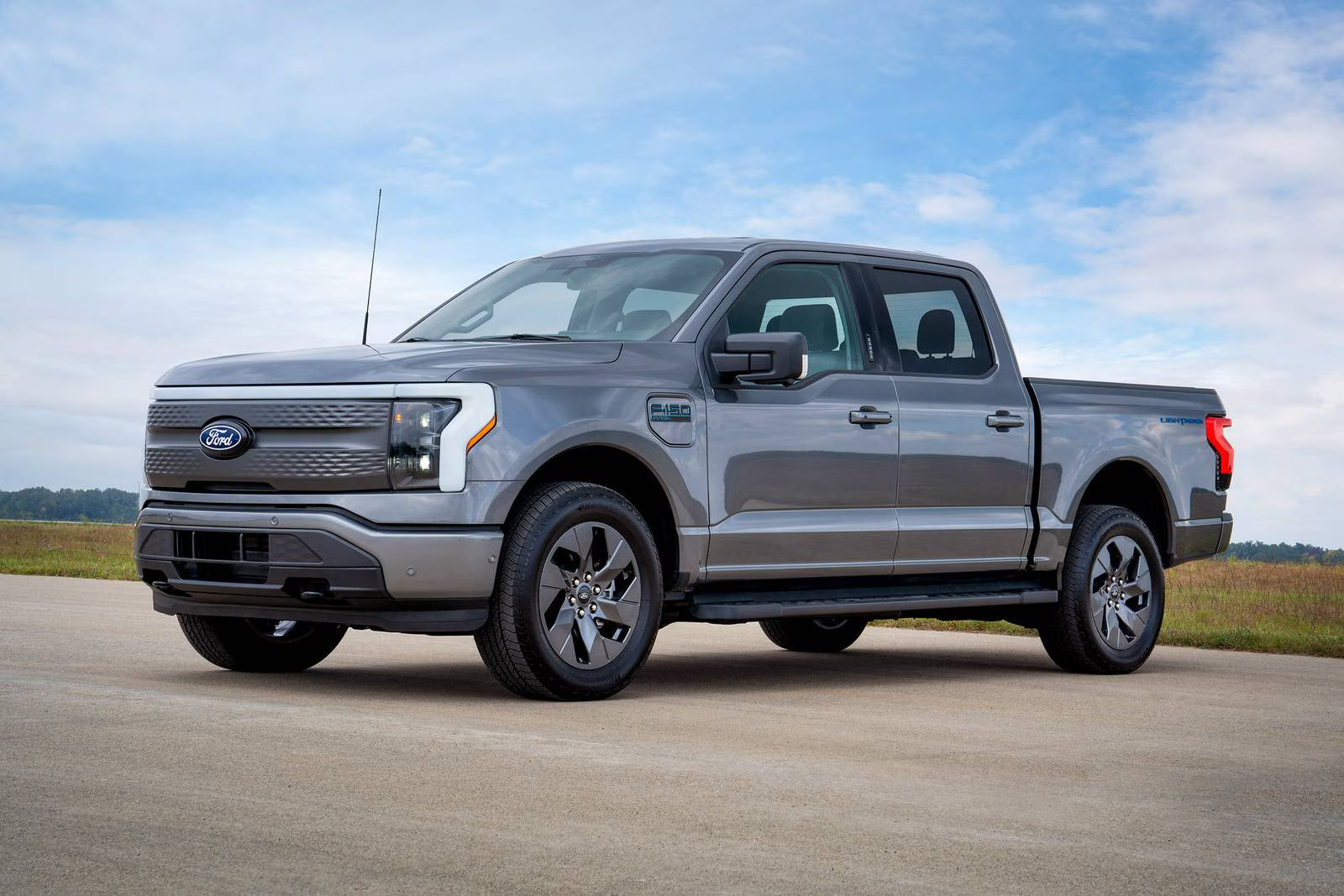
Ford Ends the Current F-150 Lightning as It Reworks Its EV Pickup Strategy
Ford has officially closed the chapter on the current-generation F-150 Lightning, confirming that production of the all-electric pickup has ended and will not resume. The decision marks a significant shift for a vehicle once positioned as a cornerstone of Ford’s electric future.
The move comes alongside broader changes to Ford’s electrification plans, including a transition toward extended-range electric vehicles for larger trucks.

Production Stops Earlier Than Expected
Ford executives confirmed that production of the 2025 F-150 Lightning concluded earlier this month, bringing the model’s lifecycle to an abrupt end. The automaker said the decision was driven by market conditions and customer demand rather than technical limitations.
The company emphasized that there are sufficient vehicles already built to meet near-term demand, but no future model years of the current Lightning are planned. Once existing inventory is sold, the truck will disappear from Ford’s lineup until a redesigned successor arrives.
Factory Priorities Shift Back to Gas Trucks
Production of the Lightning had already been disrupted following a supplier fire that constrained aluminum availability. When manufacturing resumed, Ford chose to prioritize gasoline and hybrid F-150 models, which remain more profitable and sell in far higher volumes.
As part of that shift, workers previously assigned to electric truck production are being reassigned to support additional shifts at Ford’s Dearborn Truck Plant. The decision underscores where Ford sees immediate demand—and financial stability—within its truck business.
A Once-Ambitious EV Flagship
When Ford unveiled the F-150 Lightning in 2021, it was widely viewed as a breakthrough moment for electric vehicles in the U.S. market. Electrifying America’s best-selling vehicle sent a clear signal that EVs were moving beyond niche segments.
Expectations were high. Ford initially projected annual sales as high as 150,000 units, envisioning the Lightning as a mainstream alternative to gas-powered pickups.
That level of adoption never materialized.
Sales Fell Short of Early Projections
In practice, Lightning sales peaked at fewer than 40,000 units annually, far below original targets. While Ford can point out that the EV market grew more slowly than anticipated—and that the Lightning still led electric truck sales—the gap between expectations and reality proved costly.
Pricing played a major role. Although Ford initially promoted a $40,000 starting price, most versions sold for $60,000 to $90,000, placing the Lightning well above comparable gas and hybrid F-150s.
Pricing and Familiarity Worked Against It
The Lightning’s visual similarity to gas-powered F-150s became an unexpected disadvantage. On dealer lots, buyers often saw trucks that looked nearly identical but cost $10,000 to $15,000 less and offered familiar fueling and towing behavior.
To compensate, Ford relied heavily on incentives, further pressuring margins. Over time, losses in Ford’s EV division mounted, reinforcing executive concerns that large EVs remain difficult to make profitable under current cost structures.
A Pivot Toward Extended-Range EVs
Rather than abandoning electrification altogether, Ford is changing its approach. The automaker has confirmed that future full-size electric trucks will use an extended-range EV (EREV) layout, combining electric drive with a gasoline generator to boost total range and towing confidence.
Ford believes this setup better matches how truck owners actually use their vehicles, especially for long-distance hauling.

EVs Still Matter—Just Not Everywhere
Ford reiterated its commitment to its upcoming Universal Electric Vehicle platform, which will underpin smaller, more affordable EVs. The first product, a compact electric truck priced around $30,000, is planned for 2027.
For now, however, Ford is drawing a clear line between segments where pure EVs make sense and those where partial electrification may be more realistic.
The F-150 Lightning may be gone, but its legacy is shaping Ford’s next—and more cautious—phase of electrification.
Recommend Reading: Ford EV Charging Guide: Mustang Mach-E & F-150 Lightning


Share:
Ford Plans Extended-Range F-150 Lightning as It Reconsiders Full EV Strategy
Lucid Launches Factory-Backed Certified Pre-Owned EV Program