



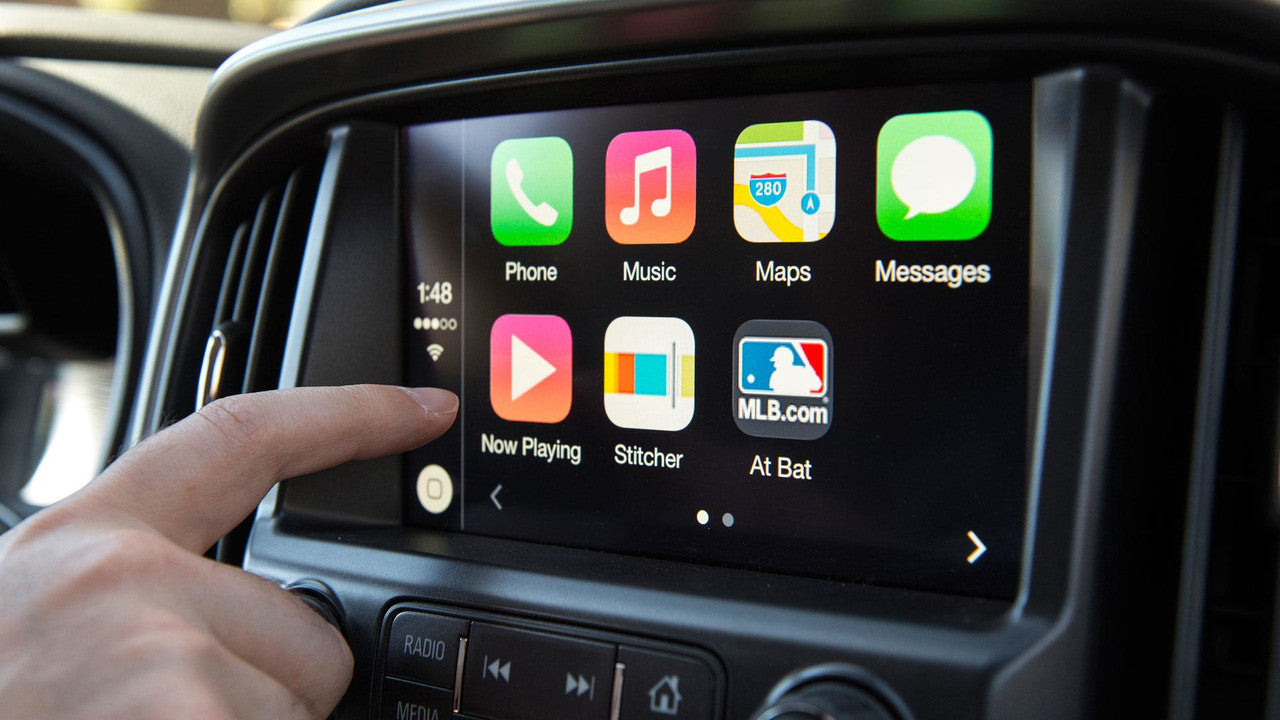
General Motors is officially moving away from Apple CarPlay and Android Auto—not just in its electric vehicles, but across its entire lineup. The company’s CEO Mary Barra confirmed the decision during an episode of The Verge’s Decoder podcast, marking the end of smartphone projection systems in future GM cars.

From EVs to the Entire Lineup
The shift away from CarPlay and Android Auto began in 2023, when GM removed both systems from new EVs such as the Chevrolet Blazer EV and Equinox EV. At the time, the move only affected electric models, while gas-powered vehicles like the Chevy Silverado and Cadillac XT5 continued to offer smartphone connectivity.
Now, that’s changing. Barra confirmed that as GM’s combustion models undergo major redesigns or mid-cycle updates, they too will lose Apple and Android projection support.
“We made a decision to prioritize our EV vehicles during this timeframe, and as we go forward, we’ll continue across the portfolio,” Barra said.
Why GM Is Ditching CarPlay and Android Auto
According to Barra, the company’s decision wasn’t about rejecting smartphone ecosystems—it was about control and consistency.
She explained that customers often found it clunky and distracting to switch between CarPlay and the car’s native interface, creating an inconsistent experience.
“It wasn’t seamless, and frankly, in some cases, it could be distracting,” she said.
GM aims to unify its infotainment systems under a single software platform to improve integration, reduce driver distraction, and allow over-the-air updates for new features.
The Rise of Android Automotive
GM’s replacement for CarPlay and Android Auto is Android Automotive OS, a Google-powered infotainment system that runs directly on the car’s hardware.
Unlike Android Auto, which mirrors a phone’s display, Android Automotive operates independently and can run native apps like Google Maps, Spotify, and YouTube Music without requiring a smartphone connection.
However, there’s a catch.
Drivers must log in separately to each app, which can feel tedious. GM’s Chief Product Officer Sterling Anderson said the company is developing a simpler login process but didn’t specify how or when it will roll out.
Anderson also acknowledged concerns about limited app availability, especially for iPhone users who rely on Apple-exclusive apps. He assured that GM is working with developers to expand its in-car app ecosystem over time.
Learning from Tech Industry Moves
Anderson compared GM’s decision to Apple’s bold past moves, like removing the disc drive and headphone jack.
“The removal of the disk drive—nobody liked that at first,” Anderson said. “But Jobs said, ‘Flash storage really is the future.’ That’s kind of what we’re saying here.”
GM believes that removing external smartphone integration will allow faster software innovation and create a more seamless, vehicle-native digital experience—even if it frustrates some customers initially.

What This Means for Drivers
In the short term, iPhone users will lose the familiar CarPlay interface, while Android users will need to rely on GM’s built-in ecosystem. The company says the change will eventually bring better performance, deeper vehicle integration, and more reliable voice commands.
Still, it’s a risky move. Apple CarPlay and Android Auto are used by millions of drivers who value their convenience and familiarity. Whether GM’s vision pays off—or alienates loyal customers—remains to be seen.
One thing is clear: the automaker is betting big on software, not smartphones, as the future of in-car connectivity.
Recommend Reading: Rivian to Introduce Apple Car Key for R1T and R1S Soon
Share:
Tesla Robotaxi Expansion Plans Move Forward, But Full Autonomy Still Years Away
Toyota bZ and Subaru Solterra Join Tesla Supercharger Network