


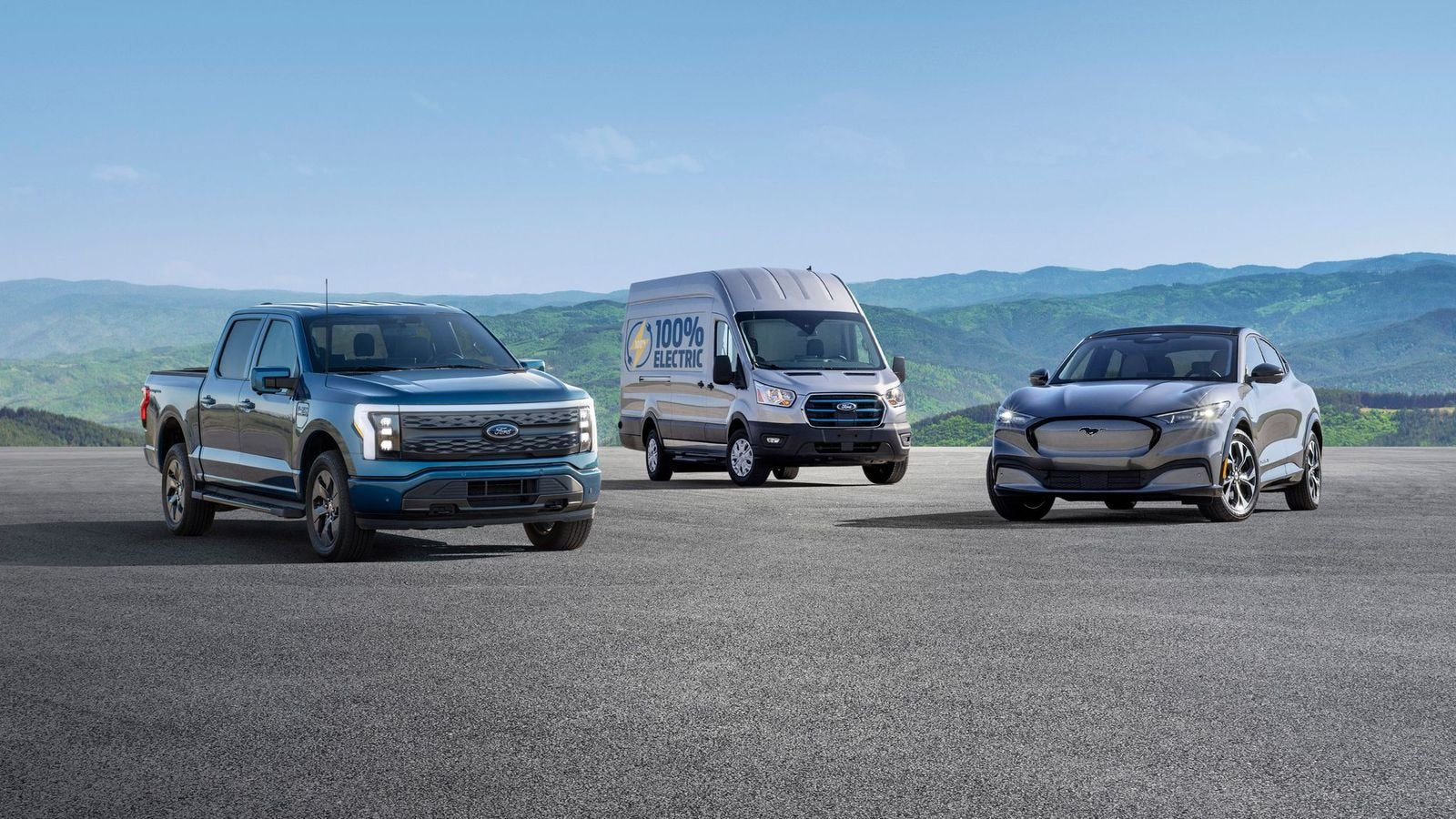
Ford Motor Company is preparing a new offensive in the global electric vehicle (EV) race. Through its quietly growing Advanced Electric Vehicle Program, the Detroit automaker has set a bold goal: match China’s cost structure on EVs by 2027. But while the technical ambition is clear, its success may hinge on a political variable outside Ford’s control—federal tax credits.
A Small Team With Big Goals
The initiative began as a “skunk works” project in California early in 2024, led by a former Tesla engineer. Since then, it has expanded into a 500-person program spread across three U.S. locations. The team’s mission is to develop a flexible EV platform capable of underpinning multiple models, from crossovers to trucks—and potentially even sedans.
At a private investor dinner hosted by Bernstein’s automotive analyst Daniel Roeska, Ford executive Lisa Drake revealed that this new platform will support up to eight distinct body styles, making it a cornerstone of Ford’s EV portfolio for the next decade.
The first model to launch on this platform is expected to be a mid-sized pickup, strongly hinting at an electric version of the Ford Ranger.
Ford’s LFP Battery Strategy: A Calculated Risk
To achieve competitive pricing, Ford will adopt prismatic lithium iron phosphate (LFP) batteries, developed in partnership with China’s CATL but produced domestically in the United States. This configuration lowers material costs and avoids reliance on expensive nickel and cobalt, a route increasingly favored by cost-sensitive EV makers worldwide.
According to Roeska, Drake was clear: Ford isn’t just aiming to compete on battery pricing—but on full vehicle system costs, from the chassis to thermal systems, inverters, and electronics. That’s a tall order, especially given the manufacturing advantages Chinese companies like BYD and SAIC already possess.
The Role of Federal Subsidies—and the Political Uncertainty
Ford’s cost model includes an estimated $700 million in U.S. federal tax credits, part of the company’s financial plan to offset the $3 billion cost of a new battery plant under construction in Michigan.
However, this benefit isn’t guaranteed. Some congressional Republicans are actively seeking to repeal Biden-era subsidies, especially those tied to Chinese intellectual property, such as Ford’s licensing deal with CATL. If these credits are eliminated or reduced in upcoming budget legislation, Ford’s pricing strategy may need rework—and its cost parity goal could face significant delays.
Looking Ahead
Ford’s ambitions to compete with low-cost Chinese EVs are not just about product; they are about platform, battery chemistry, and policy. The Advanced Electric Vehicle Program is a bet on American engineering and political stability—a combination that could define Ford’s place in the EV market for the next decade.
But until Congress finalizes its stance on clean energy subsidies later this summer, the future of Ford’s pricing strategy remains suspended between engineering optimism and legislative risk.


Share:
White House Orders DOT to Disregard GAO Ruling on EV Funding Freeze
Best EV Lease Deals and Financing Offers in June 2025