



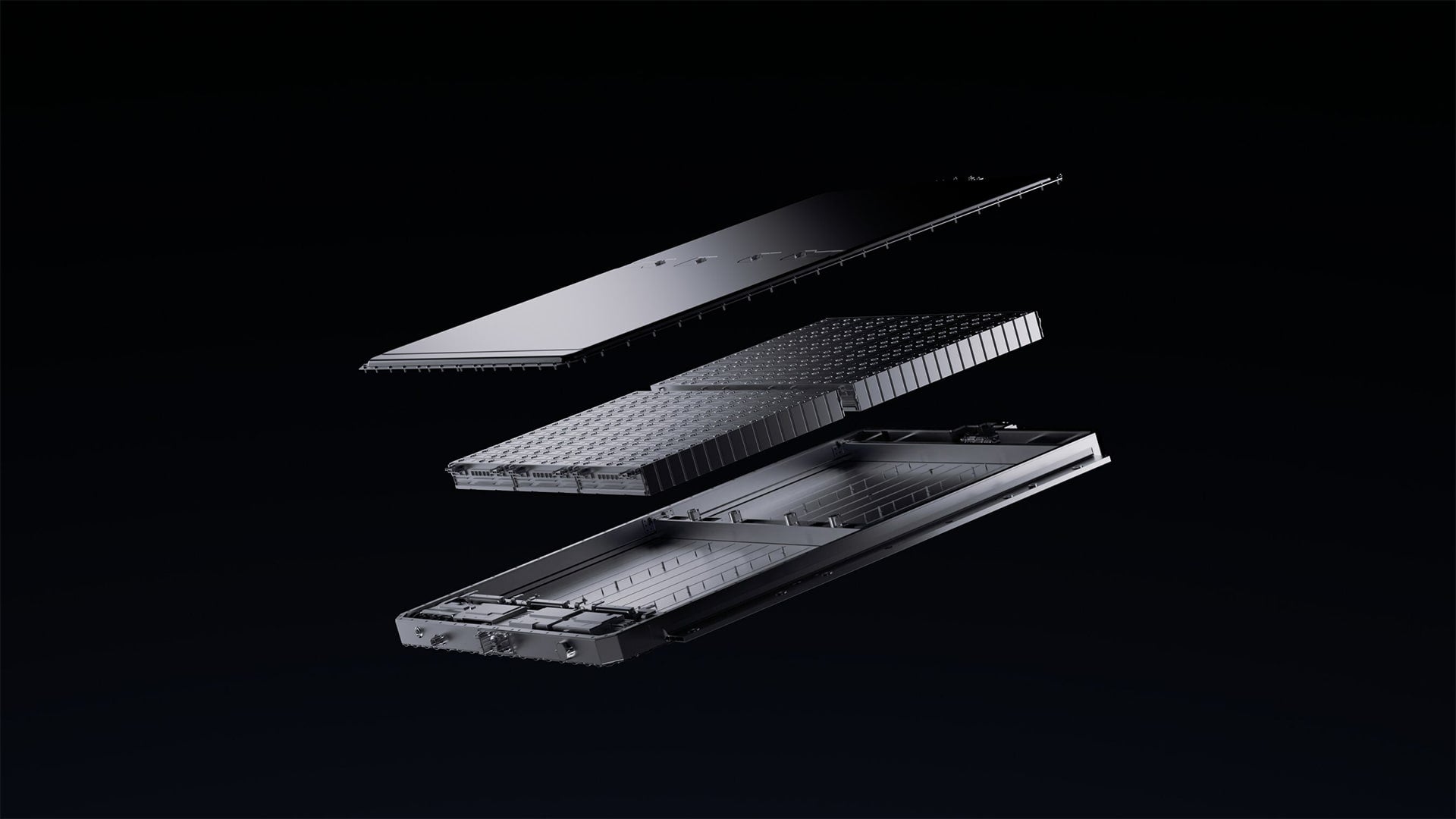
CATL, the world’s dominant battery maker, has unveiled a new breakthrough for the European market: the Shenxing Pro. The technology promises ultra-long range, rapid charging, and minimal degradation, setting a new benchmark for what electric vehicle batteries could deliver in the coming decade.

CATL’s Big Reveal at IAA Munich
The announcement came at IAA Munich, Europe’s largest auto expo, underscoring CATL’s growing push to dominate not only China but also Europe. While the company has not disclosed which vehicles will first carry the Shenxing Pro, the unveiling demonstrates once again how Chinese EV suppliers are aggressively challenging European automakers like Volkswagen, BMW, and Porsche on their home turf.
Two Battery Packs, Two Purposes
CATL presented two variations of the Shenxing Pro:
-
Super Long Life & Long Range Battery
-
Super-Fast Charging Battery
The branding leaves little mystery, but the specifications are striking.
The long-range pack carries a 122 kWh capacity and claims up to 470 miles (WLTP) on a single charge. Range will depend on the vehicle’s efficiency, but even a conservative estimate suggests the pack could comfortably power large SUVs or premium sedans. More impressive is its endurance: CATL says it will lose just 9% capacity after 124,000 miles, and still retain 70% after 621,000 miles and 10,000 charging cycles.
The fast-charging pack, at 110 kWh, delivers a 10%–80% charge in only 10 minutes. That could realistically add 150–250 miles of range, depending on the car. CATL cites 297 miles WLTP range from a single 10-minute stop—roughly 230 EPA miles in U.S. terms.
Real-World Comparisons
To put this in perspective, today’s best EVs—like the Tesla Model Y, Hyundai Ioniq 5, and Kia EV6—typically take 18–25 minutes to reach 80% on a 350 kW charger. Most mainstream models, such as the Ford Mustang Mach-E or VW ID.4, require 30–40 minutes. CATL’s promise of 10 minutes is at least twice as fast as leading competitors, potentially changing the way drivers plan road trips.
For consumers, this means a coffee break could equal 200–300 miles of added range, a convenience that pushes EVs closer to gasoline refueling times.
Technology Behind Shenxing Pro
The Shenxing Pro uses lithium-iron-phosphate (LFP) chemistry, known for durability and safety compared to nickel-based cells. Traditionally, LFP has lower energy density, meaning heavier batteries with less range. CATL’s solution is its “Wave” cell-to-pack design, which stacks Lego-like cells directly into the pack, maximizing space for active materials and improving energy density.
By avoiding intermediate modules, CATL reduces wasted volume and boosts efficiency—an essential step for making LFP more competitive with nickel-cobalt chemistries.
Strategic Stakes in Europe
The announcement also highlights CATL’s aggressive investment in Europe. The company has committed $12.9 billion across facilities in Hungary, Germany, and Spain, aiming to build a full ecosystem covering materials, battery manufacturing, remanufacturing, and recycling.
This puts direct pressure on European automakers, many of which are still years away from mass-producing advanced solid-state batteries. While Volkswagen and Porsche push their own innovations, CATL is already demonstrating market-ready solutions.
Global Ambitions, Local Challenges
Beyond Europe, CATL continues to expand in Asia and is watching opportunities in North America. However, trade policy, tariffs, and supply chain scrutiny pose challenges. In Europe, regulators are increasingly wary of China’s dominance in the EV supply chain, raising the possibility of restrictions or subsidies to protect local industry.
Technically, CATL also faces the challenge of weight versus efficiency. LFP batteries are heavier than nickel-based packs, and automakers will need to carefully design vehicles to balance range, performance, and cost. Still, if CATL’s claims hold true, the performance gains could outweigh those concerns.

The Bigger Picture
For European drivers, the Shenxing Pro could represent a major breakthrough: affordable EVs with long-lasting batteries that recharge in the time it takes to grab lunch. For automakers, it’s a wake-up call that the center of battery innovation has shifted eastward.
CATL’s progress suggests that the global EV race is entering a new phase—one where charging speed and durability become as important as range itself.
Recommend Reading: Changan’s 930-Mile EV Sets New Benchmark — Is Tesla Losing Its Edge?
Share:
Over 200 Pilot and Flying J Stations Now Offer EV Fast Charging
California EV Carpool Lane Decal Program Ends, With 2-Month Grace Period