





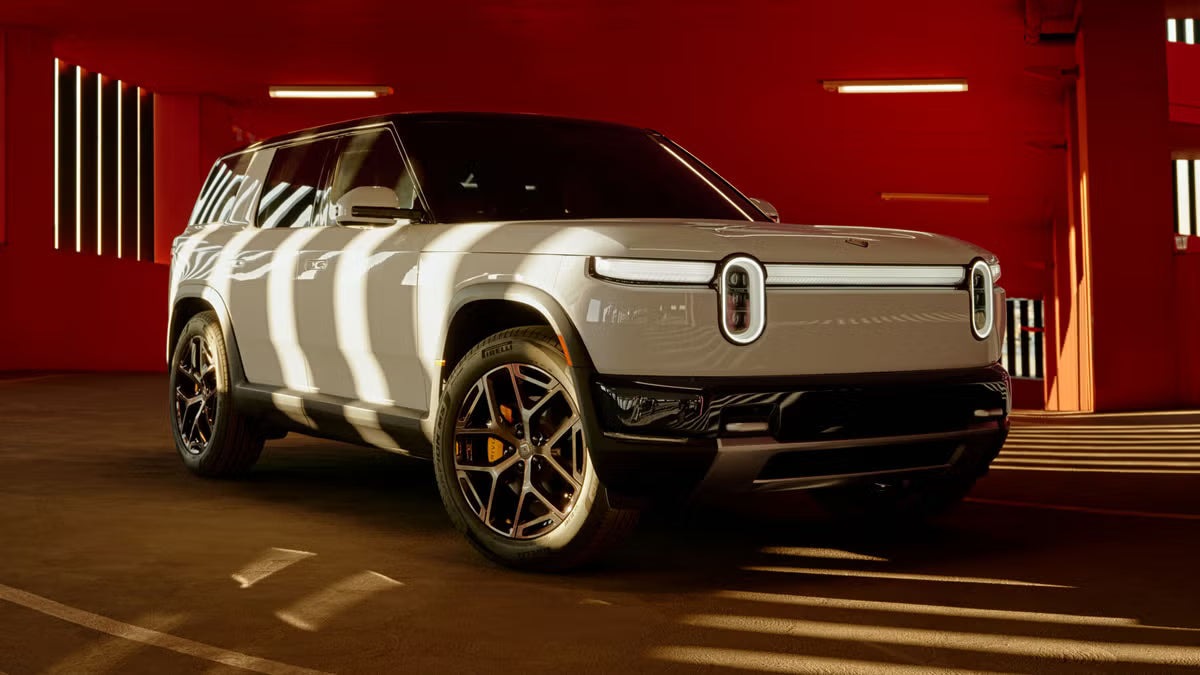
Entry-Level R2 Aims for Wider Audience
Rivian has revealed additional details about the R2, its upcoming midsize electric SUV designed to reach a broader group of buyers than the company’s current lineup. The newly disclosed information focuses on the base version priced at about $45,000, a model intended to make the brand more accessible.
While Rivian’s existing vehicles such as the R1T and R1S target the premium segment, the R2 represents a strategic attempt to compete in a more mainstream price bracket. The base trim—known as the R2 Standard—is expected to attract customers who might otherwise consider established electric crossovers from Tesla, Hyundai, or Chevrolet.
However, early specifications suggest that the entry-level R2 may lag behind several competitors in one key metric: driving range.

Performance Figures for the R2 Standard
The Standard configuration of the R2 uses a single rear-mounted electric motor that produces 350 horsepower and 355 lb-ft of torque. According to Rivian’s estimates, this setup allows the vehicle to accelerate from 0 to 60 mph in approximately 5.9 seconds.
Although this level of performance is not as aggressive as the higher-end version arriving first, it remains more than adequate for daily driving. The dual-motor Performance trim, which launches earlier, delivers significantly greater output at 656 horsepower, positioning it as the most powerful variant in the lineup.
For buyers prioritizing efficiency and affordability, however, the Standard model represents the most important addition to the R2 range.
Driving Range Compared With Key Rivals
Rivian has not publicly confirmed the exact capacity of the battery pack used in the R2 Standard. The company currently projects more than 275 miles of range on a full charge.
While respectable, that figure falls short when compared with several similarly priced electric vehicles already on the market. For example, the Tesla Model Y Premium Rear-Wheel Drive, which carries a similar price of about $45,000, offers an EPA-rated range of roughly 357 miles.
Other competitors also report higher numbers. The Hyundai Ioniq 5 Limited achieves around 318 miles on a charge at a comparable cost. Meanwhile, some newer EV offerings from brands such as Toyota, Nissan, Kia, and Chevrolet provide comparable or better driving distance while costing even less.
These comparisons highlight the growing competition in the mid-price EV segment, where range continues to be one of the most important purchase considerations for many drivers.
Design Choices Affect Efficiency
Part of the explanation for the R2’s lower estimated range may lie in its overall design philosophy. Many electric crossovers prioritize aerodynamic efficiency, adopting rounded silhouettes that reduce drag at highway speeds.
The Rivian R2, by contrast, follows a more traditional two-box SUV shape, emphasizing practicality and rugged styling over aerodynamic optimization. While this approach may appeal to buyers who prefer the look and functionality of a classic sport utility vehicle, it can lead to reduced efficiency compared with sleeker competitors.
Rivian appears to have accepted this trade-off in favor of preserving the brand’s distinctive design language.
A Longer-Range Option Available
Customers who want additional driving distance will have another option. Rivian plans to offer a rear-wheel-drive Long Range variant capable of traveling about 345 miles on a single charge.
This version is expected to cost roughly $48,490 before destination fees, about $3,500 more than the entry-level model. For buyers who frequently travel longer distances, that upgrade could help close much of the gap between the R2 and its competitors.
Standard Features in the Base Model
Despite its position as the most affordable trim, the R2 Standard still includes a range of comfort and convenience features. The factory configuration comes with heated front seats, a heated steering wheel, and power-adjustable front seats, including a 12-way driver seat with lumbar support.
The vehicle also offers several driving modes—All-Purpose, Conserve, Snow, and Sport—allowing drivers to tailor the vehicle’s behavior to different conditions.
The standard audio system produces 525 watts of output through a configuration of speakers and midwoofers. The base model rides on 19-inch all-season wheels with a machined graphite finish.
Optional Upgrades and Driver Assistance
Buyers seeking stronger acceleration can upgrade to a dual-motor all-wheel-drive version, which raises output to 450 horsepower and 537 lb-ft of torque.
Rivian will also offer its Autonomy+ driver assistance platform as an optional package. The system can be activated through a $50 monthly subscription or a one-time payment of $2,500. When enabled, it allows hands-free driving on approximately 3.5 million miles of mapped roads across the United States and Canada.
Additional options include cosmetic upgrades such as exterior colors, larger wheels, and a Tow Package that increases towing capability to 4,400 pounds.
Features Missing From the Entry-Level Trim
To reach the targeted $45,000 starting price, Rivian has omitted several elements that appear on higher trims. The Standard version does not include semi-active suspension, Matrix headlamps, or the rear drop-down glass panel found on more expensive variants.
Other small features—such as the removable flashlight integrated into the driver’s door on premium models—are also absent. The audio system in the base trim is likewise simpler than the upgraded setups offered elsewhere in the lineup.
Some of these omissions become more noticeable when comparing specifications with competitors. Vehicles like the Tesla Model Y and Hyundai Ioniq 5 provide certain premium features at similar price levels.
Software and Future Technology
One area where Rivian continues to emphasize differentiation is software architecture. The R2 will use a zonal electrical system, allowing many functions to be updated remotely through over-the-air software upgrades.
This design approach allows the vehicle to evolve over time with new features and performance improvements delivered digitally. Rivian has also stated that the R2 will eventually incorporate a lidar sensor, suggesting the company plans to enhance automated driving capabilities in future updates.

Delivery Timeline Still Several Years Away
Although the R2 has generated significant interest, buyers will need to wait before receiving the base model. Rivian currently expects the R2 Standard to reach customers in late 2027.
The Long Range rear-wheel-drive version is scheduled slightly earlier, likely in early 2027. For buyers who want the vehicle sooner, Rivian plans to launch the $57,990 Performance trim in spring, followed by a $53,990 Premium version later in the year.
Until then, the R2 remains an important preview of Rivian’s next phase as it attempts to compete more directly in the growing market for mid-priced electric SUVs.
Recommend Reading: Can Rivian Handle R2 Demand With Its Service Network?


Share:
Honda Ends 0 Series EV Program and Cancels Acura RSX Electric
Honda EV Strategy Faces Questions After Major Project Cancellations