



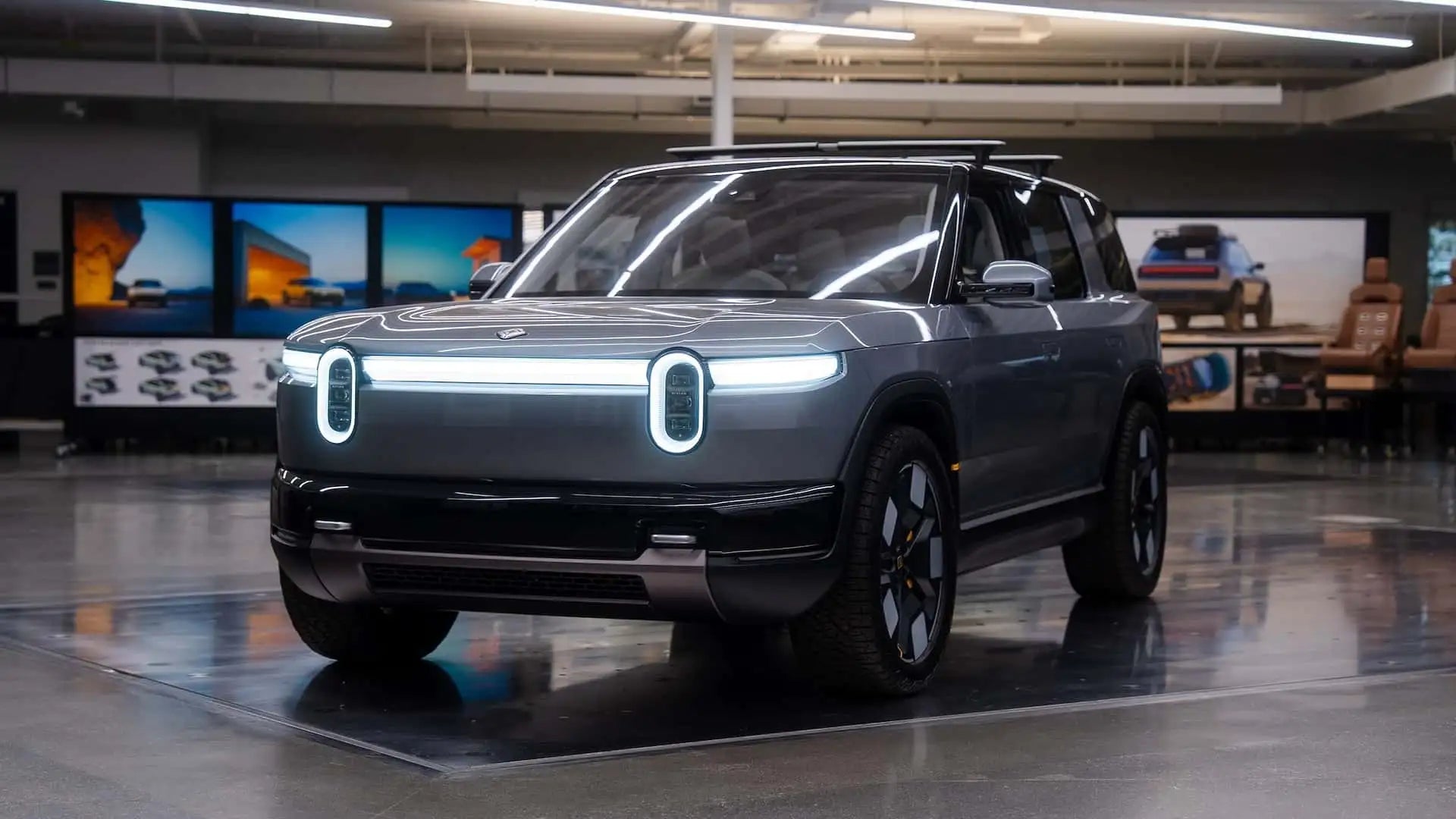
A New Kind of Affordable Electric SUV
Rivian’s upcoming R2 electric SUV, set to debut with a starting price of $45,000, isn’t just an affordable EV—it’s designed to serve as a backup power source for your home. The R2 will introduce vehicle-to-home (V2H) capability, allowing it to supply electricity directly from the vehicle’s battery to a household electrical system.
With V2H functionality, the R2 can send power through its charging port to a home’s main electrical panel. This means it can keep essential systems running during blackouts or help lower energy costs by storing electricity when rates are low and supplying it back when prices peak.

Inside the Energy Management System
At the heart of the R2’s home-powering ability is a new Energy Management Control Module. This integrated electronic assembly sits near the rear of the R2’s battery pack and combines several critical components into one system.
Among its key features is a bidirectional charger—technology that allows power to flow in two directions. The charger can convert AC power from the grid into DC to charge the vehicle’s high-voltage battery, or invert DC back to AC to power a house.
According to Rivian, this setup could unlock gigawatt-hours of potential energy storage from its future vehicle fleet. In its third-quarter shareholder letter, the company said this approach represents “a cost-effective and scalable way to deliver energy storage solutions through Rivian vehicles.”
Expanding Charging Compatibility
In the U.S. market, the R2 will come equipped with NACS (North American Charging Standard) ports—Tesla’s connector type that’s rapidly becoming the industry standard. For Europe, Rivian is expected to offer the R2 with CCS2 connectors to align with the region’s existing public charging infrastructure.
This dual approach highlights Rivian’s broader ambition to expand internationally while maintaining compatibility with the fast-growing Tesla Supercharger network in North America.
Vehicle-to-Home Hardware and Future Plans
While the V2H capability will be built into the R2’s system, additional home installation hardware is required to make it work safely and efficiently. Ford and General Motors already sell such kits for several thousand dollars, and Rivian plans to introduce its own bidirectional home charger—a product that has been delayed for more than a year.
Once released, the charger will not only work with the R2 but also be compatible with existing R1T and R1S models, giving current owners access to Rivian’s home energy features.
The R2 is expected to enter production in 2026 at Rivian’s Normal, Illinois factory, signaling a major expansion of the company’s product lineup.
Next-Generation Battery Technology
The R2 will debut LG-sourced 4695 battery cells, a next-generation cylindrical cell design that holds six times more energy than the 2170 cells used in the R1S and R1T. This upgrade is expected to deliver an estimated 300-mile range, though Rivian has not yet confirmed final battery capacities.
Initially, these 4695 cells will be produced overseas, but Rivian plans to localize production in the U.S. by 2027, once its new Arizona battery plant begins operations. Domestic production will help Rivian qualify for federal EV incentives tied to U.S.-made battery components.

Rivian’s Broader Energy Vision
Rivian sees vehicle-to-home capability as more than a convenience—it’s a step toward building a distributed energy network powered by its vehicles. By turning EVs into mobile energy storage systems, Rivian aims to make electric mobility part of the broader clean energy ecosystem.
If the company can deliver on its promise, the R2 could redefine what “affordable” means in the EV world—not just a lower price tag, but a vehicle that’s smarter, more independent, and energy-resilient.
Recommend Reading: Rivian Rolls Out Smart Charging to Lower Home Charging Costs

Share:
Tesla Launches Free Supercharging Deal for Gas Car Trade-Ins
BMW Teams Up With Samsung SDI To Accelerate Solid-State Battery Development