


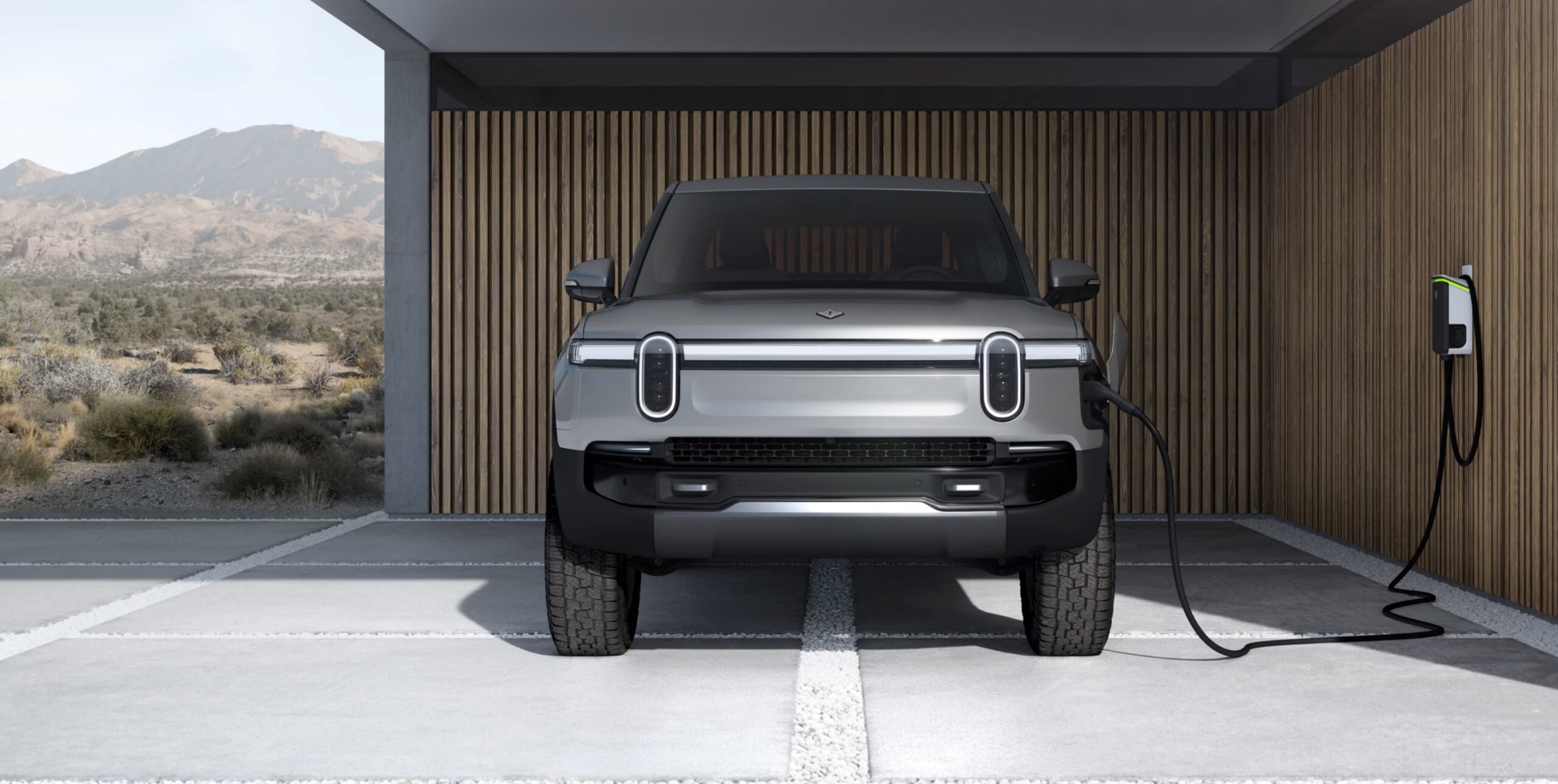
Smart Charging Arrives for Rivian Owners

Rivian is rolling out a new Smart Charging feature for its R1S SUV and R1T pickup. The update, delivered over the air, will allow owners to automatically take advantage of lower off-peak electricity rates when charging at home. Rivian says the system can help drivers save at least 20% on charging costs, with no extra effort required.

Rivian Smart Charging


How the System Works

The Smart Charging feature will be managed through the Rivian smartphone app. Once activated, the app automatically schedules charging sessions during times when electricity is typically cheaper, cleaner, and more reliable, while still ensuring the vehicle is ready to drive when needed.

According to Rivian’s head of software, Wassym Bensaid, more than 80% of EV charging happens at home, but over 70% of those sessions occur during peak rates, costing owners more than necessary. Smart Charging directly addresses that inefficiency.


Availability and Update Details

The feature will arrive with software version 2025.34, which is still in beta but expected to roll out widely soon, according to Rivian Tracker. Both Gen1 and Gen2 R1S and R1T models will support the feature.

The update also brings additional improvements:

  • Pre-facelift models (Gen1) will benefit from more accurate arrival range estimates, thanks to air density data being factored in at higher elevations.

  • Gen2 vehicles (built from 2024 onward) will gain a suite of enhancements, including Co-Steer, which lets drivers adjust vehicle position within a lane without disengaging Highway Assist.


Enhanced Highway Assist and Digital Key

Rivian has also expanded the availability of its Enhanced Highway Assist by as much as 50%, particularly on urban and suburban highways. This system helps keep vehicles centered in their lane while maintaining safe distances from other cars.

Additionally, the update introduces Digital Key support for 2025 R1S and R1T models. Owners can now share access with family or friends via an Apple iPhone, Apple Watch, Google Pixel, or compatible Samsung device.


Why It Matters

For Rivian owners, Smart Charging is more than just a convenience—it’s a practical way to lower ownership costs and make EV life more affordable. With rising electricity prices in many regions, being able to automatically align charging with off-peak hours could save drivers hundreds of dollars per year.

And for Rivian, these kinds of updates highlight the advantage of over-the-air software, which keeps vehicles evolving long after purchase.

Recommend Reading: Public Charging Memberships Worth the Money in 2025

FAQs - North American EV Home Charging

What is EV home charging and why is it important in North America?

EV home charging allows drivers to charge their electric vehicle overnight using their household electricity supply. In North America, where commuting distances can be long, home charging ensures convenience, lower cost per mile, and reduced reliance on public stations.

What are the main types of EV home charging in North America (Level 1 vs Level 2)?
  • Level 1 (120V outlet, NEMA 5-15): Adds ~3–5 miles of range per hour; good for plug-in hybrids or low daily mileage.
  • Level 2 (240V outlet, NEMA 14-50 or hardwired charger): Adds ~20–40 miles of range per hour; ideal for most EV owners.
  • ⚠️ Level 3 DC fast charging is rarely installed at homes due to cost and power requirements.
Which charging connector should I use at home: J1772, NACS, or CCS1?
  • J1772: Standard for non-Tesla EVs in North America; widely supported by Level 2 chargers.
  • NACS (North American Charging Standard): Tesla’s connector, now adopted by Ford, GM, Rivian, and more.
  • CCS1: Mostly for public DC fast charging, rarely used in home charging setups.

💡 For future-proofing, a NACS-ready Level 2 charger is the best investment.

How much does it cost to install a home EV charger in the U.S. or Canada?
  • NEMA 14-50 outlet installation: $500–$1,200 (depending on wiring and panel capacity).
  • Hardwired Level 2 charger: $800–$2,000 installed.
  • Federal & state rebates: Up to $1,000 in credits may be available.

⚠️ Always check local utility rebates and permits before installation.

Can I use a standard 120V outlet (NEMA 5-15) for EV charging at home?

Yes, but it’s very slow (only ~3–5 miles of range per hour). This is called trickle charging. It may work for plug-in hybrids or EV owners with very short daily commutes, but most drivers prefer a Level 2 charger for practicality.

What safety precautions should I take for EV home charging?
  • Hire a licensed electrician for any 240V installation.
  • Use a dedicated circuit breaker (avoid sharing with appliances).
  • Install GFCI protection for outdoor chargers.
  • Avoid extension cords; always plug directly into the outlet.
  • Regularly check cables and plugs for overheating or wear.
How do EV home charging costs compare to public charging stations?
  • Home charging: ~$0.12–$0.20 per kWh, averaging $4–$9 per 100 miles.
  • Public fast charging (DCFC): ~$0.35–$0.60 per kWh, averaging $20+ per 100 miles.

💡 Home charging saves money and is more convenient, especially when charging overnight during off-peak utility rates.

Can I charge multiple EVs at home on the same electrical panel?

Yes, but you need to ensure your home electrical panel has enough capacity. Options include:

  • Dual-port chargers (some balance load between two EVs).
  • Two separate 240V circuits (requires panel upgrades).

⚠️ Overloading your panel may cause breakers to trip—consult an electrician.

What future trends affect EV home charging in North America?
  • Shift from J1772 to NACS as the new standard.
  • Smart chargers that optimize cost using time-of-use electricity rates.
  • Bidirectional charging (V2H, V2G, V2L) to power homes or feed energy back to the grid.
  • Federal and state incentives encouraging wider adoption of home charging stations.
What are the best practices for EV home charging to extend battery life?
  • Charge between 20%–80% daily instead of always going to 100%.
  • Use scheduled charging to align with off-peak electricity hours.
  • Keep your EV and charger in a moderate-temperature garage to avoid overheating.
  • Update your charger firmware regularly for safety and performance improvements.

EV News

View all

Jaguar Commits to an All-Electric Future Despite Market Doubts

Jaguar Commits to an All-Electric Future Despite Market Doubts

Jaguar is fully committed to reinventing itself as a premium electric brand, rejecting hybrids and gas engines as it prepares a bold new flagship EV aimed at restoring desirability and relevance in a shifting global market.

Read more

F-150 Lightning

Ford Scales Back EV Ambitions at a Cost of Nearly $20 Billion

Ford is absorbing nearly $19.5 billion in costs as it scales back EV plans, cancels key electric models, and pivots toward hybrids and extended-range vehicles amid slower-than-expected EV adoption.


Read more

Ford Bets on a $30,000 Electric Truck to Reset Its EV Strategy

Ford Bets on a $30,000 Electric Truck to Reset Its EV Strategy

Ford is pulling back from several electric vehicle projects while betting its future on a low-cost EV platform led by a skunkworks team. A $30,000 electric pickup could determine whether the automaker can compete globally.

Read more