



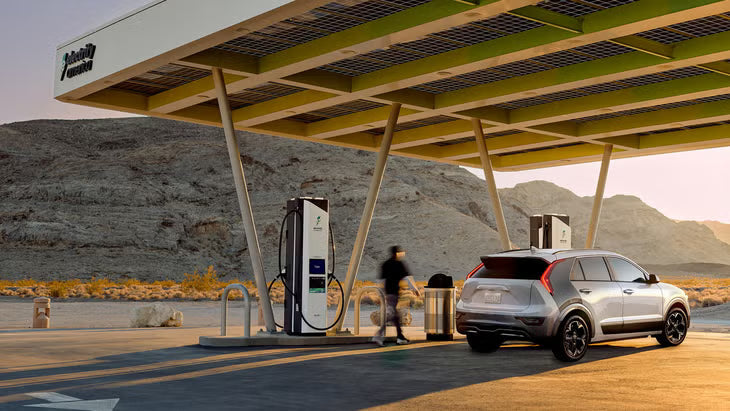
Public EV charging can get expensive—especially if you rely on fast charging often. Memberships and subscription plans from charging networks are designed to reduce that cost. But are they really worth it? Below I break down what the major networks offer, typical rates in different states, and tips to decide what’s right for you.

What Memberships & Plans Offer
Here are a few big public charging networks and what their memberships include as of 2025:
-
EVgo
EVgo offers several plans. The “EVgo Plus” plan costs $6.99/month, and the “PlusMax” plan is $12.99/month. These plans claim savings of up to ~15–30% or more depending on your usage. For heavy fast-charging users, the higher tier “PlusMax” tends to make more sense. -
Electrify America
EA has a plan called “Pass+” at about $7/month, which gives you reduced energy rates at their fast-charger stations. -
Tesla Superchargers
Tesla has also introduced a subscription that reduces price-per-kWh at Superchargers for owners and, in some areas, for non-Tesla+NACS vehicles. Discount percentages vary.

How Much Public Charging Costs (PAYG vs Membership)
To see whether joining makes financial sense, you need to compare “Pay As You Go” (PAYG) vs membership rates. Also, these rates vary quite a bit by state. Here are examples:
| State | Typical Public DC Fast Rate PAYG (~2025) | Membership-Discounted Rate |
|---|---|---|
| California | ~ $0.50/kWh in many fast-charging stations. | EVgo PlusMax or Electrify America Pass+ can reduce cost by ~20-30% if you charge frequently. |
| Texas | Public average around $0.38/kWh for commercial/public charging. | EVgo or EA membership savings bring some of those stations down significantly, especially during off-peak hours or with “time of use” (TOU) plans. |
| Ohio | Around $0.38/kWh at many fast chargers. |
With a membership plan, savings might be smaller because baseline rates are already moderate; but frequent users still benefit. |
Also, average national public charging price (for commercial EV charging) is ~$0.366/kWh.
When Memberships Make Sense
Here are some scenarios or usage patterns when memberships are likely to pay off:
-
Frequent fast charger use — If you fast charge more than 2-3 times per month with a network like EVgo or EA, the monthly fee + reduced kWh/session fees usually break even.
-
Living in a high-cost electricity state — Memberships help more when your local public rates are steep (e.g. Texas, Massachusetts, California).
-
Mostly on the road / long trips — If you rely on public fast chargers often rather than home charging, the discounts and waived session fees help.
-
Charging during off-peak hours / using TOU plans — Some networks (e.g. EVgo) offer lower rates during off-peak or “super off-peak” windows. If your schedule allows, that amplifies membership savings.

When Memberships Might Not Be Worth It
-
You mostly charge at home or at destinations where charging is free or low cost.
-
You rarely use fast chargers, so the discount doesn’t offset the monthly fee.
-
Your local stations don’t offer much of a discount even for members.
-
You drive in a state where the public kWh price is already reasonable (< ~$0.40/kWh), so savings from membership are smaller.
Recommend Reading: ⚡ Home Charging vs. Public Charging: What’s Best for New EV Owners?
Practical Compare: Sample Costs with Membership vs PAYG
Here are rough cost examples using a 60-75 kWh typical EV battery (say something like a Hyundai Ioniq 5, Tesla Model 3, etc.):
-
Case A: California driver — PAYG cost at public fast charger ~$0.38/kWh → filling 60 kWh is ~$22.80. With EA Pass+ or EVgo PlusMax, you could bring cost down by 20-30%, so maybe pay ~$16-18 + the small monthly fee.
-
Case B: Texas driver — PAYG ~$0.50/kWh → filling 60 kWh is ~$30. Membership might drop that to ~$22-24 (if the network supports discounts + session fee waivers).
-
Case C: Ohio driver — PAYG ~$0.38/kWh → filling 60 kWh ~$23. If membership is $7-$13/month with maybe 20% discount, you’d need several charging sessions to recoup the cost. Maybe 3-5 fast charges per month.

Things to Check Before You Subscribe
To make sure a membership is good value, check:
-
Which stations near you are part of the network (mapping + app). If the network doesn’t reach areas you drive, savings don’t matter.
-
Discount size and structure: is it discount per kWh, or per minute, or session fee waived?
-
Peak vs Off-Peak / Time-Of-Use pricing: can you charge when it’s cheaper?
-
Caps / maximum savings: Some plans limit how much discount you can get or have high session fees.
-
Monthly cost vs how often you use: simple math — fee + discounted rates vs PAYG cost.

Verdict: Are Memberships Worth It in 2025?
Yes — for many EV drivers — memberships can be worth it in 2025, especially if:
-
You fast-charge fairly regularly (2-4 times a month or more)
-
You live in a state with high public charging rates
-
You have access to membership-friendly networks nearby
-
Your driving includes road trips or long stretches without home charging
For occasional or home-ring charging users, memberships are less critical — saving might be small and the monthly fee could outweigh the benefit.
Recommend Reading: Over 200 Pilot and Flying J Stations Now Offer EV Fast Charging


Share:
Using Your EV to Power Camping Gear: A Practical Guide to V2L
Rainy Day EV Driving: Safety and Charging Advice