



Introduction
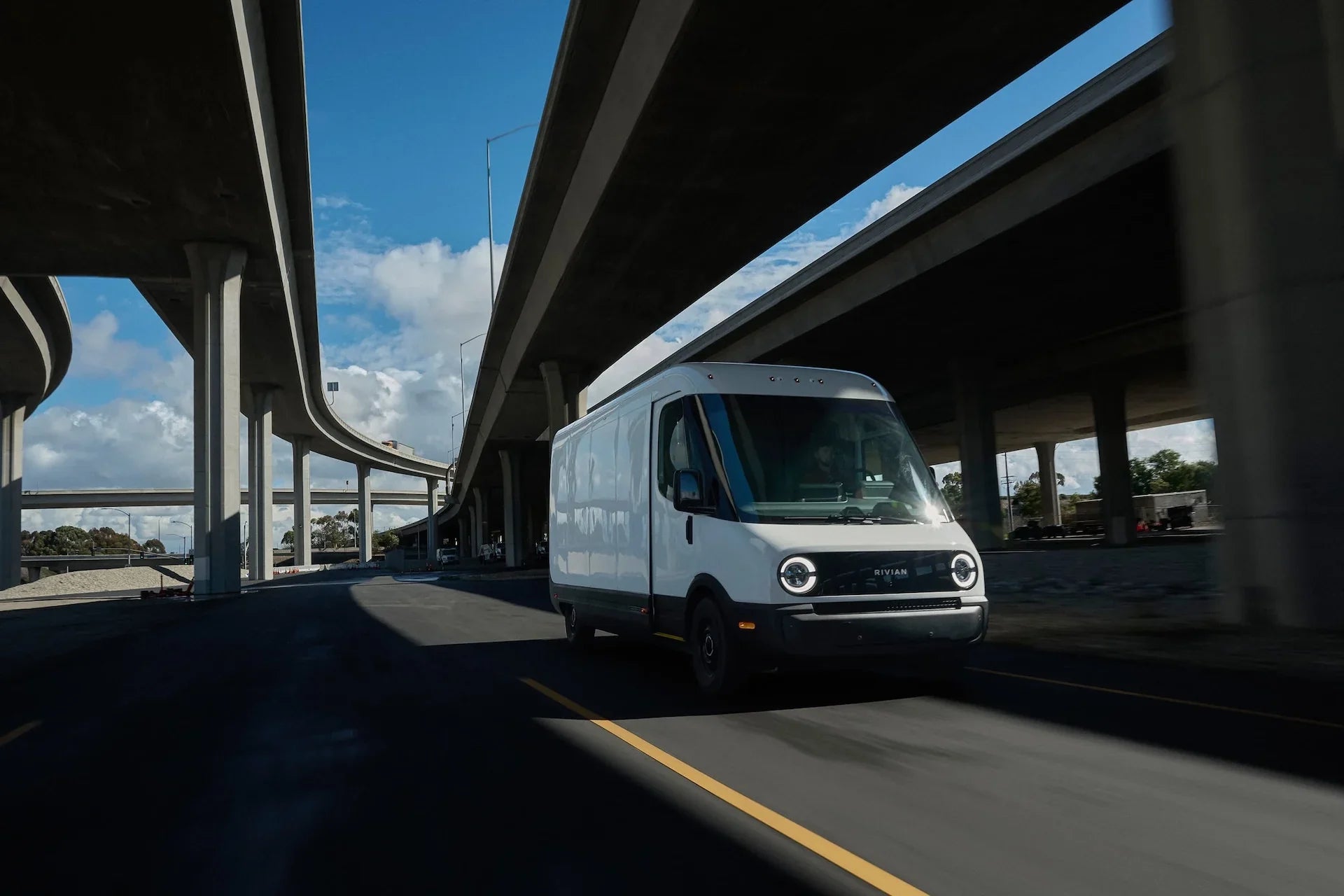
Rivian has launched a major safety campaign involving its electric commercial vans, announcing a U.S. recall tied to a potential defect in the driver’s seatbelt pretensioner system. The action covers 34,824 vehicles, all part of the company’s growing commercial lineup, according to filings with the National Highway Traffic Safety Administration (NHTSA). Rivian’s consumer models—the R1T pickup and R1S SUV—are not affected.

Scope of the Recall
The recall focuses solely on Rivian’s Electric Delivery Van (EDV), the model widely used across Amazon’s logistics network. Documentation submitted to NHTSA shows that every recalled vehicle is a commercial van, underscoring the operational conditions that likely contributed to the issue.
Rivian reports that the driver-side seatbelt pretensioner cable may sustain damage after repeated misuse. The hazard arises primarily when operators sit on the belt while it remains buckled, a behavior Rivian says has been observed in commercial settings where drivers frequently exit and re-enter the vehicle.
What Causes the Damage
Delivery drivers often complete dozens of stops per shift, and some may leave the seatbelt latched to speed up entry and exit. Doing so can disable the vehicle’s seatbelt warning alerts and place excessive strain on the pretensioner cable. Consistent pressure on the buckled belt can ultimately weaken or damage the component, compromising its ability to function correctly in a collision.
Although this practice violates traffic-safety laws, Rivian acknowledges the pattern as a realistic operational challenge in high-frequency delivery environments.
Rivian’s Remedy Plan
To address the problem, Rivian will perform inspections of the driver’s pretensioner assemblies on all affected vehicles and replace components found to be compromised. The company has also deployed an over-the-air software update designed to automatically detect misuse of the seatbelt, providing additional protection against damage.
Importantly, Rivian states that it has not received any reports of injuries or crashes connected to the defect. The recall is being undertaken proactively based on field observations and engineering analysis.
Background on Rivian’s Commercial Van Program
Rivian began producing its electric van in 2021 under a high-profile agreement with Amazon, which committed to purchasing 100,000 vehicles by 2030. To date, Amazon has already taken delivery of more than 20,000 units. Although Amazon’s exclusivity ended in 2023, the long-term delivery target remains unchanged, and Rivian now offers the van to other U.S. businesses.
The EDV—also referred to in regulatory documents as the Rivian Commercial Van (RCV)—has benefited significantly from Amazon’s deployment scale. The model has quickly become one of the most visible electric commercial vehicles on American roads.

Sales Performance and Market Position
Rivian’s commercial van has not only been highly visible but highly successful. In 2023, it outsold every competing electric van, and early data from Cox Automotive suggests the company is on track for a repeat performance.
From January through September of this year, Rivian delivered 6,809 electric vans, surpassing key rivals including the Ford E-Transit (4,604 units) and the Chevrolet BrightDrop (3,976 units). The recall, while large, is not expected to disrupt Rivian’s broader momentum in the commercial EV market.
Recommend Reading: Why Rivian Sees Opportunity After the Federal EV Tax Credit Ends
Partager:
Trump’s Fuel-Economy Rollback Will Raise Drivers’ Costs
Trump Moves to Roll Back U.S. Fuel-Economy Standards