



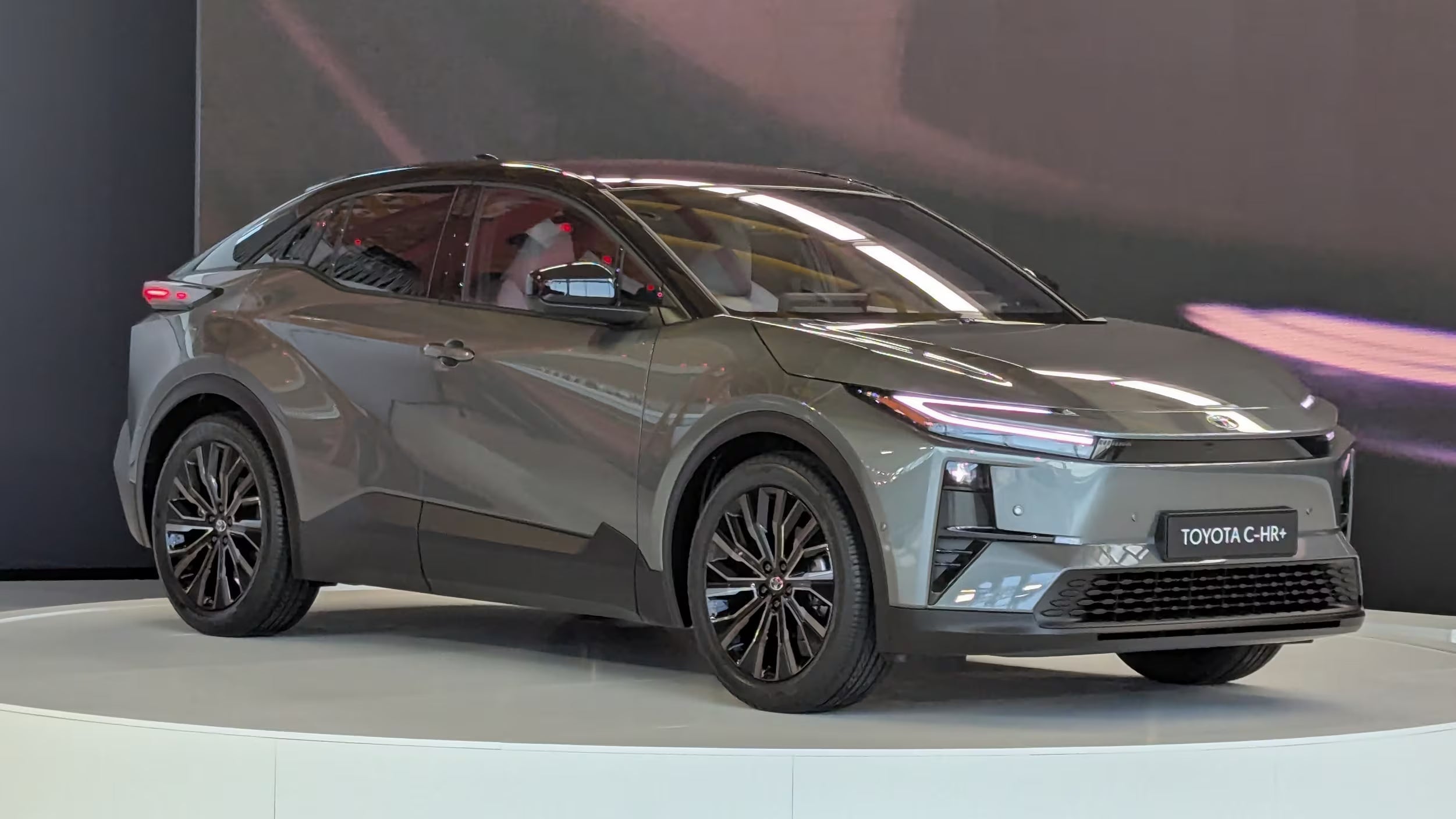
Toyota Expands Its Affordable EV Lineup
Toyota’s electric vehicle strategy is shifting into a higher gear. Over the next two years, the company plans to significantly broaden its battery-powered offerings in the United States, adding several new nameplates to a portfolio that until recently felt limited. Among the latest arrivals is the 2026 Toyota C-HR EV, a compact crossover positioned below $40,000 and aimed at buyers seeking all-wheel drive without moving into a larger, pricier segment.
I recently spent time driving the C-HR EV in California and came away with a clear impression: this is a far more polished effort than Toyota’s earlier electric attempts. Still, while it addresses past criticisms, it leaves some important boxes unchecked in a market that is evolving quickly.
Performance That Exceeds Expectations
Unlike many entry-level electric crossovers that offer modest output, the C-HR EV comes exclusively with a dual-motor setup producing 338 horsepower and powering all four wheels. Toyota estimates a 0–60 mph time of 4.9 seconds, placing it firmly in quick territory for its size and price bracket.
On the road, acceleration feels immediate and strong, especially for drivers transitioning from older gasoline vehicles. Highway merging and passing require little effort. Compared with similarly sized front-wheel-drive competitors such as the Chevrolet Bolt or Nissan Leaf, the Toyota delivers notably more punch and traction.
Ride comfort is another highlight. The suspension absorbs uneven pavement well, and cabin noise remains subdued at freeway speeds. Despite carrying a substantial battery pack, the vehicle feels relatively agile in corners, avoiding the excessive heft that sometimes characterizes electric SUVs.

Distinctive Styling and Practical Trade-Offs
Visually, the C-HR EV stands apart from more conventional compact crossovers. Its sharply descending roofline and sculpted rear give it a coupe-like profile, reinforcing the “high rider” concept embedded in its name. Up front, Toyota’s latest design language creates a modern, assertive face.
This styling approach, however, comes with compromises. Rear cargo capacity is not class-leading, and access to the back seat requires a noticeable duck for taller passengers. At 6 feet 1 inch, I found head clearance tight when entering the second row, and the seating position places knees relatively high due to the battery pack beneath the floor.
Interior materials are generally pleasant, especially in the base SE trim, which includes heated front seats, an eight-way power-adjustable driver’s seat with lumbar support, wireless phone charging, multiple USB-C ports, and Toyota’s SafetySense driver-assistance suite. Some harder plastics remain on the doors and center console, but overall fit and finish are competitive for the price.
Competitive Range and Charging Capability
Powering the C-HR EV is a 74.7-kilowatt-hour battery. On 18-inch wheels fitted to the SE trim, the crossover achieves up to 287 miles of EPA-rated range. Opting for the larger 20-inch wheels on the XSE reduces that figure slightly to 273 miles.
While these numbers do not top the segment, they are respectable. Nearly 300 miles of range covers typical daily driving needs comfortably. More importantly, this marks a significant step forward compared with Toyota’s earlier electric offerings, which faced criticism for limited range and slower charging.
When connected to a DC fast charger, the C-HR can draw up to 150 kilowatts, enabling a 10% to 80% recharge in approximately 30 minutes, according to Toyota. The vehicle includes a built-in North American Charging System (NACS) port, allowing direct use of Tesla Superchargers without adapters. Plug & Charge capability is also supported.
Faster-charging rivals exist, including higher-priced models from Hyundai, Kia, and Tesla, but the Toyota’s specifications align reasonably well with its cost positioning.
Pricing and Market Context
With a starting price of $38,450 including destination fees, the C-HR EV joins a limited group of new electric vehicles available below the $40,000 threshold in the U.S. market. Its closest Subaru counterpart, the Uncharted, shares much of its hardware, though pricing structures differ slightly between the two brands.
For buyers who prioritize all-wheel drive in a compact footprint, the Toyota occupies a relatively unique niche. Competing models at similar prices, such as the Nissan Leaf or Hyundai Kona Electric, generally rely on front-wheel drive. Moving up to all-wheel-drive versions of larger crossovers like the Chevrolet Equinox EV or Tesla Model Y typically requires a higher budget.
However, value comparisons become more complicated when considering Toyota’s own lineup. The larger bZ and Subaru Solterra are available for not dramatically more money, and non-electric options like the RAV4 Hybrid offer greater interior space at comparable pricing.

Software and Technology Shortcomings
Where the C-HR EV feels less competitive is in its digital experience. A 14-inch central touchscreen dominates the dashboard, and while it responds promptly to inputs, its layout and visual presentation feel dated relative to leading systems in the segment.
The interface lacks a comprehensive home screen that consolidates navigation, media, and vehicle information. App integration is limited, and customization options are sparse. The small digital instrument cluster positioned near the base of the windshield is functional but features basic graphics and minimal configurability.
Notably absent is integrated route planning that automatically suggests charging stops for longer trips. If a destination exceeds the vehicle’s remaining range, the native navigation system provides little assistance beyond a warning. Although Apple Maps can handle route-based charging suggestions through CarPlay, battery preconditioning does not activate automatically in that scenario, potentially affecting fast-charging efficiency.
One-pedal driving is also unavailable. The regenerative braking system offers four selectable levels, yet even the strongest setting will not bring the vehicle to a complete stop without using the brake pedal. For some drivers this may be inconsequential, but many EV shoppers now expect that functionality.

Overall Assessment
The 2026 Toyota C-HR EV demonstrates meaningful progress in Toyota’s electric ambitions. It combines strong acceleration, respectable range, standard all-wheel drive, and competitive pricing into an appealing compact package. At the same time, it trails certain rivals in software sophistication and interior practicality.
For shoppers focused on performance and brand familiarity within a sub-$40,000 budget, the C-HR EV deserves consideration. Yet those seeking advanced digital features or maximum rear-seat space may find stronger alternatives elsewhere. Toyota’s electric evolution is clearly underway, but refinement in user experience remains a work in progress.
Recommend Reading: Toyota Expands Its EV Lineup With Two New Crossovers and Clear Pricing


Partager:
Toyota Highlander EV vs Kia EV9 vs Hyundai Ioniq 9 Comparison
Hyundai Ioniq 5 Sales Rise Despite Broader EV Slowdown