





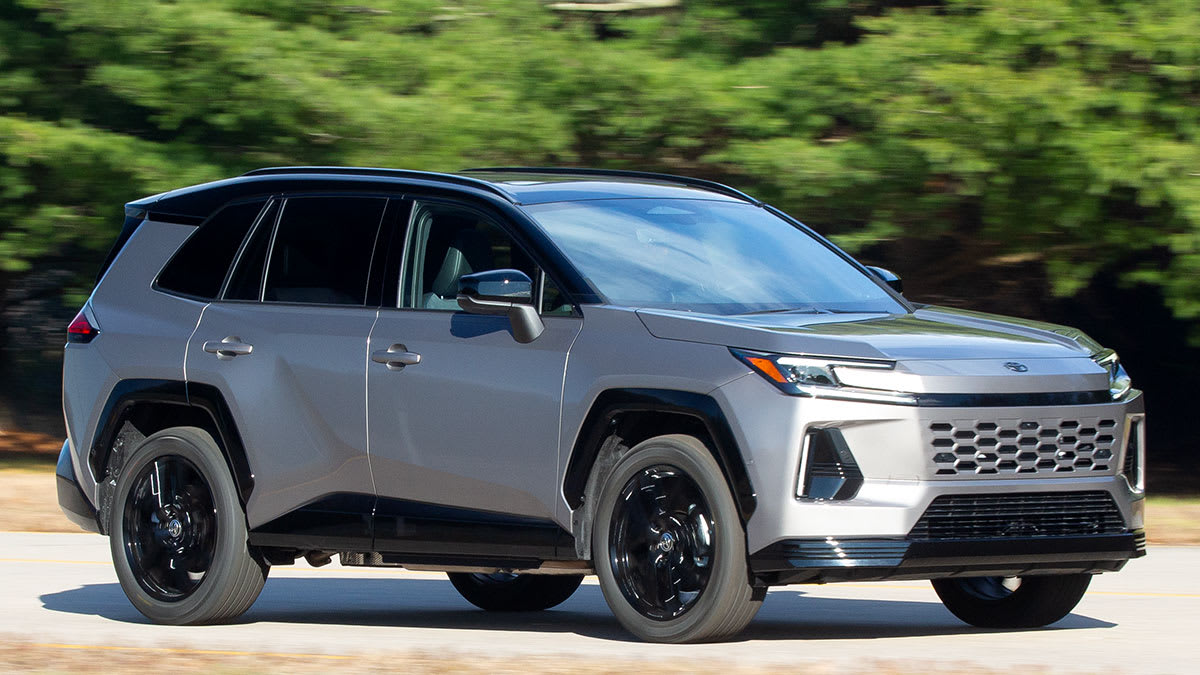
Toyota’s 2026 RAV4 lineup goes fully hybrid, and the plug-in hybrid (PHEV) version promises more electric range, improved performance, and advanced tech. But does it justify its higher price compared with the standard hybrid?

2026 RAV4 PHEV: Specs at a Glance
| Model | 2026 Toyota RAV4 PHEV GR Sport |
|---|---|
| Base Price | $45,000 (est.) |
| As-Tested Price | $50,000 (est.) |
| Engine | 2.5-liter Atkinson inline-four |
| Battery | 22.7 kWh |
| Drive | All-wheel drive |
| Efficiency | 41 city / 34 highway / 37 combined |
| EV Range | 48-52 miles |
| Output | 320 hp, 263 lb-ft combined |
| 0-60 MPH | 5.2 seconds (est.) |
Hybrid-First Platform
The sixth-generation RAV4 now comes standard with hybrid power, making gas-only models a thing of the past. Regular RAV4 Hybrids deliver up to 48 city / 42 highway MPG with a 236-hp system, while the PHEV upgrades to a 22.7-kWh battery, three electric motors, 324 hp, and 52 miles of EV range. All PHEV trims are AWD and positioned as premium options.
Toyota’s new Arene connected software platform adds smart battery management, charging scheduling, and intuitive infotainment across trims, making the PHEV feel more modern than previous plug-in models.
Driving Experience
The PHEV GR Sport combines sporty aesthetics with everyday comfort. While the Gazoo Racing-inspired suspension and 20-inch tires slightly reduce ground clearance, they deliver competent handling. Acceleration is brisk for a crossover, with a 5.2-second 0-60 mph time.
The RAV4 PHEV excels in around-town driving. On full charge, it defaults to all-electric mode until the battery is depleted, and the gas engine transitions seamlessly when needed. Snow Mode uses electric torque for better traction in slippery conditions. However, the four-cylinder engine sounds buzzy under load, and the car’s handling remains practical rather than thrilling.
Inside, the RAV4 offers comfortable seats, high-quality materials, and an intuitive layout, with 37.8 cubic feet of cargo space behind the rear seats and 70.4 cubic feet with them folded. Its taller, upright design improves visibility and gives a more traditional SUV silhouette.
Range, Efficiency, and Charging
Charging is straightforward. A home Level 2 charger replenishes the battery in around three hours, while a standard 120-volt outlet takes about 12 hours. Select trims support DC fast charging via CCS1, reaching 10-80% in roughly 30 minutes—useful for topping off during errands.
EV-only driving delivers 2.0-2.2 miles per kWh in cold weather, roughly equivalent to similar EVs. Combined fuel efficiency with the PHEV can reach 37 MPG, and total range exceeds 490 miles, blending electric and gas power. Regular gas use is minimal if the vehicle is charged consistently, keeping operating costs low.
Technology Highlights
The 10.5-inch infotainment screen is standard, with higher trims offering 12.9-inch displays and a 12.3-inch digital cluster. The system now feels snappy, customizable, and plug-in ready, with features tailored for hybrid management.
ADAS includes adaptive cruise control and lane-keeping, but lacks advanced hands-free highway capabilities found in some competitors. Toyota focuses on reliability and efficiency over cutting-edge autonomous features.
Comparing Options
If you’re considering a plug-in, full EVs like the Hyundai Ioniq 5, Tesla Model Y, or Kia EV6 provide longer all-electric range and fast-charging benefits. Among plug-in crossovers, Hyundai Tucson PHEV, Mitsubishi Outlander PHEV, and Mazda CX-70 PHEV are alternatives, though they offer less EV range or less refined hybrid systems than the RAV4 PHEV.

Price and Verdict
Base hybrid RAV4 FWD starts at $31,900, while upper trims reach the mid-$40,000 range. PHEVs are expected between $45,000 and $50,000, making them the enthusiast or environmentally conscious choice rather than the default pick.
The RAV4 PHEV delivers practical electric range, AWD capability, and solid tech upgrades. It isn’t a thrilling ride, but it’s comfortable, versatile, and efficient. For drivers committed to plugging in regularly, it’s a strong option. For most buyers, the standard hybrid remains sufficient, offering excellent fuel economy with fewer charging obligations.
Recommend Reading: Toyota Expands Its EV Lineup With Two New Crossovers and Clear Pricing


Share:
Michigan Files Antitrust Lawsuit Accusing Oil Industry of Blocking EV Progress
U.S. EV Fast-Charging Expansion Hit a Record in 2025 Despite Slower EV Sales