



Tesla is increasingly redefining itself beyond electric vehicles, but its latest financial results show the cost of that transition. As the company accelerates its shift toward artificial intelligence, robotics, and autonomous services, profits are falling sharply, raising questions about near-term stability even as long-term ambitions grow.

Financial Results Reveal a Sharp Profit Decline
Tesla’s 2025 earnings report highlights a difficult year for the automaker’s core business. Total revenue declined from $97.7 billion to $94.8 billion, a modest drop on its own. However, the more striking figure was profitability: net profit fell 46% year over year, from $7.1 billion to $3.8 billion.
The numbers reflect mounting pressure on Tesla’s traditional automotive operations. While the company remains one of the most profitable EV manufacturers globally, shrinking margins and slowing sales momentum are eroding its financial cushion.
Vehicle Sales Face Growing Headwinds
Tesla’s automotive business struggled throughout 2025. Car sales declined for the second consecutive year, driven by intensifying competition, shifting government policies in the U.S., and growing geopolitical uncertainty in key overseas markets.
Automotive revenue dropped 10% to $69.5 billion, underscoring how pricing pressure and reduced demand are affecting Tesla’s flagship products. Rival automakers have narrowed Tesla’s once-dominant software and performance advantage, particularly in China and Europe, where EV options have expanded rapidly.
Despite these challenges, Tesla vehicles remain highly competitive in terms of software integration, efficiency, and charging ecosystem access. But those strengths alone are no longer enough to guarantee growth.
Energy and Services Help Offset the Decline
While car sales faltered, Tesla’s energy and services segments provided a partial buffer. Businesses such as energy storage, solar, and Supercharging contributed a growing share of overall revenue, helping stabilize the company’s top line.
These segments demonstrate Tesla’s ability to diversify beyond vehicle manufacturing. Still, they were not large enough to fully counterbalance the profit decline driven by weaker automotive performance.
A Strategic Pivot Away From Expanding the Vehicle Lineup
Rather than doubling down on new vehicle models or refreshing its aging lineup, Tesla is pursuing a different strategy. Elon Musk has made it clear that he sees AI, robotics, and autonomy as the company’s primary growth engines, even if that means deprioritizing certain legacy products.
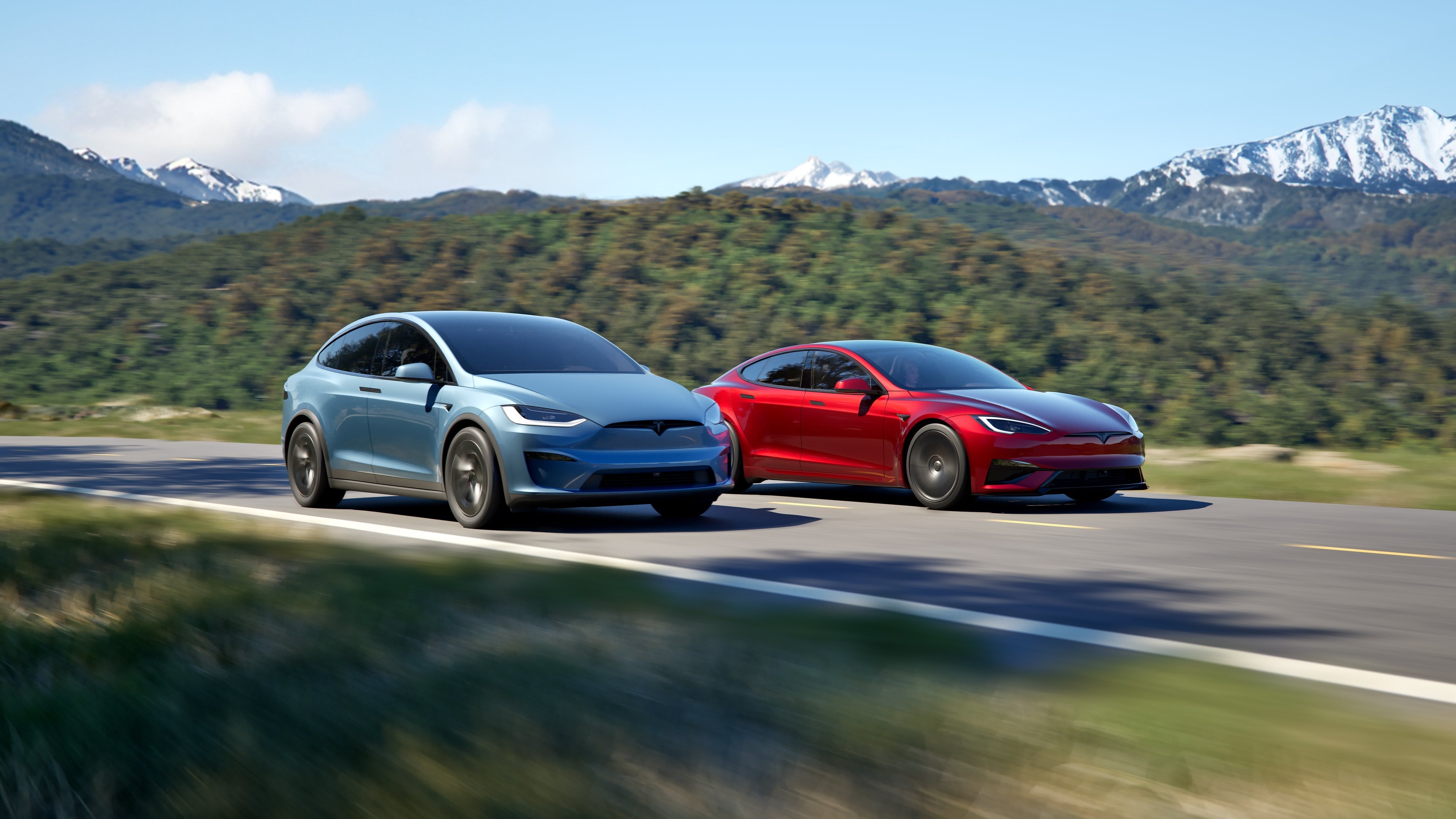
During the earnings call, Musk announced a symbolic shift: Tesla will discontinue the Model S and Model X to free up production capacity. That space will instead be used to scale development of the Optimus humanoid robot.
The decision signals a clear reallocation of resources away from low-volume premium vehicles toward projects Musk believes will define Tesla’s future.

Betting the Future on AI and Autonomy
Tesla’s long-term vision centers on autonomous driving, robotaxis, and AI-powered robotics. Musk has repeatedly argued that these technologies will eventually generate far more value than car sales alone.
However, that future remains uncertain and largely unproven at scale. The gap between today’s declining profits and tomorrow’s AI-driven revenue is widening, leaving investors and analysts to weigh ambition against execution risk.
For now, Tesla is asking the market to be patient—accepting weaker near-term financial performance in exchange for a bold, high-stakes bet on what comes next.
Recommend Reading: Tesla Cybertruck Sees Sharp Sales Decline as EV Market Cools in 2025
Partager:
Acura RSX Electric SUV: What to Expect From Acura’s Next-Generation EV
EV Battery Health After 150,000 Miles: What Real-World Data Shows