


NACS Integration Brings Seamless Charging
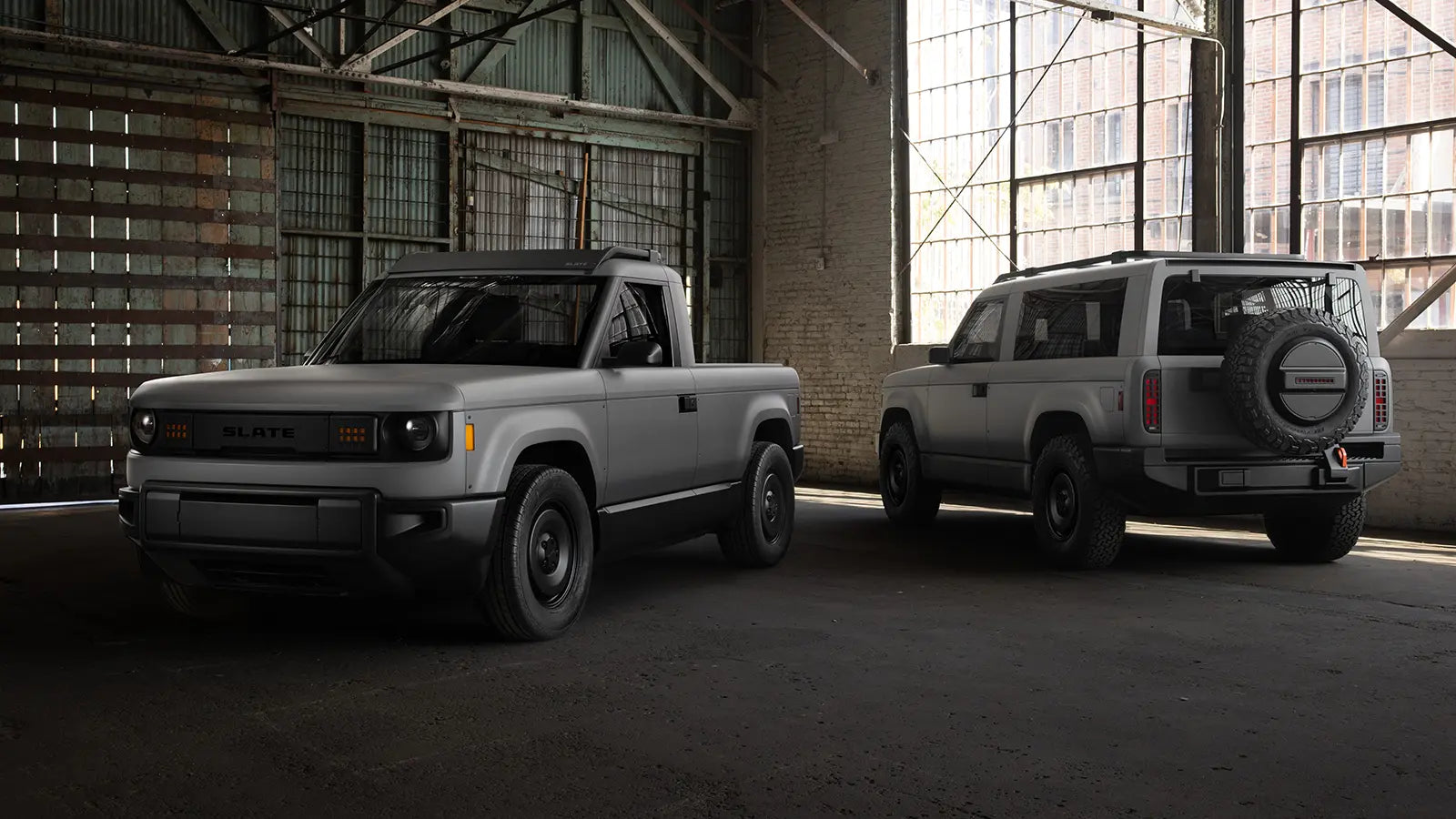
The upcoming Slate electric truck will soon be able to charge at Tesla Supercharger stations, the startup announced on Tuesday.
The news marks a significant step forward for the California-based EV newcomer, giving its customers access to the largest and most reliable fast-charging network in North America.
The Slate will roll off the production line equipped with Tesla’s North American Charging Standard (NACS) port—the same connector used on Tesla vehicles. That means Slate drivers can plug directly into Superchargers without needing an adapter or dongle, unlike many other EVs currently on the road.
The placement of the charging port was clearly designed with practicality in mind. Located **at the rear left corner—identical to Tesla’s layout—**it allows drivers to pull into Supercharger stalls naturally, without awkward cable stretches or reverse maneuvers.

Part of a Growing EV Alliance
Slate’s announcement puts it among the growing list of automakers—including Ford, Rivian, GM, and Volvo—that have partnered with Tesla to adopt the NACS standard.
These deals ensure access to over 15,000 Tesla Supercharger stations across North America, a network renowned for its uptime reliability and user-friendly interface.
For smaller EV startups like Slate, joining the NACS ecosystem provides a critical advantage. Building an independent charging network would be an enormous undertaking, while relying solely on third-party networks often leads to inconsistent experiences. Access to Tesla’s infrastructure helps bridge that trust gap for new customers who might otherwise hesitate to try a lesser-known brand.
Charging Performance and Range Expectations
While Supercharger access is a major selling point, the Slate truck isn’t built for cross-country adventures—at least not yet. The base model offers around 150 miles of range, while an optional extended battery can push that to approximately 240 miles. Charging speeds top out at 120 kW, enough for an 80% recharge in under 30 minutes.
That makes the Slate ideal for urban commutes, local businesses, and light-duty hauling, rather than long-haul road trips. Still, Supercharger compatibility ensures that when drivers need to go beyond their daily routes, reliable fast-charging is always within reach.
A Step Toward Everyday Convenience
The real benefit here isn’t about raw range—it’s about confidence and convenience.
Even if Slate owners primarily charge at home, knowing that Superchargers are an option adds flexibility for spontaneous weekend trips or unexpected errands.
In an EV market still defined by “range anxiety,” such practical details can make or break a purchase decision.
As Slate CEO Daniel Reeve put it in a brief statement:
“Our customers don’t want to think about charging—they just want it to work. NACS and Supercharger access let us deliver that seamless experience right out of the gate.”
The Bigger Picture: Standardization Wins
Slate’s adoption of NACS is also part of a larger industry trend toward charging standardization.
Until recently, U.S. EVs were split between CCS (Combined Charging System) and Tesla’s proprietary plug. The transition toward a single unified standard—backed by both private industry and government initiatives—signals a new phase in EV maturity.
As more automakers follow suit, charging infrastructure becomes less about brand loyalty and more about accessibility, which ultimately benefits all EV drivers.

Final Thoughts
For a new automaker like Slate, access to Tesla’s Supercharger network represents far more than a technical update—it’s a statement of credibility.
By aligning itself with the gold standard of EV charging, Slate positions its compact electric truck as not just another startup experiment, but a serious contender for practical, everyday electric driving.
Even if most charging happens at home, it’s the freedom to choose where and when to charge that truly defines convenience.
And now, for Slate owners, that freedom just got a lot wider.
Recommend Reading: Slate’s $27K Electric Pickup Promises Customization Like No Other


Partager:
Lucid’s Upcoming $50K Crossover Takes Aim at Tesla’s Model Y
Lucid Teams Up with Nvidia to Bring True Self-Driving Cars by 2026