



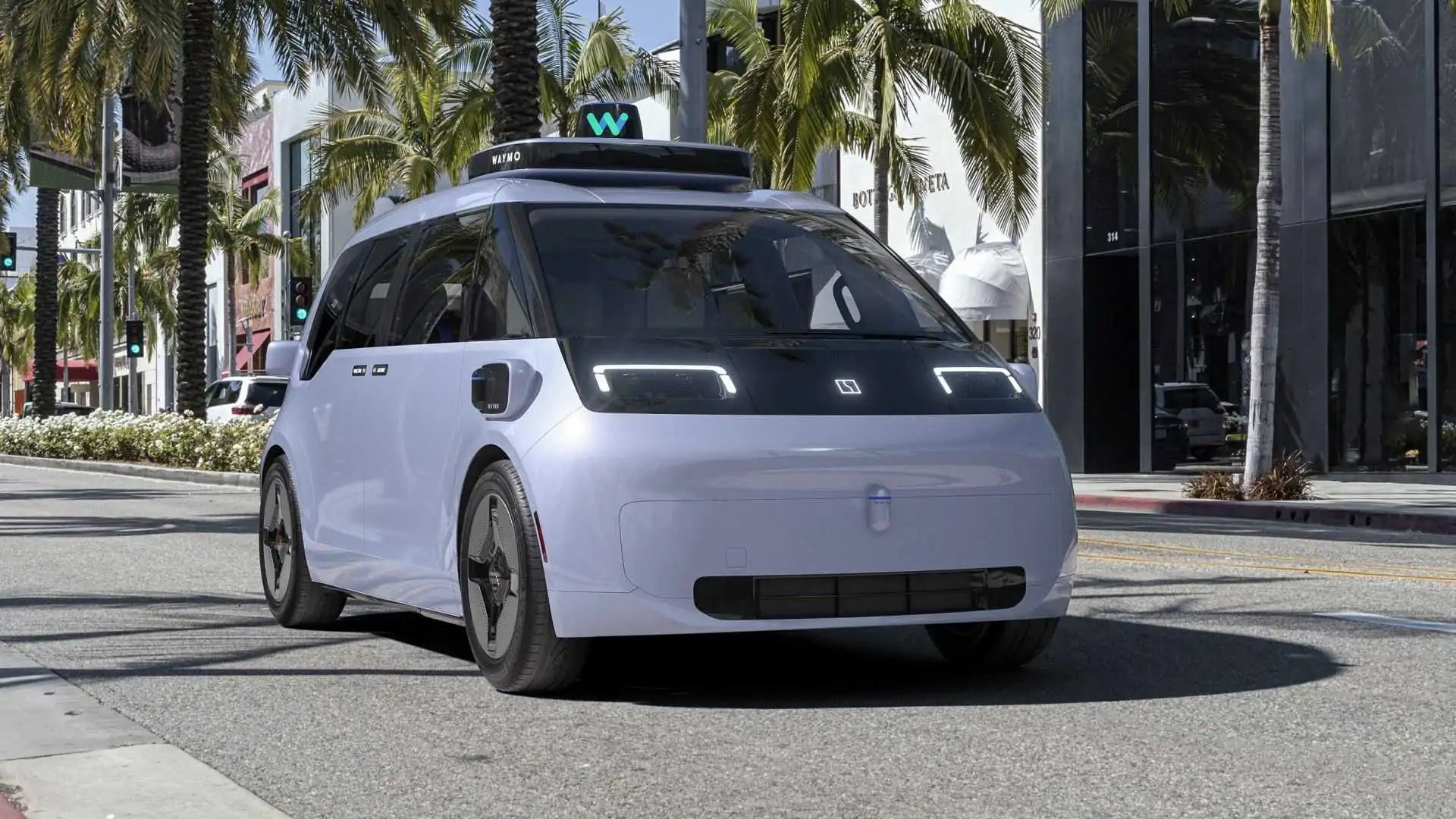
Waymo is entering a new phase of growth, and it now has a new vehicle designed specifically to support that expansion. At CES 2026, the Alphabet-owned autonomous driving company officially introduced the Waymo Ojai, a purpose-built electric robotaxi developed with Chinese automaker Zeekr.
The new vehicle marks a significant step forward for Waymo as it moves beyond its long-serving Jaguar I-Pace fleet and prepares for rapid deployment across dozens of additional cities.

A New Name for a New Era of Scale
Waymo confirmed that the Zeekr-built robotaxi will be known as the Waymo Ojai, a name drawn from a California city. According to the company, the decision reflects a desire to use a U.S.-friendly identity, since the Zeekr brand remains unfamiliar to most American riders.
The Ojai is expected to begin appearing in multiple U.S. markets throughout 2026, including cities such as Dallas, Denver, Las Vegas, Miami, and Houston. Waymo has already been spotted testing the vehicles in San Diego, where commercial robotaxi service is planned for next year.
Waymo says it aims to expand into more than 20 additional cities this year, far beyond the handful of markets it currently operates in. To achieve that scale, it will need significantly more vehicles than its existing fleet can support.
Purpose-Built Hardware Replaces the Aging I-Pace
For years, Waymo’s growth relied almost entirely on the Jaguar I-Pace, an electric crossover that was never designed for autonomous ride-hailing at scale. The Ojai changes that equation.
Although built in China by Zeekr, the vehicle—previously known internally as the Zeekr RT—is manufactured exclusively for Waymo. Once imported into the United States, it is fitted with Waymo’s sixth-generation autonomous driving software and sensor suite.
The Ojai is believed to feature an 800-volt electrical architecture, enabling much faster charging than the I-Pace. Reports also suggest a 76-kWh lithium iron phosphate battery, although Waymo has not confirmed official U.S. range figures. For ride-hailing use, overall uptime and charging speed matter far more than maximum driving range.
Fewer Sensors, Better Performance
One of the Ojai’s most notable upgrades is its streamlined sensor configuration. The vehicle uses 13 cameras, four lidar units, six radars, and external audio receivers—fewer total sensors than the I-Pace, but far more advanced ones.
Waymo says this reduction lowers manufacturing complexity and cost while improving real-world performance, particularly as sensor technology has matured. The new system is also designed to perform better in challenging environments.
Cold weather capability is a key focus. The sensor pods are engineered to resist snow and ice buildup and include onboard heaters, small wipers, and cleaning fluid systems. These features are essential as Waymo expands beyond mild-weather markets like California and Austin into colder regions.
Expanding the Fleet Mix Beyond Jaguar
While the Ojai represents Waymo’s future, the company is not retiring its existing vehicles overnight. Waymo still has around 1,000 Jaguar I-Paces on order, and many currently in service have substantial usable life remaining.
At the same time, Waymo is also adding Hyundai Ioniq 5 robotaxis, which run the same latest-generation hardware and software as the Ojai. Over time, Waymo expects its fleet to shift toward Zeekr and Hyundai vehicles, though some cities may operate a mix of all three.

Operational Lessons and Growing Pains
Waymo executives also acknowledged that scaling autonomous ride-hailing comes with challenges. A recent incident in San Francisco—where a power outage disabled traffic lights and caused robotaxis to stall—highlighted the need for more robust backend systems.
The company says it is continuously improving both its software and its operational infrastructure to handle unexpected events. Each deployment, Waymo argues, generates data that strengthens future rollouts.
With paying riders already returning regularly in existing markets, Waymo believes it is well-positioned to grow quickly—this time with vehicles designed specifically for the task.
Recommend Reading: Waymo Expands Robotaxi Service to Highways in Three U.S. Cities

Partager:
Volvo EV Sales Show Sharp Regional Divide in 2025
New York Plans East Coast’s Largest Battery-Powered EV Charging Hub