





A Break From Long-Standing U.S.–Canada Alignment
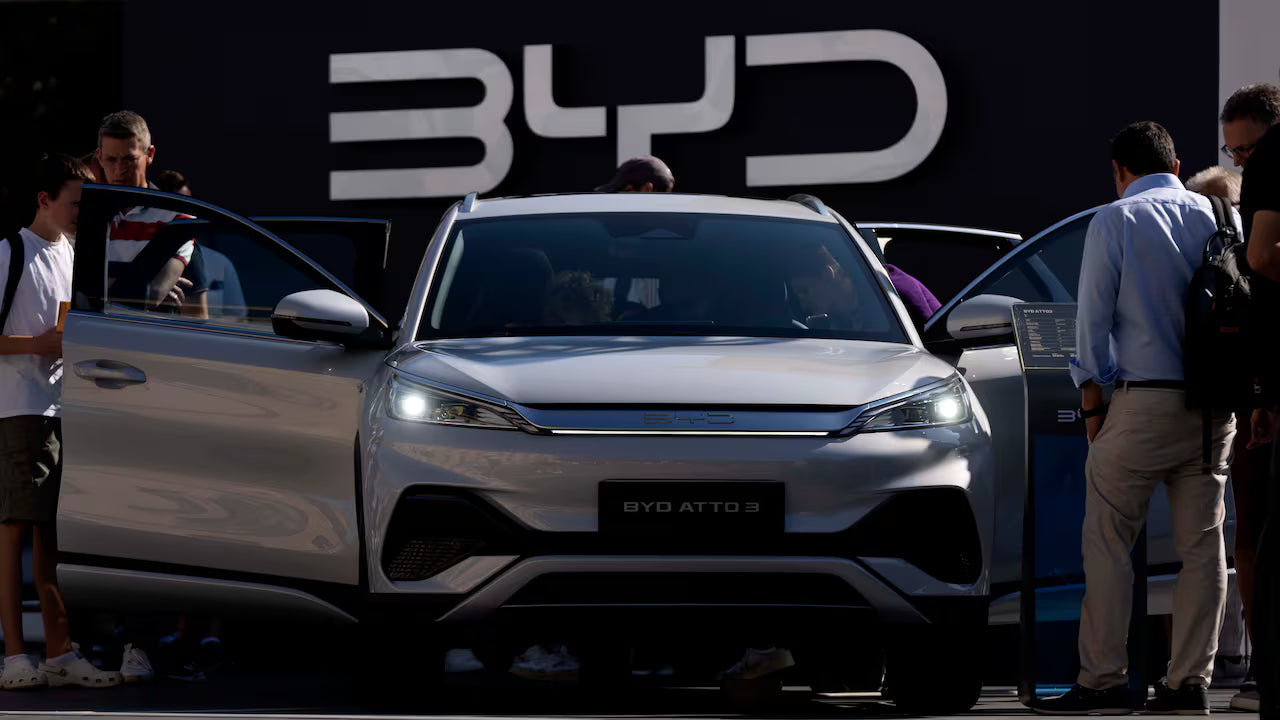
For decades, the United States and Canada have coordinated closely on automotive policy, reflecting a deeply integrated manufacturing ecosystem that spans the border. That alignment cracked this week after Canada agreed to sharply reduce its 100% tariffs on Chinese-made electric vehicles, opening the door to lower-cost imports and a new wave of competition.
The move marks one of the most significant policy divergences in North American auto trade in years. While Canadian officials framed the decision as a response to rising vehicle prices and global market realities, critics argue it risks destabilizing domestic manufacturing and straining relations with the United States.

Why Ottawa Changed Course
The tariff rollback follows months of escalating trade tensions between Canada and the U.S. under President Donald Trump, whose administration imposed sweeping tariffs and openly challenged Canada’s economic autonomy. In response, Ottawa has sought to reduce its dependence on U.S. trade policy and diversify its economic partnerships.
Under the new framework, Chinese EV imports will face a reduced tariff of 6.1%, with annual volumes capped at 49,000 vehicles initially, rising to around 70,000 within five years. Canadian officials say the goal is to bring EVs priced under CAD $35,000 (about USD $25,000) to a market where the average new car now costs roughly CAD $63,000.
Ontario Pushes Back Hard
Not everyone is convinced. Ontario Premier Doug Ford, whose province anchors Canada’s auto manufacturing base, sharply criticized the agreement. The Windsor-to-Toronto corridor employs tens of thousands of autoworkers and has already contracted in recent years.
Ford called the decision “a self-inflicted wound” that could undermine efforts to resolve U.S. auto tariffs and expose Canadian factories to subsidized foreign competition. He also echoed security concerns raised by U.S. lawmakers, suggesting Chinese vehicles could pose data and surveillance risks, potentially limiting their ability to operate in the United States.
U.S. Industry Groups Sound the Alarm
The backlash quickly spread south of the border. The American EV Jobs Alliance warned that policy instability threatens billions in North American EV investment. The group argued that automakers building vehicles in the U.S. and Canada are being undercut just as they commit capital to electrification, workforce retraining, and factory retooling.
Similarly, the Zero Emission Transportation Association cautioned that fragmented trade policy could weaken American competitiveness. The group stressed that global rivals are accelerating EV investment, while North America risks falling behind if industrial policy remains inconsistent.
How Big Is the Immediate Impact?
In the short term, the numbers remain modest. Even at full scale, Chinese EV imports would represent about 3% of Canada’s annual vehicle market, roughly in line with volumes seen before Canada imposed punitive tariffs in 2023.
But the EV landscape evolves quickly. Three to five years is a long time in this sector, and Chinese automakers are advancing rapidly in battery technology, software integration, and manufacturing efficiency. Future imports are unlikely to be bare-bones city cars; many could arrive as high-range, feature-rich EVs that directly compete with North American models.
Which Cars Could Arrive First?
While no brands have confirmed launch plans, analysts expect lower-cost models such as the BYD Seagull or Dolphin to lead the initial wave. Higher-end offerings are considered less likely under the current pricing strategy, which prioritizes affordability over premium positioning.
Canada’s largest private-sector union, Unifor, strongly opposed the move, warning it threatens domestic jobs and rewards unfair trade practices. Union leaders argue that subsidized Chinese imports could accelerate factory closures and heighten tensions with Washington.
Mixed Signals From Washington
U.S. officials were quick to criticize the decision. Transportation Secretary Sean Duffy said Canada could come to regret opening its market, while Trade Representative Jamieson Greer reiterated plans to keep Chinese EVs out of the U.S.
Yet President Trump struck a more pragmatic tone days later, saying Canada was free to pursue trade deals—so long as Chinese automakers build vehicles in North America. The contrast underscores ongoing uncertainty around the region’s long-term EV strategy.

A Turning Point for North America’s EV Market
The first Chinese EV shipments could arrive as early as spring. Whether the policy shift proves disruptive or transformative, Canada’s decision signals a major shift in how North America approaches competition, affordability, and electrification. And it may be only the first domino to fall.
Recommend Reading: Canada May Drop Tariffs on Chinese EVs to Aid Farmers and Boost Sales











Partager:
Tesla Model Y Standard Proves Efficiency Matters More Than Price
Ram 1500 REV Extended Range: First Look at the Production Truck