





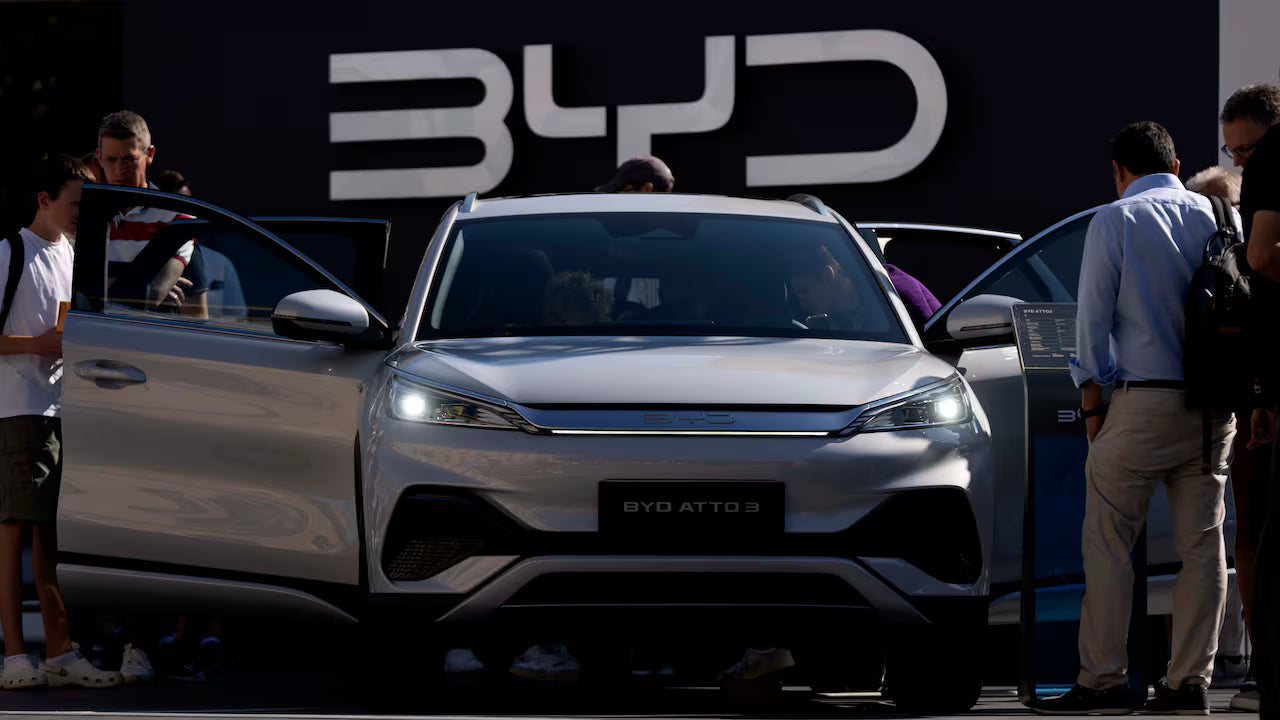
Chinese Automakers Are Running Out of Room at Home
China’s auto market is overcrowded. While a handful of brands like BYD remain profitable domestically, dozens of smaller EV makers are struggling to reach sustainable sales volumes. For many of them, exporting vehicles has become less a growth strategy and more a necessity.
Brands facing declining sales at home increasingly view overseas markets as a way to absorb excess production. However, not all Chinese automakers are equally prepared for global competition. Smaller players often lack the capital, product maturity, and after-sales infrastructure needed to succeed long term outside China.

Australia as a Testing Ground for Chinese EV Expansion
Australia offers a useful case study. Over the past decade, Chinese brands have steadily expanded their footprint, taking advantage of gaps left by Ford and General Motors after they exited local manufacturing.
According to Cox Automotive Australia and New Zealand, Chinese brands now account for roughly 17% of Australia’s total car market, up from just 1.7% in 2019. That growth accelerated after the pandemic as demand rose for affordable and electrified vehicles.
Australia and Canada share similarities as developed, sparsely populated countries with relatively small but open automotive markets, making comparisons especially relevant.
Why Chinese EVs Gained Traction So Quickly
Chinese manufacturers entered Australia earlier than many Western markets. Brands such as Great Wall Motors and Chery arrived in the late 2000s, stumbled on quality and safety, then regrouped.
Chery’s exit in 2015 due to poor crash ratings became a learning moment. When the brand re-entered in 2023, it did so with better-designed, better-equipped vehicles aligned with global safety standards. That shift reflects a broader industry trend: Chinese automakers are no longer exporting experimental products, but refined ones.
Today, 77% of EVs sold in Australia in 2025 were manufactured in China, including models from non-Chinese brands. In total, 22 Chinese brands sell over 30 EV models, accounting for 41% of the country’s EV market.
EV and Plug-in Hybrid Dominance
While Chinese brands sell gasoline and hybrid vehicles in Australia, their strongest impact is in electrification.
Australia’s EV penetration sits at 8.6% of total vehicle sales, similar to the U.S., but with far more brand diversity. BYD dominates plug-in hybrids, capturing 68% of that segment, while models like the BYD Sealion 7 rapidly climbed EV sales rankings.
Chinese brands are not limited to small cars. The BYD Shark became Australia’s most popular non-fleet pickup, outperforming the Toyota Hilux in private sales despite Toyota controlling roughly 20% of the overall market.
Not Every Brand Will Survive Long Term
Despite the momentum, analysts caution against assuming unlimited growth. Selling vehicles is only the first step. Long-term success depends on service networks, parts availability, dealer quality, and brand trust.
Chinese automakers that invest beyond wholesale exports are pulling ahead. Great Wall Motors, once criticized for poor build quality, is now Australia’s seventh best-selling brand. Chery has also posted triple-digit growth since returning, even if much of it comes from gasoline models.
Still, experts expect consolidation. Australia cannot support unlimited brands indefinitely, and China’s excess capacity will not disappear overnight.
What This Means for Canada
Canada presents a more controlled environment. Import limits and tariffs restrict how many Chinese vehicles can enter the market, starting at 49,000 units under a lower tariff rate and rising to 70,000.
Unlike Australia, Canada’s policies discourage dumping and force manufacturers to be selective. This means fewer brands, more focused product lineups, and higher stakes for those that enter.
While it remains unclear which brands will arrive first, Australia’s experience suggests that well-prepared Chinese EVs could find strong demand once they do.

Australia Offers a Clear Warning—and a Clear Signal
Australia shows both the opportunity and the risk. Chinese EVs can win market share quickly when affordability meets acceptable quality. But only brands willing to invest beyond exports will last.
When Chinese EVs reach Canada, success is likely—but only for those ready to commit for the long haul.
Recommend Reading: Canada’s Tariff Shift Cuts Prices on Chinese-Built EVs, Starting With Lotus









Partager:
Tesla Drops Lane-Centering From New Model 3 and Model Y Orders in the U.S.
GM Simplifies EV Charging by Bringing Electrify America Into Its Apps