



Hyundai and Kia Post Record February Results
February marked a milestone month for Hyundai, which delivered 65,677 vehicles in the United States, representing a 6% increase compared with the same month last year and setting a new February record for the brand. Its affiliate Kia achieved a similar feat, reporting 66,005 units sold, up 4% year over year.
A significant portion of Hyundai’s volume came from electrified models, a category that includes hybrids, plug-in hybrids, and battery-electric vehicles. The automaker recorded 22,357 electrified sales, a 56% jump from a year earlier. Hybrid variants of high-volume models such as the Sonata, Santa Fe, Tucson, and Elantra were the primary contributors to that growth, underscoring continued consumer appetite for gasoline-electric combinations.

Ioniq 5 Defies EV Segment Weakness
While hybrid demand remains robust, fully electric vehicles have faced a more challenging environment since the expiration of the federal EV tax incentive. Across much of the industry, battery-electric sales softened after buyers rushed to qualify before the credit ended.
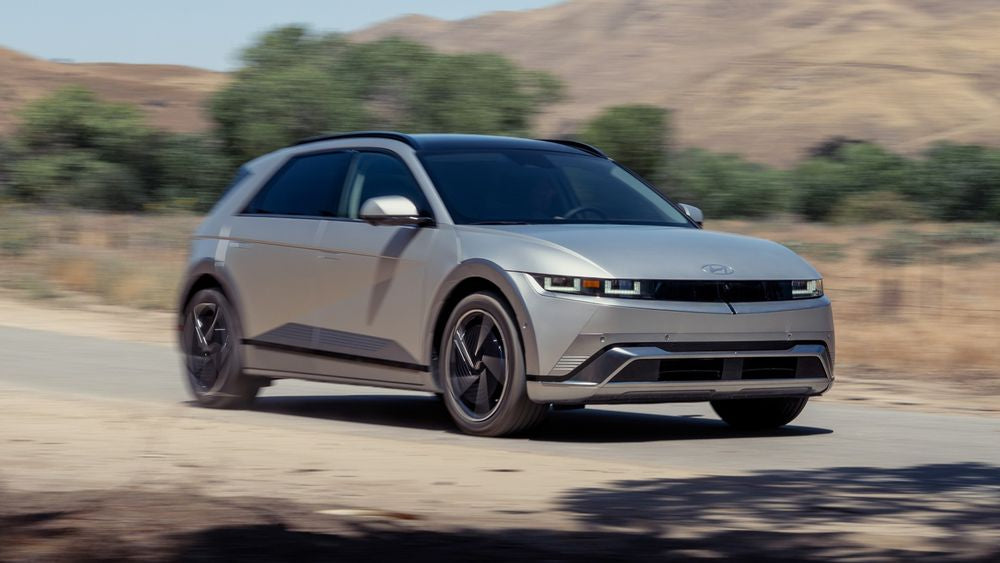
Against that backdrop, the Hyundai Ioniq 5 stood out. The company sold 3,239 units of the electric crossover in February, reflecting a 33% year-over-year increase and its strongest monthly showing in five months.
Although this figure remains below the surge recorded in September—the final full month when the federal incentive was available—it represents a meaningful rebound from October, when EV sales broadly contracted following the incentive’s conclusion.
Pricing and Incentives Play a Role
Hyundai adjusted its strategy quickly after the tax credit lapsed. The day after the program ended, the automaker reduced the starting price of the Ioniq 5 by as much as $9,800, depending on configuration. In addition to that price revision, the brand introduced 0% APR financing for qualified buyers, competitive lease terms, and dealer-level discounts.
These measures appear to have stabilized demand for the Ioniq 5, even as the broader EV market adjusts to the absence of federal support. However, the performance of other electric models in Hyundai’s lineup tells a more subdued story.
In February, Hyundai sold 229 units of the Ioniq 6 sedan and 505 units of the Ioniq 9, volumes that remain modest relative to the Ioniq 5’s total.
Kia Sees Similar Hybrid Momentum
Kia’s February results reflect a comparable pattern. The brand reported strong overall growth and a 53% surge in hybrid sales, though it does not disclose breakdowns by individual model for those powertrains.
Battery-electric deliveries at Kia, however, remained limited. The company recorded 600 sales of the EV6 and 819 units of the EV9 during the month. These totals suggest that, as with Hyundai, hybrids are currently driving the majority of electrified growth.

A Sales Mix That Mirrors Toyota
Taken together, the February figures reveal a shifting composition within the Korean automakers’ portfolios. Hybrids are accounting for an expanding share of total volume, while fully electric vehicles continue to search for stable footing in a post-incentive market.
This distribution increasingly resembles the strategy employed by Toyota, where hybrid models form the backbone of electrified sales and EVs occupy a smaller—but strategically important—portion of the lineup.
Importantly, both Hyundai and Kia maintain broad electric portfolios alongside their hybrid offerings. The central question is whether February’s improvement for the Ioniq 5 signals renewed organic demand for EVs or reflects the short-term impact of pricing adjustments and promotional incentives.
For now, hybrids remain the clearest growth engine. Yet the Ioniq 5’s rebound suggests that competitively priced electric vehicles can still attract buyers, even without federal subsidies.
Recommend Reading: Hyundai Enters the Robotaxi Race With Motional and the Ioniq 5


Partager:
2026 Toyota C-HR EV Review: Strengths and Weaknesses
2026 Toyota RAV4 Plug-In Hybrid Price and Specs Update