





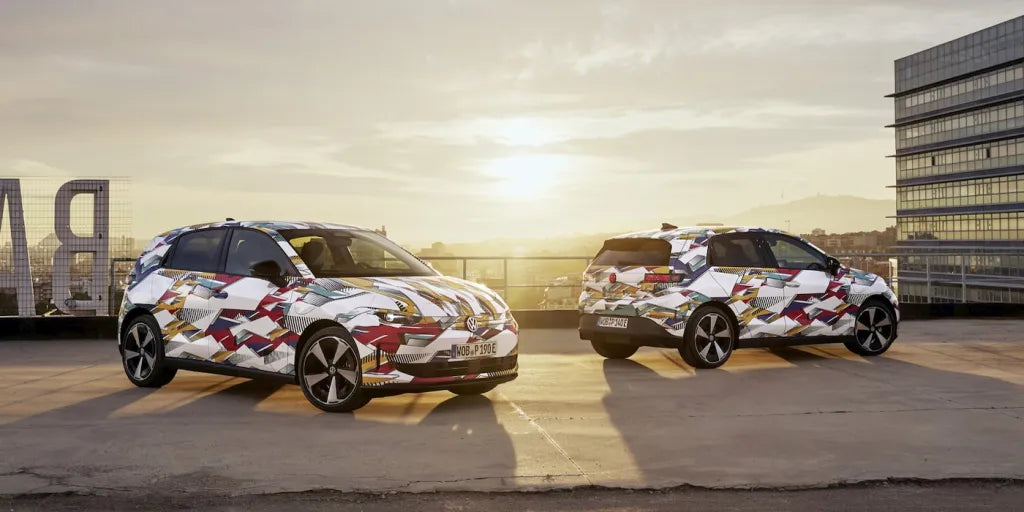
Volkswagen appears to be recalibrating its electric vehicle strategy, and the upcoming ID. Polo may be the clearest signal yet. Designed to compete directly with affordable European electric hatchbacks, the ID. Polo focuses on familiar design, usable space, and a lower entry price, rather than bold experimentation.
Set to launch next spring with a starting price of around €25,000, the ID. Polo targets a growing segment that prioritizes practicality over novelty. Early prototype drives suggest Volkswagen is returning to fundamentals that once defined its small cars.

A More Conventional Approach to Small EV Design
Unlike earlier ID-branded models, the ID. Polo avoids polarizing styling cues. Instead, it adopts proportions and surfaces that closely resemble Volkswagen’s long-running combustion hatchbacks, making the transition to electric less visually disruptive.
This approach appears intentional. Volkswagen’s earlier EVs leaned heavily into futuristic design, which helped establish a new identity but may have alienated traditional buyers. With the ID. Polo, the brand is clearly reducing visual friction for mainstream customers.
The car is built on a front-wheel-drive version of the MEB platform, chosen primarily for cost efficiency. This setup lacks the independent rear suspension found on some competitors, including the Renault 5 E-Tech, but Volkswagen appears confident that careful tuning can offset the hardware limitations.
Interior Focused on Space and Everyday Usability
Early impressions suggest the ID. Polo’s cabin is one of its strongest points. Despite its compact footprint, rear-seat space is generous for the class. Test drivers over six feet tall report fitting comfortably behind their own driving position, which is not always the case in direct rivals.
Volkswagen has also leaned back toward physical controls, a notable departure from the touch-heavy layouts seen in earlier ID models. While some buttons were hidden during prototype testing, the intention is clear: usability over minimalism.
One standout feature is the panoramic glass roof with an electrically retracting shade, a detail often missing even in more expensive electric vehicles. This adds a premium feel without significantly increasing complexity.
Ride Comfort and Driving Character
Despite its simpler rear suspension, the ID. Polo reportedly delivers a composed ride. On rough gravel surfaces, the car remains stable and controlled, absorbing imperfections better than expected. This suggests Volkswagen prioritized damper tuning to maintain comfort across varying road conditions.
On paved roads, the car feels light and predictable through corners, aligning well with European expectations for a subcompact hatchback. While it is not positioned as a performance model, the chassis appears capable enough to support a future GTI-branded electric variant, which Volkswagen has already confirmed for later in the decade.
Positioned Against the Renault 5 E-Tech
The ID. Polo’s most direct competitor is the Renault 5 E-Tech, a car that has gained strong momentum through nostalgic design and competitive pricing. Volkswagen’s response is not to out-style Renault, but to out-balance it.
Where the Renault leans heavily on retro charm, the ID. Polo emphasizes interior space, ride comfort, and traditional ergonomics. It may not feel as playful at first glance, but it could appeal more strongly to buyers seeking a familiar daily driver rather than a design statement.

A Sign of Volkswagen’s Broader EV Reset
More than just a new model, the ID. Polo reflects a broader shift within Volkswagen. The brand appears to have accepted that electric vehicles no longer sell on novelty alone. Price sensitivity is higher, and buyers expect EVs to feel like natural replacements for gasoline cars, not experimental departures.
By simplifying its EV formula and focusing on affordability and usability, Volkswagen is signaling that its next phase of electrification will be quieter, more pragmatic, and potentially more successful.
Recommend Reading: Volkswagen Pauses ID. Buzz Sales in the U.S. for 2026









Share:
Nissan Introduces 2026 Rogue Plug-In Hybrid With Key Compromises
EV Buyers May See Deeper Discounts as Unsold 2024–2025 Models Pile Up