


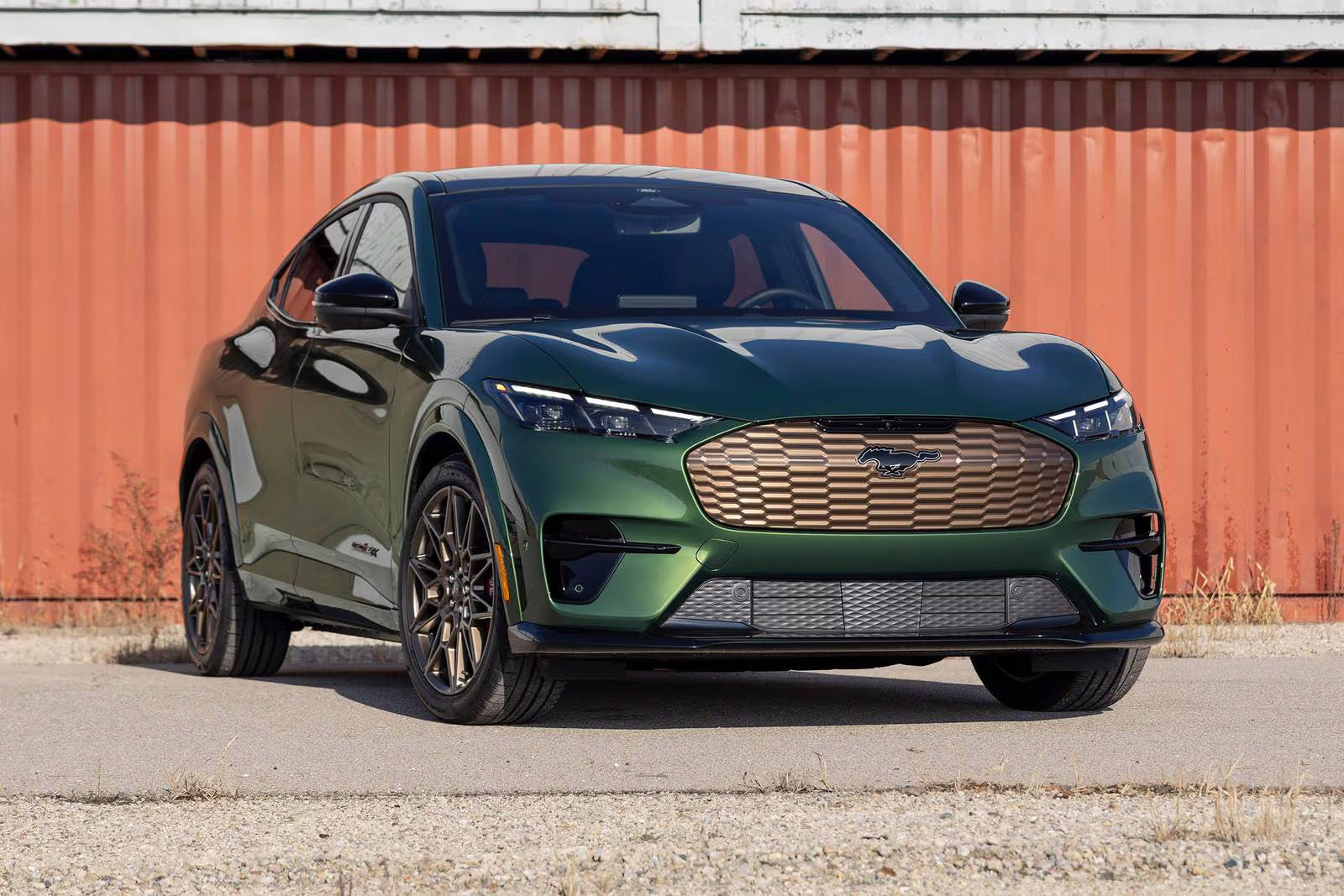
Ford is reportedly weighing a potential partnership with Chinese automotive giant Geely, a move that would underscore a broader shift in the global auto industry. As legacy manufacturers struggle to close the technology and cost gap with Chinese electric vehicle leaders, collaboration is increasingly viewed as a pragmatic—if politically sensitive—path forward.

Talks Reflect Ford’s Growing Interest in Chinese EV Expertise
According to multiple sources cited by Reuters, Ford has held discussions for several months with Geely Automotive Holdings, the multinational group behind brands such as Volvo, Polestar, Zeekr, Lotus, and Lynk & Co. The talks are said to involve a range of possible cooperation areas, though no formal agreement has been announced.
Ford’s interest is not entirely surprising. The company’s leadership has been openly impressed by the pace and sophistication of Chinese EV development. With China now setting the benchmark for cost efficiency, software integration, and speed to market, Western automakers are increasingly studying Chinese players as potential partners rather than just competitors.
Technology Sharing and Manufacturing Are Central Themes
People familiar with the discussions say the conversations focus on two main areas. The first involves shared vehicle technologies, including platforms and advanced driver-assistance systems. Such cooperation could support Ford’s efforts to develop more affordable electric vehicles, including its planned sub-$30,000 electric pickup and next-generation EV architecture.
The second area centers on manufacturing capacity in Europe. Sources indicate that Geely may be interested in using Ford’s underutilized production facilities to expand its global footprint, particularly within the European Union.
Spain Emerges as a Strategic Manufacturing Option
Ford’s plant in Valencia, Spain, has emerged as a likely candidate for any potential manufacturing arrangement. The facility currently builds the Ford Kuga crossover and has an annual capacity of roughly 450,000 vehicles, making it Ford’s largest factory outside the United States.
The Valencia site has already been under internal review as Ford evaluates future production plans, including multi-energy vehicle programs. Allowing a partner to use excess capacity could help Ford improve plant utilization while offering Geely a way to localize production in Europe.
Tariffs and Regulation Add Strategic Pressure
If a deal were to move forward, local European production could help Geely sidestep EU tariffs on Chinese-built vehicles, which can reach nearly 38%. For Chinese automakers facing rising trade barriers, partnerships with established Western manufacturers offer a viable workaround.
However, regulatory hurdles remain significant—especially in the United States. Chinese connected-car software is currently restricted, and imports face steep tariffs. Any expansion into the U.S. market would likely require substantial localization and regulatory adaptation.
A Broader Industry Pattern Is Taking Shape
A potential Ford–Geely partnership would fit into a growing trend of cross-border collaboration. Volkswagen has aligned with Xpeng on EV technology, Stellantis has taken a major stake in Leapmotor, and Ford itself is licensing battery technology from CATL to produce lithium iron phosphate cells domestically.
The balance of power has clearly shifted. Where Chinese automakers once relied on joint ventures to learn from Western brands, established manufacturers are now turning to Chinese firms for cost discipline, software expertise, and EV scale.

Uncertainty Remains, But the Direction Is Clear
Both Ford and Geely have declined to confirm specific plans, and Ford has emphasized that exploratory talks do not always lead to formal partnerships. Still, recent actions—such as Ford’s CATL battery agreement—suggest the company is willing to pursue unconventional strategies to stay competitive.
If a partnership with Geely does materialize, particularly one that extends beyond Europe, political scrutiny would be inevitable. Yet from an industry perspective, such alliances may become less the exception and more the norm as automakers adapt to a rapidly changing EV landscape.
Recommend Reading: Ford Plans Eyes-Off Driving for Affordable EV Platform by 2028


Share:
BMW i3 Sedan Moves Into Pre-Production, Signaling a New EV Era for the 3 Series
Solid-State Battery Claims Face Reality Check as Verge Motorcycle Deliveries Slip