



Ford Motor Company is making a dramatic pivot in its electric vehicle strategy, pulling back from several high-profile EV projects while placing a critical bet on a new low-cost electric platform. At the center of this strategy is a $30,000 electric pickup being developed by a semi-independent internal team, a project Ford executives increasingly describe as essential to the company’s long-term survival.

Ford Scales Back Its Current EV Ambitions
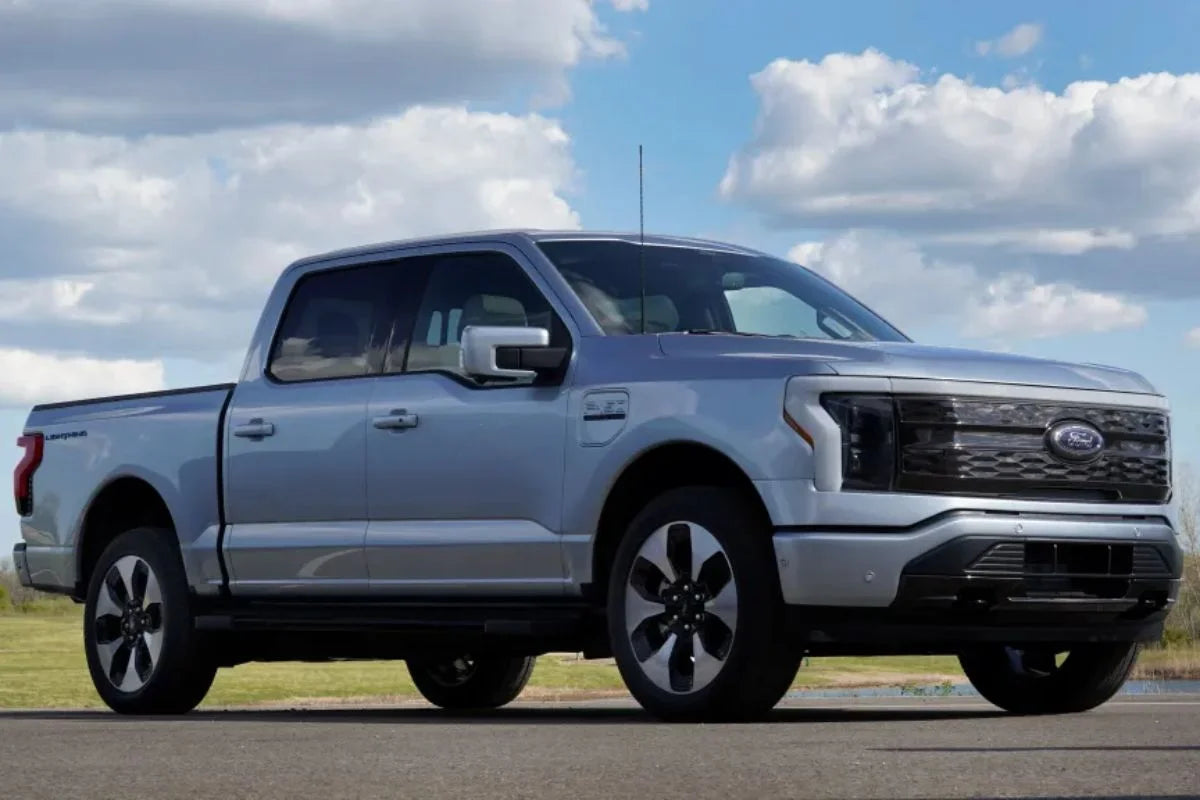
Ford’s latest announcements mark a sharp contrast with its public warnings about the global EV threat, particularly from China. The automaker is ending production of the current F-150 Lightning, abandoning plans for a next-generation all-electric version, canceling an electric commercial van, and refocusing its Tennessee EV facility into a conventional truck plant.
According to Ford, EV demand and pricing realities failed to align with earlier forecasts. Executives acknowledged that the current EV lineup struggles to achieve profitability, forcing the company to retrench even as global competition accelerates.
The $30,000 Electric Truck Takes Center Stage
Despite the pullback, Ford insists it is not abandoning the electric future. Instead, it is consolidating its efforts around a “Universal EV Platform”, designed to support affordable, scalable electric vehicles.
Company leaders say the first model on this platform will be a compact electric pickup priced around $30,000, with additional variants to follow. The goal is to deliver strong range, usable performance, and pricing that can compete globally, including against Chinese manufacturers known for cost efficiency.
Ford executives describe this platform as make-or-break, with future EV growth hinging entirely on its success.
Why Ford Created a Skunkworks EV Division
To execute this strategy, Ford turned to an unconventional solution: a California-based skunkworks team operating outside traditional corporate structures.
The division is led by Doug Field, a veteran executive with experience at Ford, Apple, Tesla, and Segway. His mandate is to rethink vehicle development from the ground up, borrowing ideas from the tech sector rather than legacy automaking.
The skunkworks team was deliberately isolated to avoid internal bureaucracy. Other Ford employees reportedly cannot access the facility, underscoring how seriously the company views the need for speed, secrecy, and autonomy.
Faster Development Is the Only Path Forward
One of the core goals of the skunkworks effort is cutting development time from seven years to as little as three or four. That timeline more closely mirrors Chinese automakers, which have reshaped expectations around speed and cost.
Ford is also rethinking manufacturing. Vehicles on the new platform will be built using a redesigned production system at its Louisville, Kentucky facility following a $2 billion investment. The company aims to modernize its approach in a way comparable to Tesla’s modular production concepts.
Competing in a World Dominated by Cost Efficiency
Affordability is no longer optional. Chinese automakers are expanding rapidly across global markets, offering feature-rich EVs at prices legacy brands struggle to match.
Ford acknowledges that without a dramatic cost reset, it cannot remain competitive. The Universal EV Platform is intended to deliver software-defined vehicles that can be reused across multiple models, reducing development and production costs.
Political and Market Headwinds at Home
Ford’s EV reset is also shaped by changes in U.S. policy. Looser fuel efficiency rules, reduced EV incentives, and higher tariffs have altered the profitability equation. Executives admitted that earlier assumptions about EV adoption—once projected at nearly half of all sales by 2030—no longer hold.
As a result, Ford is leaning into extended-range electric trucks, including a future F-150 Lightning variant with a gas-powered range extender promising over 700 miles of total range.

A High-Stakes Gamble on Reinvention
The skunkworks program represents a tacit admission that Ford’s traditional approach is no longer sufficient. By separating innovation from the core organization, Ford is attempting a reset rather than an incremental fix.
The first electric pickup from this program is not expected until 2027, leaving little room for error. If Ford delivers on its promises, it could reestablish relevance in the global EV market. If not, the company risks falling further behind in an industry that is moving faster than ever.
Recommend Reading: Ford’s EV Retreat Signals Opportunity for Chinese Automakers


Share:
Volkswagen Tests Steering-Free Robotaxi in Wolfsburg Pilot Program
Ford Scales Back EV Ambitions at a Cost of Nearly $20 Billion