



Ford Motor Company is paying a steep price for recalibrating its electric vehicle strategy. After years of aggressive investment in battery-electric vehicles, the automaker has confirmed a major pullback—one that will cost nearly $19.5 billion as it shifts toward hybrids, extended-range EVs, and conventional gasoline models.
The move reflects a broader reassessment of EV demand in the U.S. market, where adoption has grown more slowly than Ford once projected. While the company insists this is not an exit from electrification, it is a costly acknowledgment that its earlier expectations were overly optimistic.

A Market That Didn’t Move as Fast as Planned
Ford previously planned for EVs to account for roughly 45% of U.S. vehicle sales by 2030, a scenario that now appears unrealistic. Today, electrified vehicles—including mild hybrids, plug-in hybrids, and battery-electric models—make up about 17% of Ford’s global sales volume.
Instead of doubling down on a pure EV roadmap, Ford is now pivoting toward a more mixed portfolio. That includes hybrids, extended-range electric vehicles (EREVs), and lower-cost combustion models, which executives say better align with current customer demand.
This strategic shift marks a clear departure from Ford’s earlier commitment to an all-electric future, particularly for large trucks and commercial vehicles.
Major EV Programs Are Being Wound Down
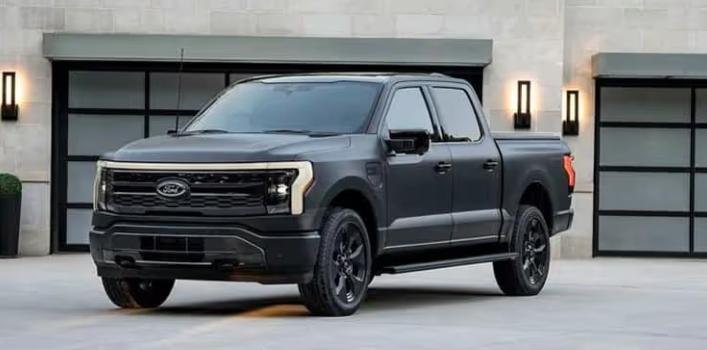
As part of this reset, Ford has confirmed a series of high-profile cancellations and changes. The all-electric F-150 Lightning has ended production, and its planned next-generation successor has been scrapped. Instead, the next Lightning will adopt an extended-range setup using a gasoline engine.
Ford has also canceled a fully electric commercial van and redirected investment away from large-scale battery production. One battery plant originally intended to support EV growth will now be repurposed to produce energy storage systems for AI data centers.
Despite solid sales performance from the Lightning and Mustang Mach-E, both vehicles have proven deeply unprofitable, reinforcing the company’s decision to step back from expensive, low-margin EV programs.
The $19.5 Billion Price of Changing Course
Reversing direction in the auto industry is rarely cheap. Ford estimates that its EV retreat will result in approximately $19.5 billion in special charges over the next several years.
According to the company’s latest financial guidance, $8.5 billion of that total comes from EV-related asset write-downs, with most charges landing in the near term. An additional $5.5 billion in cash costs will be spread through 2027, with a large portion expected next year.
These expenses underscore how deeply Ford had committed to its original EV strategy—and how costly it is to unwind.
Politics, Incentives, and Shifting Consumer Behavior
Ford CEO Jim Farley has framed the pivot as a response to real-world buying behavior rather than ideology. He has emphasized that customers remain sensitive to price, range, and utility, especially as EV incentives disappear and regulatory certainty weakens.
The political environment has also shifted dramatically. Federal EV tax credits are no longer guaranteed, fuel economy rules have been relaxed, and automakers face a far less predictable regulatory outlook than they did just a few years ago.
In that context, Ford’s move reflects a growing industry belief that hybrids may be the most practical bridge between gasoline vehicles and full electrification.

EVs Aren’t Dead—But the Timeline Has Changed
Despite the retrenchment, Ford insists it has not abandoned EVs altogether. The company is still investing in a new, low-cost EV platform, anchored by a $30,000 electric pickup planned for 2027.
Rather than betting everything on large, expensive battery packs, Ford is betting that affordability and scale will define the next phase of EV adoption. Whether that bet pays off remains uncertain.
For now, Ford’s retreat highlights a sobering reality: the transition to electric vehicles is proving slower, costlier, and more complex than many automakers anticipated.
Recommend Reading: Ford’s EV Retreat Signals Opportunity for Chinese Automakers


Share:
Ford Bets on a $30,000 Electric Truck to Reset Its EV Strategy
Jaguar Commits to an All-Electric Future Despite Market Doubts