



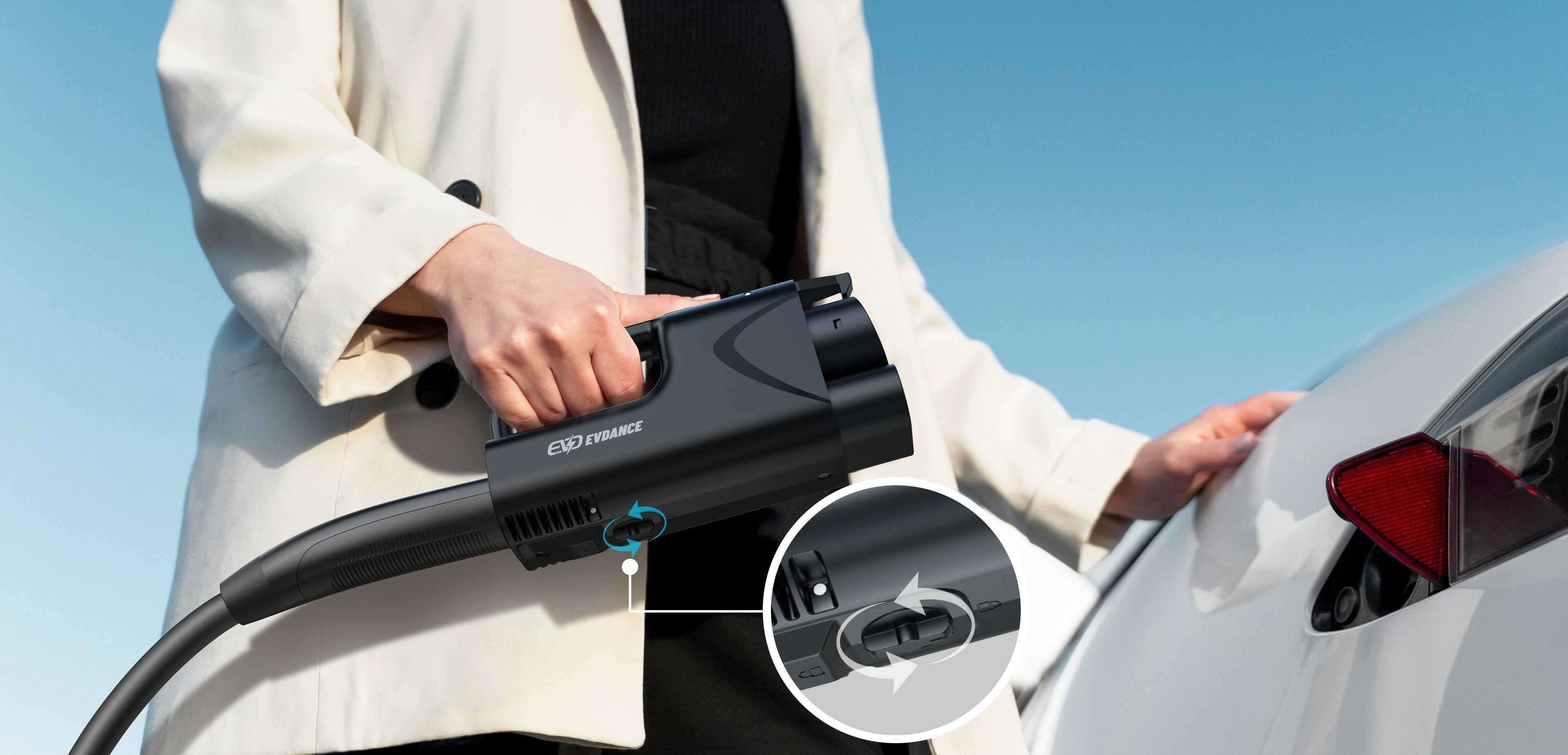
Why EV Charging Adapters Are Crucial
The electric vehicle landscape in North America is evolving rapidly. With Tesla’s NACS standard gaining adoption by legacy automakers and charging networks continuously expanding, EV drivers now need multiple adapters to access the full range of chargers.
Even if a charging station appears operational, it may not match your car’s port. Carrying the right adapters ensures you are never stranded with a dead battery, regardless of network upgrades or location.
CCS1: The Standard for Non-Tesla EVs
The CCS1 (Combined Charging System 1) connector remains the most common on non-Tesla EVs and plug-in hybrids in North America. It supports both DC fast charging through its large bottom pins and AC Level 1/Level 2 charging via the J1772 section at the top.
If your car has a CCS1 port, you will need:
-
A NACS to CCS1 adapter for using Tesla Superchargers or other NACS-equipped fast chargers.
-
A NACS to J1772 adapter for Tesla Destination Chargers or AC stations with NACS connectors.
For standard CCS1 or J1772 stations, no adapter is needed. Many drivers find that carrying a single NACS to CCS1 dongle covers most fast-charging scenarios.

J1772: AC Charging for Older or Plug-in Hybrid EVs
The J1772 connector is included within the CCS1 interface but remains relevant for cars limited to AC charging only. Older EVs and most plug-in hybrids cannot use DC fast charging, relying solely on Level 1 or Level 2 AC power.
To charge at a Tesla Destination Charger or other NACS-equipped AC charger, a NACS to J1772 adapter is required. Importantly, J1772 ports cannot use DC fast charging, so a NACS to CCS1 adapter won’t work in this case.

NACS: Tesla’s North American Charging Standard
All modern Tesla vehicles and an increasing number of non-Tesla EVs now use NACS ports. This connector allows DC fast charging at Tesla Superchargers and AC charging at Tesla Destination Chargers without an adapter.
However, to charge at CCS1-equipped stations like Electrify America or EVGo, you will need a CCS1 to NACS adapter. For Level 2 AC stations with J1772 plugs, a J1772 to NACS adapter is necessary.
Non-Tesla EVs now coming with NACS ports include the 2026 Rivian R1T/R1S, 2026 Nissan Leaf, 2026 Cadillac Optiq, 2025 Hyundai Ioniq 5, 2026 Hyundai Ioniq 9, and 2025 Lucid Gravity, increasing the demand for adapters.

CHAdeMO: Legacy DC Fast Charging
CHAdeMO was an early fast-charging standard but is now declining in North America. Older vehicles like the first-generation Nissan Leaf or Mitsubishi Outlander PHEV still use it.
Adapters such as CCS1 to CHAdeMO exist, allowing these cars to access modern chargers, but they are expensive and not officially recognized by automakers. CHAdeMO ports cannot be used for Level 1 or Level 2 charging, and drivers should use adapters at their own risk.
Where to Buy Charging Adapters
Most automakers sell manufacturer-approved adapters through dealerships or official websites. Third-party adapters are widely available but may void warranties if a failure occurs during charging. Trusted third-party brands include EVDANCE, A2Z, and Lectron.
A quality adapter generally costs around $200, a small price for reliability, safety, and peace of mind. BMW is the only manufacturer currently recommending a third-party adapter with an interlock device.
Key Takeaways for EV Owners
Keeping a set of well-chosen charging adapters ensures access to virtually any station in North America. Knowing the right adapter for CCS1, J1772, NACS, or CHAdeMO ports protects your vehicle warranty and battery health, making long trips and urban charging far less stressful.
Recommend Reading: Understanding EV Adapters: Bridging Compatibility Across Charging Standards
Partager:
Rivian Expands Hands-Free Driving and Adds Key Software Upgrades