





Electric Cars Gain Share Despite Overall Market Dip
While the U.S. electric vehicle sector faces political uncertainty and shifting regulatory priorities, Europe is moving in the opposite direction. January sales data shows battery-powered models expanding their footprint across the European Union, even as the broader car market contracted.
According to figures released by the European Automobile Manufacturers’ Association (ACEA), fully electric vehicles captured 19.3% of EU registrations in January. That represents a five-percentage-point increase compared with 14.9% during the same month last year.
This growth occurred despite a 3.9% decline in total vehicle registrations across the region. In other words, EV adoption advanced even as overall demand softened.
Combustion Cars Continue to Lose Ground
The changing powertrain mix underscores a structural shift. Conventional gasoline and diesel vehicles without hybrid assistance fell sharply, with their combined market share dropping to 30.1%, down from 39.5% a year earlier.
Hybrid vehicles retained the largest slice of the market at 38.6%, reflecting continued consumer interest in transitional technologies. However, the momentum clearly favors fully electric models, which are steadily narrowing the gap.
The numbers suggest that Europe’s transition toward lower-emission mobility remains intact, even amid economic headwinds.
Volkswagen Holds Lead as Competition Intensifies
Among manufacturers, Volkswagen remained Europe’s top seller of fully electric cars in January, delivering 17,230 units. Yet the company’s volume declined 17% year over year, highlighting intensifying competition.
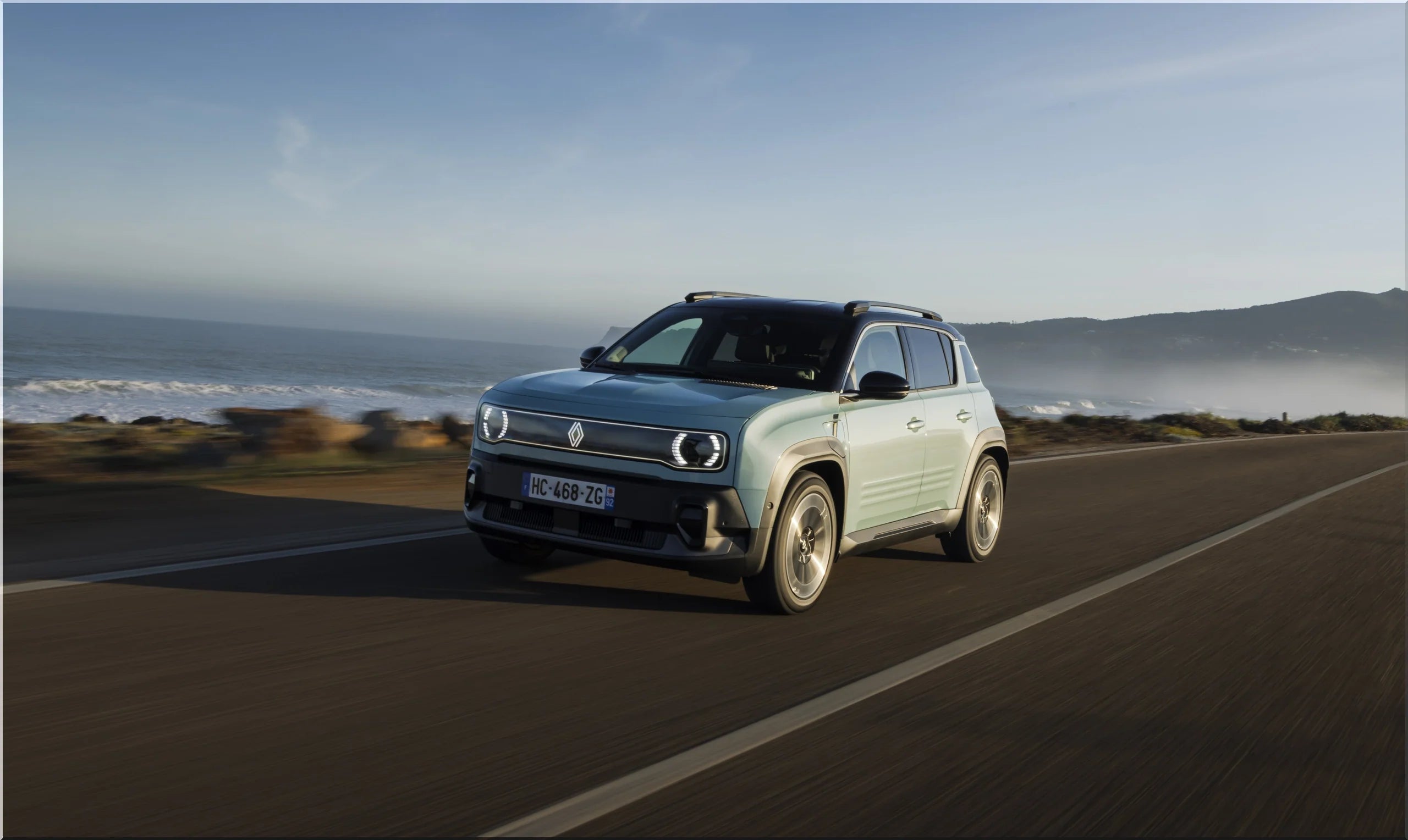
Renault recorded one of the strongest performances. The French automaker rose five positions in the rankings, posting 14,447 EV deliveries, a 64% increase compared with the previous year. Its expanding portfolio of accessible electric models has played a central role in that climb.
New offerings such as the Renault 5 E-Tech, Scenic E-Tech, and Renault 4 E-Tech are positioned for broad appeal rather than niche luxury demand. Their pricing and design strategy target mainstream buyers seeking practical alternatives to combustion vehicles.

Tesla Slips as Chinese Brands Advance
In contrast, Tesla experienced another month of contraction in the region. The company delivered 7,794 vehicles in January, reflecting a 17% year-over-year decline and placing it tenth in the rankings. Its share of the European EV market has steadily narrowed as competitors introduce updated products.
At the same time, Chinese automaker BYD nearly doubled its European sales. The company recorded 8,711 registrations, representing a 94% increase from a year earlier and allowing it to surpass Tesla in monthly volume.
This expansion occurred despite the European Union’s 27% tariff on EVs manufactured in China. The figures indicate that pricing and product positioning remain powerful competitive tools, even in a more restrictive trade environment.
Affordability Drives Demand
A closer look at product strategies reveals a common theme: cost matters. Several of the fastest-growing models in Europe sit at lower price points than many American-market EVs.
BYD’s compact Dolphin Surf—also marketed as the Seagull in some regions—starts at approximately €18,990 in France. Renault’s updated small cars also focus on attainable pricing. The revived Twingo begins around €15,870, while the Renault 5 opens near €21,370, depending on configuration and exchange rates.
These figures place electric mobility within reach of a wider segment of consumers, reinforcing the idea that price accessibility remains central to adoption.

Diverging Paths Across the Atlantic
The European market’s January results highlight a widening contrast with the United States, where EV growth has moderated amid political polarization and evolving federal policy.
Although transitions in transportation rarely follow a straight line, the data suggests Europe’s regulatory framework and product mix are sustaining forward momentum. Manufacturers offering competitively priced vehicles appear particularly well positioned.
The broader lesson is clear: consumer adoption responds strongly to affordability. As more mass-market electric models enter showrooms, Europe’s share of battery-powered vehicles continues to expand—even when overall auto demand weakens.
Recommend Reading: Germany Overtook the U.S. in EV Production Last Year, New Data Shows










Share:
2026 Mustang Mach-E Frunk Now a $495 Option
Can Rivian Handle R2 Demand With Its Service Network?