



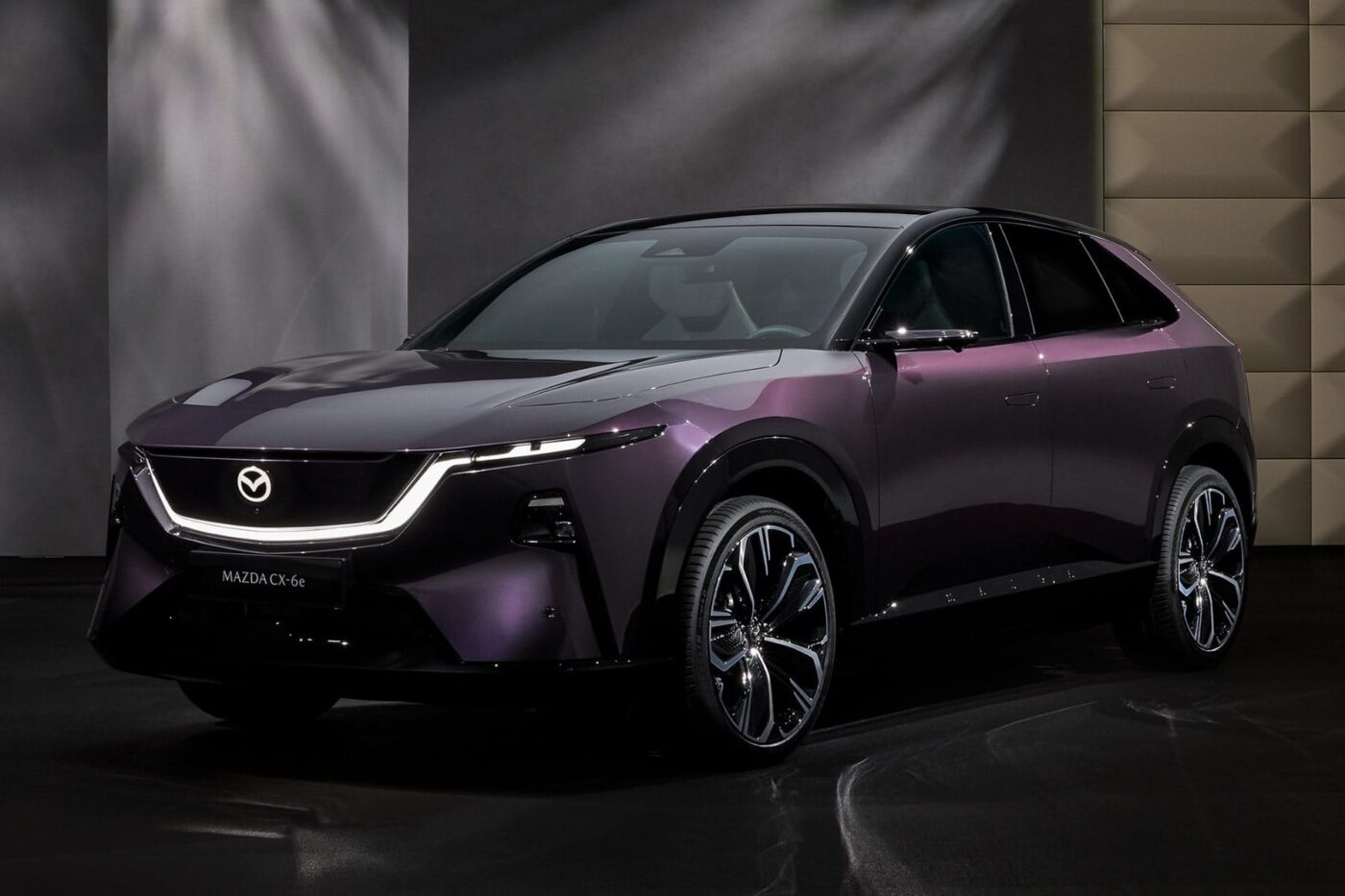
Mazda is once again recalibrating its electrification plans, signaling a cautious retreat from fully electric vehicles in favor of hybrids. According to reports from Japan, the automaker has postponed its next-generation EV program, pushing production timelines back by at least two years as market conditions and regulatory uncertainty reshape its strategy.

A Dedicated EV Program Put on Hold
Mazda had been developing a new battery-electric vehicle based on a bespoke EV platform, marking a significant departure from the limited MX-30 experiment. That vehicle—widely expected to be a mid-size electric crossover—was originally scheduled to enter production as early as 2027.
That timeline has now slipped. Japanese media outlets report that production will not begin before 2029, with internal plans reassessed amid rising costs and weakening policy support in key markets. For a smaller, independent automaker like Mazda, the risks tied to launching a clean-sheet EV have become harder to justify.
Policy Shifts and Tariffs Change the Math
Several external forces appear to have influenced Mazda’s decision. The removal of the $7,500 federal EV tax credit, fluctuating emissions rules across regions, and growing trade barriers have collectively made long-term EV investments more uncertain.
Import tariffs are a particular challenge. Mazda’s Hofu plant in western Japan had been linked to the delayed EV, but new tariffs introduced last year significantly raised the cost of exporting vehicles, especially to North America. Unlike larger rivals with global EV scale, Mazda lacks the volume needed to absorb those added costs.
In a statement to Automotive News, a Mazda spokesperson emphasized flexibility rather than retreat. The company reiterated its “multi-solution strategy,” stating that EV timing will depend on customer demand and regulatory developments rather than fixed deadlines.
EVs Aren’t Gone, Just Not the Priority
Despite the delay, Mazda has not abandoned electrification altogether. The company recently introduced the Mazda 6e sedan and CX-6e crossover, developed jointly with China’s Changan. These models are already being sold in Europe, Australia, and other markets.
However, their China-based production makes them effectively off-limits for the U.S. market. A 100% import tariff would render both vehicles commercially unviable, limiting their global impact and reinforcing Mazda’s reliance on hybrids for North America.
A Broader Industry Pattern Emerges
Mazda’s pullback mirrors a wider industry trend. Automakers across the spectrum are slowing or canceling EV programs as demand growth softens and incentives fade.
Ford has scaled back multiple EV initiatives, General Motors canceled the BrightDrop electric van, and Stellantis halted development of the all-electric Ram 1500 before production began. Even companies with deeper pockets are reassessing how quickly consumers will adopt battery-only vehicles without subsidies.
For Mazda, hybrids offer a safer middle ground—lower development costs, easier manufacturing integration, and stronger alignment with current buyer behavior.

Electrification Isn’t Over, Just Rebalanced
While short-term EV ambitions are being tempered, electrification itself remains inevitable. Battery costs are expected to fall later in the decade, and more affordable EVs are already on the horizon, including Ford’s $30,000 electric pickup and next-generation versions of the Chevrolet Bolt and Nissan Leaf.
Mazda’s decision reflects a broader reality: timing matters as much as technology. For now, hybrids provide a bridge that allows automakers to stay competitive without betting the company on an uncertain EV rollout.
Recommend Reading: Mazda Steps Up EV Plans as New U.S.-Focused Electric SUV Prototype Emerges

Partager:
How LFP Batteries Overtook Nickel-Based Cells in the EV Market