



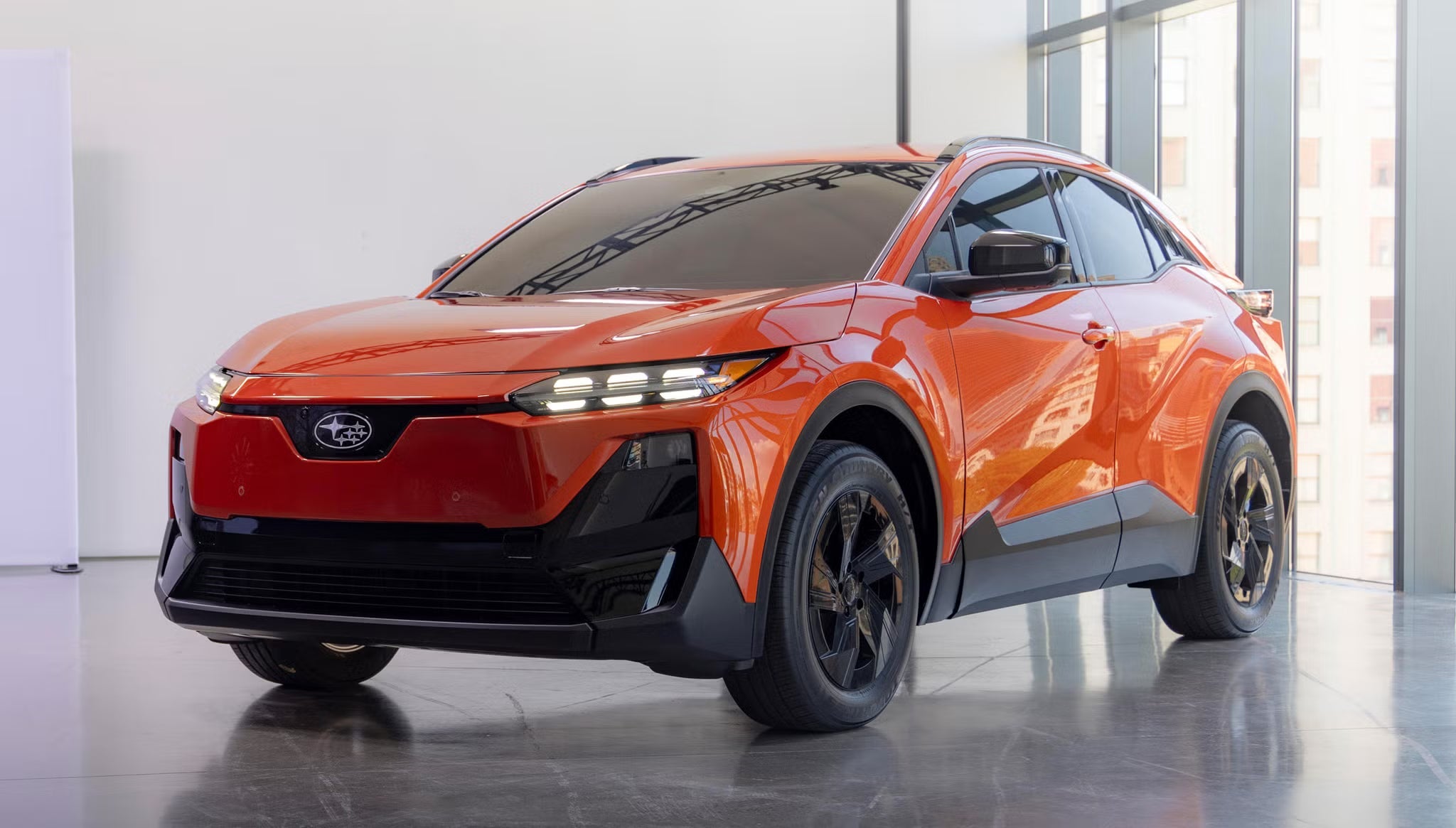
Subaru Steps Up Its EV Strategy
Subaru’s early electric efforts, led by the Solterra, did little to convince buyers that the brand was ready to compete seriously in the EV space. That perception is beginning to shift. After improving the Solterra’s performance this year with help from partner Toyota and announcing two new EVs, Subaru has now revealed full details for the 2026 Uncharted, a compact electric crossover positioned below the newly announced Trailseeker.
The company’s latest model marks a notable change in strategy: instead of chasing premium EVs, Subaru is targeting the mid-priced market with competitive range, power, and charging capabilities.

Pricing Designed for Mainstream Buyers
On Tuesday, Subaru confirmed that the 2026 Uncharted will start at $34,995 before destination charges. The model will begin reaching dealerships early next year. With many electric crossovers pushing well above $40,000, Subaru’s pricing sends a clear signal that it intends to compete in one of the market’s most constrained segments.
This strategy also arrives at a moment when EV adoption is cooling slightly in the U.S. because of high interest rates and the loss of federal tax credits for many models. Subaru’s pricing suggests the company sees long-term opportunity in affordable EVs that maintain solid range and performance.
Range, Charging, and Powertrain Options
Subaru estimates that the front-wheel-drive (FWD) version of the Uncharted will deliver over 300 miles of range, placing it among the longest-range EVs under $40,000. The all-wheel-drive (AWD) model is rated at 285 miles, still highly competitive for its class.
Both trims use the NACS charging port, aligning Subaru with the rapidly expanding Tesla Supercharger network. The Uncharted supports 150-kW DC fast charging, enabling meaningful recovery of range during short charging sessions.
Performance varies by configuration. Subaru says FWD models produce 221 horsepower, while AWD versions reach 338 horsepower, outpacing rivals like the Hyundai Kona EV and Kia Niro EV. These figures suggest that Subaru is prioritizing both efficiency and capability—traits that typically define the brand’s gasoline crossovers.
Competition in the Mid-$30,000 EV Segment
Historically, shoppers looking for a long-range EV near the $35,000 mark have had limited options. The Hyundai Kona EV, for instance, starts near $33,000 but offers about 200 miles of base-trim range. Larger models such as the Ford Mustang Mach-E and Hyundai Ioniq 5 offer better performance but typically fall short of the Uncharted’s range at similar prices.
Some automakers have made significant progress in affordability. The Chevy Equinox EV, which launched last year, delivered a headline-grabbing mix of 319 miles of range and a $34,995 starting price, earning it recognition as a breakthrough. Nissan later pushed the segment further by introducing the 2026 Leaf, which provides 300 miles of range at just over $30,000.
With the Uncharted, Subaru becomes the latest brand to strengthen the field, offering buyers another long-range EV with family-friendly pricing. This increasing competition is gradually reshaping the lower end of the EV market, giving consumers more choice than ever before.

A Boost for EV Affordability
The recent loss of federal EV tax credits has complicated the economics of going electric for many households. Even so, Subaru’s new strategy demonstrates that automakers can still deliver value without relying on incentives. By prioritizing range, capability, and charging performance at a reasonable price, Subaru is signaling that affordable EVs remain central to the market’s long-term growth.
If other brands follow a similar path—focusing on practical features and accessible pricing—the EV transition could regain momentum after a period of uncertainty. The Uncharted, positioned as a capable and attractively priced electric crossover, represents a meaningful step in that direction.
Recommend Reading: Subaru’s Trailseeker EV Debuts With More Range and Power
Partager:
Fiat Plans U.S. Launch of Its Mini Electric Topolino
Autonomous Driving Enters a New Phase as Automakers Accelerate Development