





A Familiar Name Marks a Shift in Toyota’s EV Strategy
Toyota has confirmed that its upcoming three-row electric SUV will carry one of its most recognizable badges: Highlander. The decision signals a clear change in how the company plans to present its battery-powered vehicles, moving away from abstract naming conventions toward labels long associated with mainstream buyers.
After introducing the bZ4X as its first purpose-built electric vehicle, Toyota faced criticism that the name felt confusing and disconnected from its broader lineup. With future EVs set to revive well-known nameplates—including an electric Corolla—the Highlander EV fits into a broader effort to simplify branding and reduce friction for buyers transitioning from combustion models.

Early Design Details Hint at a Clean Break From the Gas Model
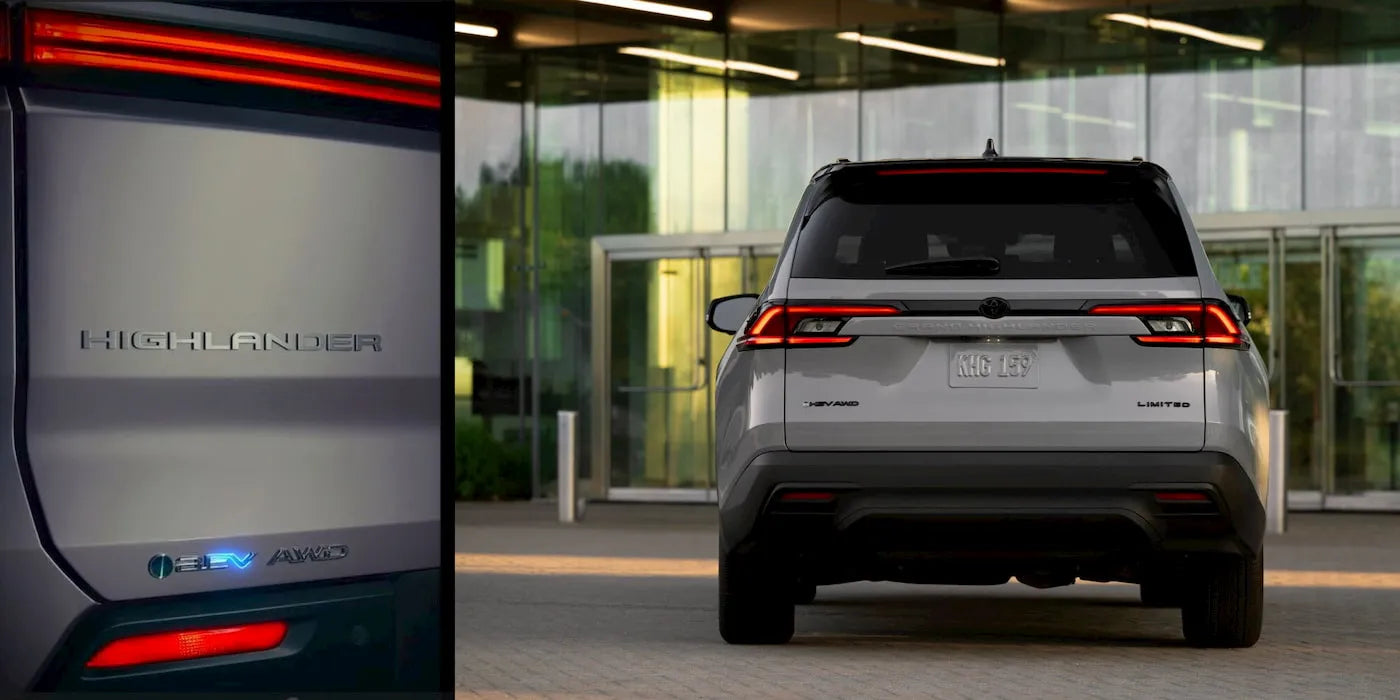
While Toyota has not released full specifications, it has begun to tease visual elements of the electric Highlander. Images of the vehicle’s rear reveal the Highlander badge prominently displayed on the tailgate, alongside a full-width rear light signature that wraps around both sides of the vehicle.
What is already clear is that the electric version will not closely resemble today’s gasoline-powered Highlander. Toyota’s teasers suggest a distinct body shape and lighting treatment, reinforcing that this is not a simple powertrain swap but an entirely new design built specifically for electric propulsion.
Concept Roots Suggest a More Aerodynamic, EV-First Profile
Design cues indicate that the production model will draw heavily from Toyota’s bZ Large SUV concept, first shown in 2021. That concept featured a lower, more swept-back roofline and a sleeker silhouette than Toyota’s current family SUVs.
Based on the previews released so far, the electric Highlander is expected to balance futuristic EV styling with familiar proportions. The overall look appears more streamlined and sporty, particularly around the greenhouse and rear profile, while still maintaining the upright stance buyers expect from a three-row vehicle.
Powertrain Expectations and Likely Performance Targets
Toyota has not confirmed drivetrain specifications, but the presence of an AWD badge in teaser images strongly points to a dual-motor all-wheel-drive configuration. Given the size and positioning of the vehicle, it is also expected to use a battery larger than the 74.7 kWh pack found in the bZ4X.
For a vehicle in this segment, an estimated driving range of around 300 miles under U.S. testing standards would align with current market expectations. Toyota has publicly discussed ongoing improvements in battery energy density and charging performance, though it is unlikely that the electric Highlander will debut the company’s most advanced long-range battery technologies.
Toyota has previously stated that future EVs could eventually achieve up to 1,000 kilometers (620 miles) on a single charge, but those figures are widely viewed as long-term goals rather than near-term production realities.
Official Reveal Signals a Broader Commitment to Electrification
The electric Highlander is scheduled to be fully revealed on February 10, when Toyota is expected to disclose key specifications, feature details, and potential market positioning. Entering the three-row electric SUV category marks an important step for a brand often criticized for moving cautiously in the EV space.
If priced competitively, the model could appeal to buyers seeking a practical family vehicle without stepping into luxury-brand territory. The combination of a trusted nameplate, usable interior space, and electric power may place Toyota in a strong position as demand grows for larger EVs.

Lexus Variant and Competitive Landscape
Toyota’s luxury division, Lexus, is developing a more upscale version of the same underlying vehicle. That model is expected to carry the TZ name and feature higher-end materials, additional technology, and a higher price point. A launch date for the Lexus version has not yet been announced.
Both vehicles will compete directly with upcoming and recently announced electric three-row SUVs such as the Hyundai Ioniq 9 and Cadillac Vistiq, placing Toyota and Lexus squarely into one of the fastest-growing EV segments globally.
Recommend Reading: Toyota Prepares Its First Three-Row Electric SUV as U.S. EV Push Accelerates









Share:
Germany Overtook the U.S. in EV Production Last Year, New Data Shows
Lucid Plans a $50,000 Electric SUV, but Rules Out Budget EVs