





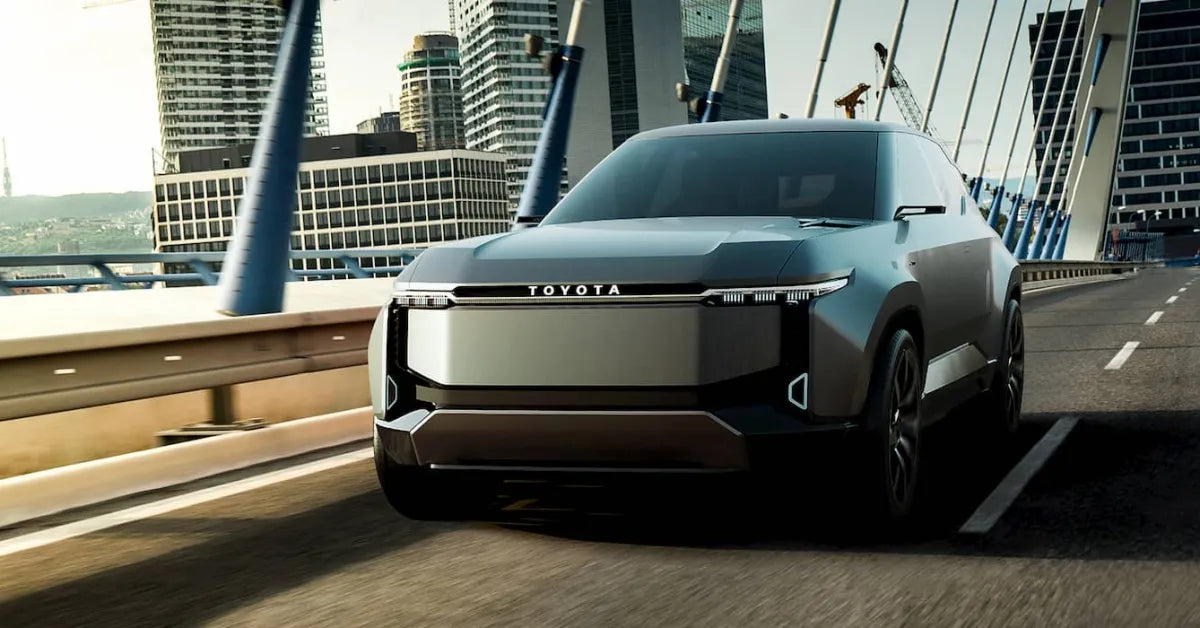
Toyota has spent years taking a cautious approach to battery-electric vehicles, but that strategy is now changing. As competition intensifies and demand grows for family-sized EVs, the automaker is preparing to unveil what appears to be its first fully electric three-row SUV, marking a major step in its U.S. electrification plan.
Recent teasers and disclosures suggest Toyota is targeting the heart of the large electric SUV segment, currently led by models like the Kia EV9 and Hyundai Ioniq 9.

A New Flagship for Toyota’s EV Lineup
Toyota has already confirmed that multiple new and refreshed EVs will reach the U.S. market this year, including updates to the bZ lineup and several Lexus-branded electric models. The upcoming three-row SUV sits above those vehicles, both in size and positioning.
Early teaser images indicate that this model will serve as Toyota’s largest and most premium electric SUV to date, designed specifically for families who need space, comfort, and long-distance usability.
Design Signals a Modern, EV-First Platform
Toyota first hinted at a large electric SUV in 2021 through its “beyond zero” concept lineup. That concept previewed a long, sculpted body with a clean, futuristic profile—elements that now appear in the latest teaser images and patent filings.
The upcoming SUV features sharp body creases, a raised beltline, and a wide stance, closely aligned with Toyota’s latest design language seen on the new Camry and RAV4. A full-width LED rear light bar strongly suggests an EV-specific platform.
Interior teasers reveal three rows of seating, with second-row captain’s chairs, a large central touchscreen, a digital instrument cluster, and a panoramic glass roof. Dedicated climate controls for rear passengers and ambient lighting point to a more premium experience than the current bZ models.
Battery, Range, and Performance Expectations
Toyota has not released official specifications, but expectations are high for a vehicle in this segment. A dual-motor all-wheel-drive configuration is likely, along with an estimated range exceeding 300 miles, placing it in line with direct competitors.
The automaker has publicly discussed multiple battery development programs, including next-generation liquid electrolyte batteries and solid-state technology. While Toyota has claimed future EVs could reach ranges well beyond today’s standards, it remains unclear whether those advanced batteries will debut in this three-row SUV.
Charging speed improvements, higher energy density, and lower production costs are all stated goals, but Toyota has been cautious about committing timelines for these technologies.
U.S. Manufacturing and Supply Chain Strategy
Toyota has confirmed that the three-row electric SUV will be manufactured in Georgetown, Kentucky, reinforcing its commitment to local EV production. This move aligns with Toyota’s broader strategy to reduce supply chain risk and improve cost control.
In parallel, Toyota has invested $13.9 billion in a battery manufacturing facility in North Carolina, which will supply batteries for EVs, plug-in hybrids, and traditional hybrids sold in the U.S. Lexus-branded variants of the three-row EV are expected to be produced in Japan.
Pricing, Timing, and Market Position
Pricing has not been announced, but the three-row electric SUV is expected to sit well above the bZ, which starts around $35,000. Industry estimates place the new model in the $55,000 to $80,000 range, directly competing with other large electric SUVs.
Production is expected to begin in 2026, positioning Toyota to expand its EV presence as the U.S. market recalibrates following changes to tax credits and emissions regulations.

Toyota’s EV Reputation Faces a Turning Point
Toyota’s dominance in hybrids is unquestioned, but its slow entry into full EVs has drawn criticism. As the EV market faces policy uncertainty and rising costs, Toyota’s scale, manufacturing discipline, and conservative approach could become an advantage.
If this three-row electric SUV delivers on space, range, and reliability, Toyota may finally shift from EV follower to serious contender in one of the fastest-growing segments.
Recommend Reading: Toyota Expands Its EV Lineup With Two New Crossovers and Clear Pricing










Share:
California Targets First-Time EV Buyers With New State Rebate Plan
2026 Nissan Leaf Highway Range Test at 70 MPH: Real-World Results Explained