



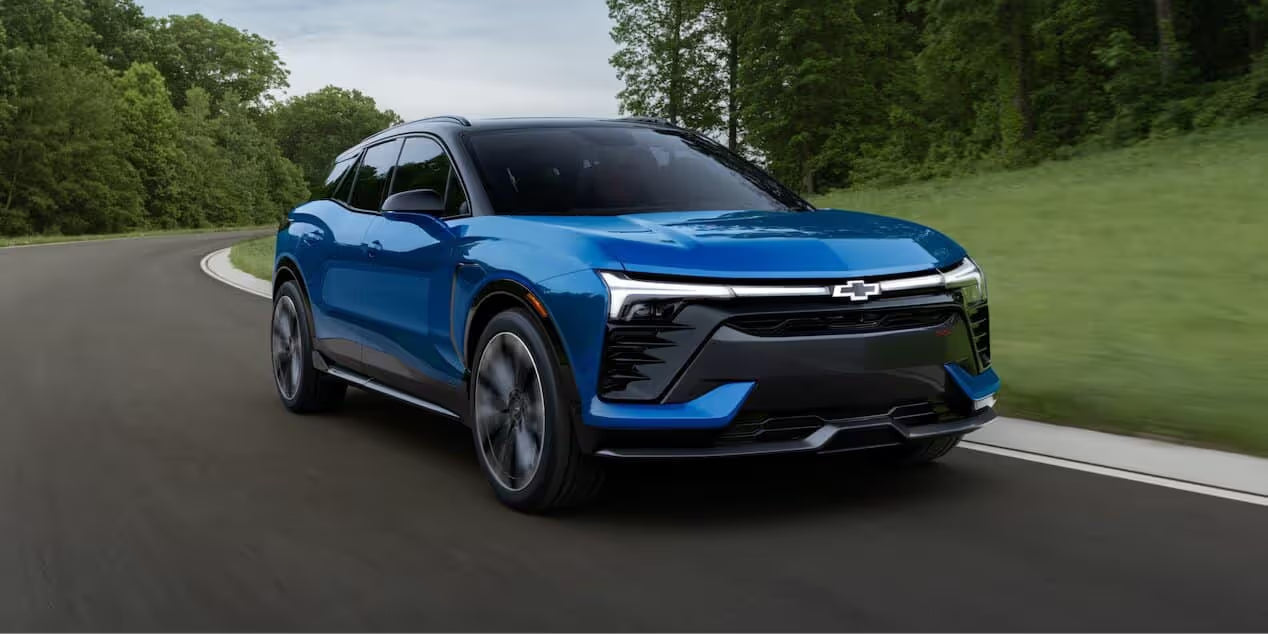
A Rapid Price Shift Creates an Unexpected EV Bargain
The 2024 Chevrolet Blazer EV entered the market as a stylish, well-equipped electric SUV with a premium price tag. With MSRP figures hovering around $52,000 for the LT2 trim, the Blazer EV positioned itself as a mid-range competitor in a rapidly expanding EV landscape. Yet less than two years later, used examples are appearing for less than half of their original price, with some listings dipping close to $21,000.
This sudden drop has surprised even EV enthusiasts. For shoppers looking for a feature-rich electric SUV at an accessible price, the used Blazer EV has become one of the most compelling deals available—largely thanks to a unique combination of market conditions, early production issues, and shifting federal policies.

A Well-Equipped EV at a Surprisingly Low Price
One key reason the used Blazer EV offers unusually strong value is that all 2024 models released were higher-trim versions. Chevrolet initially launched the LT2 and RS trims, both of which came standard with premium equipment not typically found on entry-level EVs.
These features are common across most used Blazer EVs for sale today:
-
Surround-view camera system
-
Heated steering wheel
-
Leatherette seating
-
Advanced driver-assist suite
-
Large infotainment display with Google Built-In
-
All-wheel drive (most used listings are AWD LT2 models)
Buyers browsing the used market will often find listings with 15,000 miles or fewer, many in near-new cosmetic condition. Pricing is consistently dropping below $25,000, and while extreme cases around $21,499 are outliers, the broader trend is unmistakable: the Blazer EV is depreciating much faster than most modern electric SUVs.
Why Did Prices Drop So Fast?
The price drop doesn’t reflect fundamental flaws with the vehicle itself. Instead, it stems from a sequence of events that began shortly after launch.
Early Software Problems Hurt Confidence
Shortly after deliveries began, the Blazer EV faced widely publicized software issues. Some drivers reported serious malfunctions, and one notable breakdown prompted Chevrolet to issue a stop-sale order. This halted deliveries for months as GM focused on fixing the software and revalidating system reliability.
The pause in deliveries damaged consumer confidence and temporarily slowed production momentum.
How Leasing Incentives Flooded the Market
Once Chevrolet resolved the software issues, it faced uncertain demand—but needed to restart sales quickly. The result was a wave of aggressive leasing incentives designed to get the Blazer EV into customers’ hands.
Most of these deals featured 24-month leases, meaning the earliest returns have only just begun trickling into the market. But the pricing structure of those leases effectively pre-set a low residual value, which now reflects in the prices seen at used-car retailers.
Early adopters paid very little to drive new Blazer EVs, and as those vehicles now enter the used market, dealers are pricing them to sell. This has accelerated depreciation far beyond normal EV levels.
Policy Changes Are Also Reshaping Pricing
Beyond the vehicle’s rocky launch, broader shifts in U.S. federal policy have also influenced its market value.
Loss of the $7,500 EV Tax Credit
The Blazer EV previously benefited from federal incentives that made new leases particularly attractive. With that credit now gone, GM no longer has the leverage to offer steep discounts.
Demand for new EVs softened, and interest has shifted toward used vehicles where pricing is already reduced.
Relaxed Emission Requirements
With federal emissions rules rolled back, automakers no longer face penalties for failing to meet fleet-level EV quotas. This has further reduced the need for manufacturers to push EV sales aggressively in the short term.
Combined, these policy shifts have pushed more buyers toward the used market—where large inventories of discounted Blazer EVs have created intense downward pressure on prices.
Where the Blazer EV Stands Today
Despite its bumpy start, the Blazer EV is now a far more refined product. Chevrolet has rolled out multiple software updates addressing earlier issues, and real-world driver reports show improved reliability and smoother performance.
Current strengths include:
-
Up to 279 miles of range depending on configuration
-
A quiet, upscale cabin
-
Mature software post-updates
-
Comfortable ride quality and solid daily usability
-
Increasing availability of lower-priced new trims
For everyday commuting, the Blazer EV excels at comfort and practicality. Its biggest remaining drawback is charging speed, which lags behind some competitors during long-distance travel. But for drivers who primarily charge at home, this limitation is manageable.

Is a Used Blazer EV a Smart Buy Now?
From a value perspective, the answer is largely yes. A used Blazer EV priced below $25,000 offers features, range, and comfort comparable to EVs nearly twice the cost. For buyers seeking a nearly new electric SUV without stretching their budget, it is one of the strongest options on the market.
Depreciation may continue as more two-year lease returns arrive in late 2025 and 2026. But even at today’s prices, the Blazer EV stands out as a rare high-spec EV experiencing unusually rapid depreciation—creating an opportunity for buyers that likely won’t last indefinitely.
Recommend Reading: GM Confirms a New Line of Affordable EVs Beyond the Chevy Bolt


Partager:
Why Rivian Sees Opportunity After the Federal EV Tax Credit Ends
Upcoming Electric Cars to Watch in 2025, 2026 and the Years Ahead
1 commentaire
The reason the used Blazer EV is so cheap is the POOR SOUND SYSTEM…