





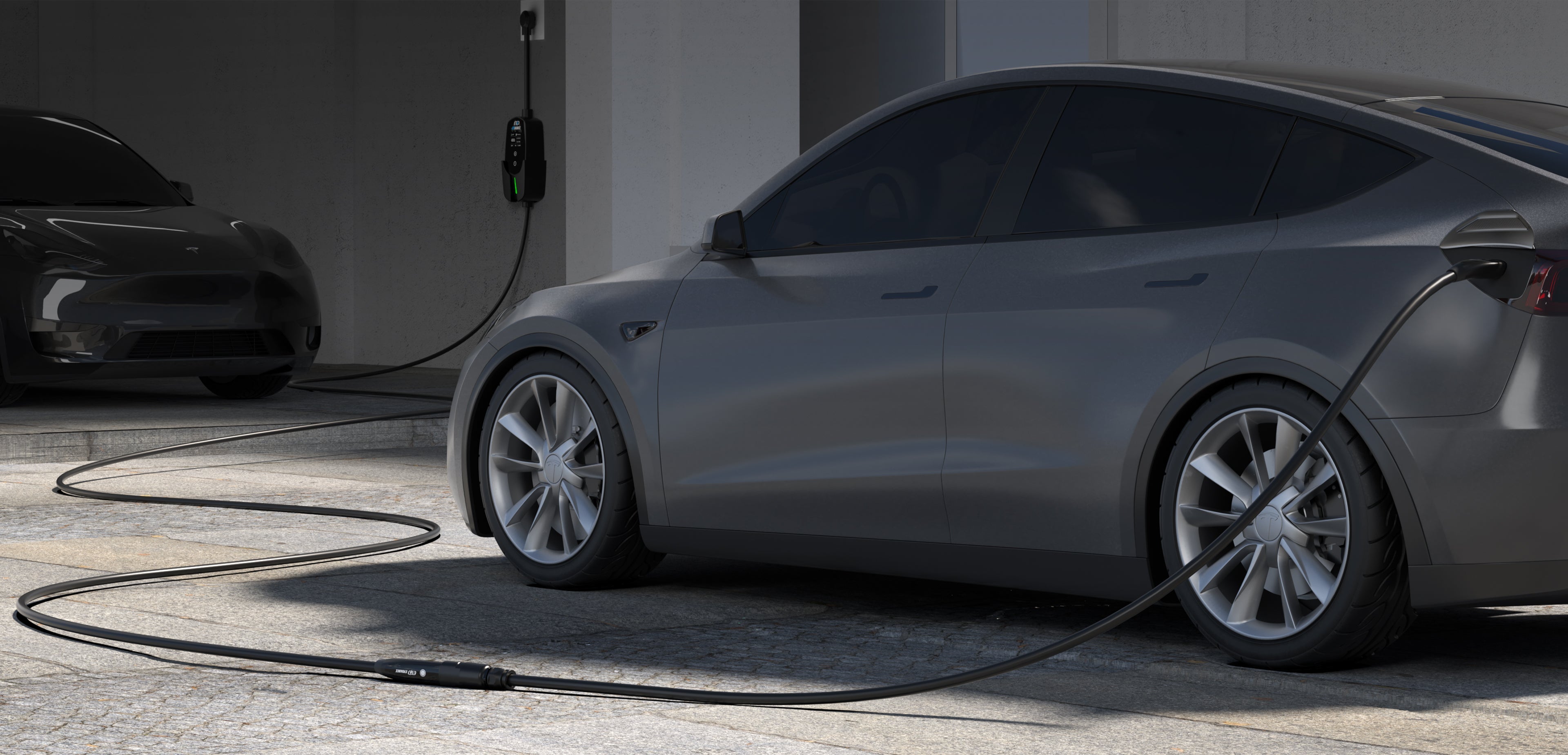
Electric vehicles fit naturally into daily life—until more than one car needs to charge. For multi-car households, especially those with two or more EVs or a mix of EVs and gas vehicles, charging quickly becomes a logistical problem rather than a technical one.
This is where EV extension cables quietly become essential. Not as a workaround, but as a tool to make home charging actually work in real-world conditions.

Why Multi-Car Households Face Unique Charging Challenges
Most residential charging setups are designed around a single, predictable parking position. In reality, multi-car households are anything but predictable.
Common constraints include:
-
One fixed wall-mounted Level 2 charger
-
Limited driveway length or garage depth
-
Narrow parking layouts that only fit one vehicle close to the charger
When more than one vehicle depends on that charger, distance—not power—becomes the bottleneck.
The Daily Friction of Moving Cars Around
In theory, rotating vehicles sounds simple. In practice, it’s exhausting.
Many households deal with:
-
Early-morning car reshuffling to ensure the right vehicle is charged
-
Late-night reminders to move a car once charging finishes
-
Coordinating schedules between partners who leave at different times
Over time, this constant repositioning becomes a source of friction. An extension cable allows the charger to reach the car, instead of forcing the household to reorganize around the charger.

When Family or Friends Bring Their Own EVs
Charging pressure spikes the moment guests arrive.
Whether it’s:
-
A family member visiting for a weekend
-
Friends stopping by during holidays
-
Overnight guests driving EVs from out of town
Most homes simply aren’t wired to support multiple chargers. Installing a second EVSE is expensive and often unnecessary for occasional use.
In these moments, an extension cable provides temporary flexibility without permanent infrastructure changes, allowing visiting EVs to charge without disrupting the household’s routine.
Shared Driveways and Tight Parking Layouts
Not all homes have clean, straight driveways.
Many multi-car households face:
-
Side-by-side parking that blocks direct access to the charger
-
Garages where only one bay reaches the charging cable
-
Angled or offset parking that increases the distance by just a few feet—but enough to matter
These small spatial mismatches are exactly where extension cables solve a real problem. They bridge physical layout gaps that were never designed with EVs in mind.

Why Extension Cables Are About Function, Not Convenience
There’s a misconception that extension cables are only about comfort. In reality, they’re about system efficiency.
A properly designed EV extension cable:
-
Maintains the original charging speed
-
Preserves safety when used within rated limits
-
Reduces unnecessary handling of the main charger cable
Most importantly, it allows households to use one charger more effectively, instead of adding hardware or changing habits.
Practical Scenarios Where Extension Cables Make Sense
In multi-car households, extension cables are especially useful when:
-
One EV needs priority charging for the next morning
-
A guest vehicle needs overnight charging
-
Parking order changes daily
-
Physical space limits direct charger access
These scenarios aren’t edge cases. They are routine for households living with more than one car.
A Note on Safe and Appropriate Use
Extension cables are not a substitute for proper infrastructure. They are meant to extend reach, not capacity.
When used correctly:
-
With Level 2 chargers
-
Within rated amperage limits
-
With high-quality connectors and insulation
They function as intended—solving distance problems without introducing risk. That’s exactly what the EVDANCE 50A NACS Extension Cable is designed to do.

Conclusion: Charging That Fits Real Life
Multi-car households don’t need more complexity. They need flexibility.
EV extension cables exist because real homes, real families, and real schedules rarely match the ideal charging setup imagined during installation. By reducing friction, minimizing daily adjustments, and adapting charging to real parking conditions, extension cables make shared EV charging sustainable over time.
Recommend Reading: Travel Charging Made Easy: How an EV Extension Cable Can Help


Share:
Travel Charging Made Easy: How an EV Extension Cable Can Help
EV Extension Cable vs Fixed Charger: When You Really Need One