



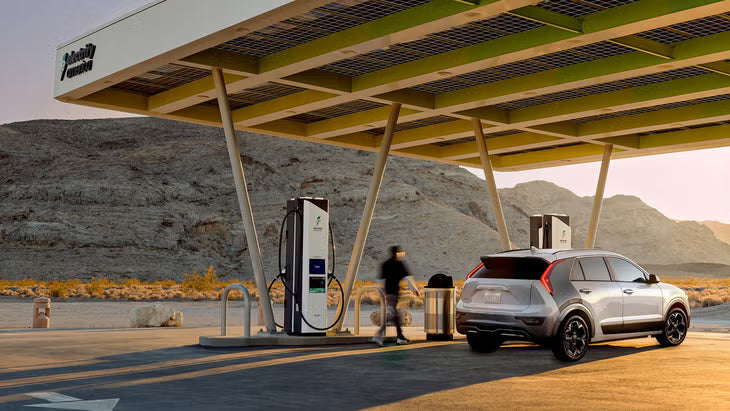
Road trips are all about freedom, but for EV drivers, the key to a stress-free journey is knowing where to recharge along the way. Fortunately, the U.S. has developed an expanding EV charging network that now makes many of the country’s most scenic weekend routes not just possible but enjoyable. You can use Charge Map or the PlugShare App to find the chargers and organize your road trip. Below, we’ve curated five iconic American road trips—spanning the South, West, East, Midwest, and Pacific Northwest—that are both scenic and EV-friendly.
1. Pacific Coast Highway: San Francisco to Big Sur, California
The route: San Francisco → Monterey → Big Sur
Length: 150 miles (one way)
Few road trips capture the American dream like California’s Highway 1. Begin your journey by leaving San Francisco over the Golden Gate Bridge before heading south along rugged coastal cliffs. EV drivers will find fast charging hubs in Daly City, Half Moon Bay, and Santa Cruz, all strategically placed so you never dip below comfort range.
Pause in Monterey to explore Cannery Row and the Monterey Bay Aquarium, one of the most celebrated aquariums in the country. Just 30 miles further lies Big Sur, a region renowned for Bixby Bridge and sweeping ocean views. With multiple EVgo and Tesla Supercharger stations clustered near Carmel and Big Sur Village, it’s easy to recharge while grabbing a coastal meal. A weekend round trip of ~300 miles is stress-free with today’s charging network.

2. Blue Ridge Parkway: Asheville, North Carolina to Roanoke, Virginia
The route: Asheville → Linville Gorge → Blowing Rock → Roanoke
Length: 230 miles
Nicknamed “America’s Favorite Drive,” the Blue Ridge Parkway connects the Great Smoky Mountains with Shenandoah National Park. Start in Asheville, a city known for craft breweries and outdoor culture, before winding into the misty ridges. The average spacing of chargers is ~40–50 miles, with DC fast charging hubs in Asheville, Boone, and Roanoke.
Along the way, stop at Linville Gorge Wilderness for a hike, and later in Blowing Rock, enjoy small-town hospitality. Autumn brings a spectacle of fall colors across the Appalachian ridges, making this one of the most photographed drives in the U.S. EV drivers can comfortably manage this weekend trip thanks to over 150 charging stations along the route.

3. Historic Route 66: Chicago, Illinois to Springfield, Illinois
The route: Chicago → Pontiac → Springfield
Length: 200 miles
For a Midwest adventure, head down the original Route 66, starting from Chicago’s Buckingham Fountain. Your EV can easily cover the drive with fast charging stops in Joliet, Bloomington, and Springfield, each located near local diners and Route 66 attractions.
Highlights include the Route 66 Hall of Fame Museum in Pontiac and roadside Americana like giant fiberglass statues from the mid-20th century. Springfield, the capital of Illinois, offers both Abraham Lincoln’s historic sites and Level 2 charging at many hotels for overnight peace of mind. Even with weekend traffic, the 200-mile round trip is well within range for most modern EVs, making this a fun, nostalgic getaway.

4. Denver to Rocky Mountain National Park, Colorado
The route: Denver → Estes Park → Rocky Mountain NP (Trail Ridge Road)
Length: 140 miles (round trip)
For mountain lovers, the short drive from Denver to Rocky Mountain National Park is a perfect EV-friendly weekend trip. Begin in Denver, where public charging density is among the highest in the Mountain West, and head north to Estes Park. The scenic approach offers Electrify America and ChargePoint stations every 20–30 miles.
Inside the park, drive along Trail Ridge Road, the highest continuous paved road in North America, peaking at 12,183 feet. Note: Some sections close in winter due to snow. Overnight stays in Estes Park are easy, as many hotels and lodges now provide EV chargers for guests. This route blends nature, wildlife spotting, and EV convenience.

5. Boston to Acadia National Park, Maine
The route: Boston → Portland → Bar Harbor → Acadia NP
Length: 280 miles (one way)
Head northeast from Boston for a coastal New England experience. After charging in Portsmouth, NH, enjoy Portland, Maine’s food scene before continuing up U.S. Route 1. Electrify America and Tesla Superchargers are spaced every 30–40 miles, giving peace of mind during this longer weekend journey.
End in Acadia National Park, where Cadillac Mountain offers one of the first sunrise views in the continental U.S. With charging available in Bar Harbor and nearby hotels, EV owners can relax while exploring hiking trails, ocean cliffs, and small fishing villages. At ~560 miles round trip, this is a longer weekend drive but entirely feasible with today’s growing charging infrastructure.

Final Thoughts
Weekend road trips don’t have to mean range anxiety anymore. With fast-growing charging networks across the U.S., EV drivers can confidently plan escapes that combine scenic drives, iconic landmarks, and reliable charging stops. Whether you’re cruising the Pacific Coast, exploring mountain passes, or retracing the nostalgia of Route 66, there’s an EV-friendly adventure waiting just a few hours from home. Also remember to pick up a portable EV charger, becasue it can be super helpful in emergencies. So pick a route, map your charging stops, and enjoy the journey—your EV is ready for it.
Recommend Reading: How to Plan an EV Road Trip Without Range Anxiety


Share:
Using Your EV to Power Camping Gear: A Practical Guide to V2L