



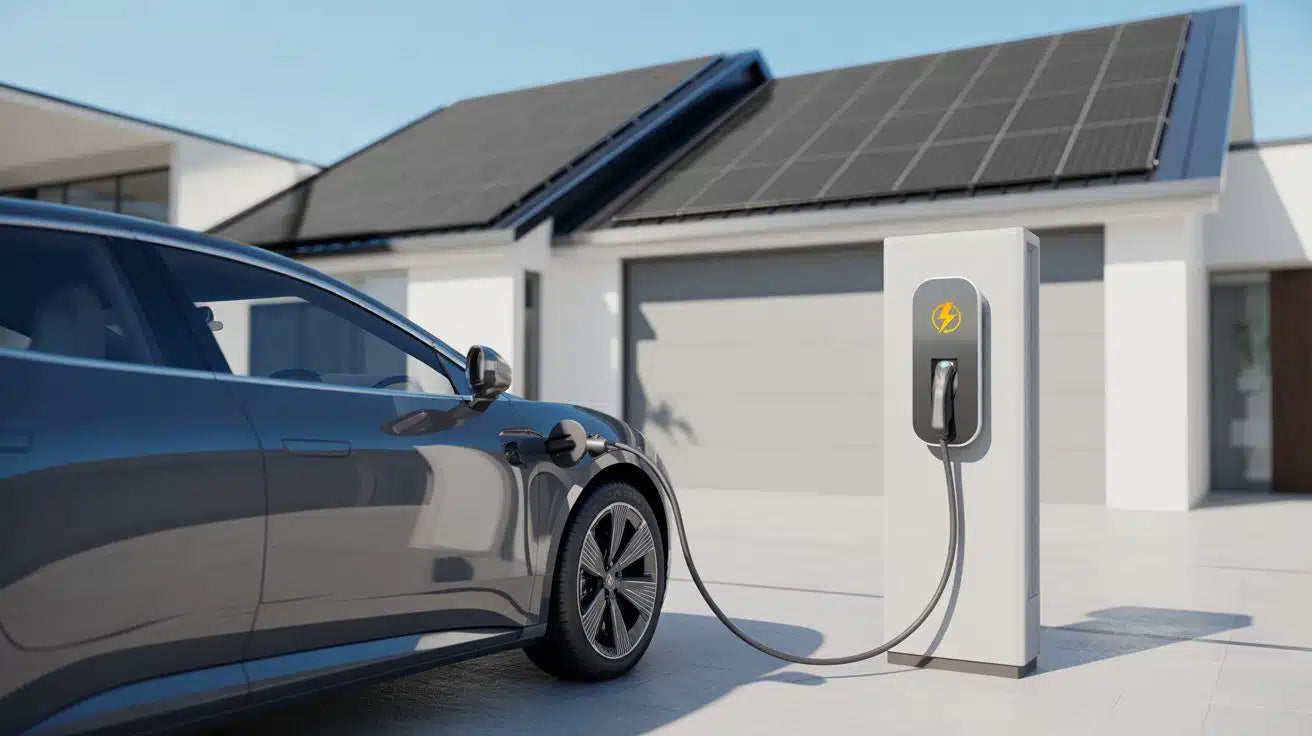
Charging an electric vehicle at home is already one of the most convenient and cost-effective ways to own an EV. But pairing your EV with solar power takes that convenience a step further—cutting energy costs, increasing energy independence, and reducing your carbon footprint.
As residential solar systems become more affordable and EV adoption continues to grow, more homeowners are asking the same question: Can solar power realistically charge an EV at home, and is it worth it?
The short answer is yes—but the details matter.
This guide breaks down how solar EV charging works, what equipment you need, how much energy it takes, and what setups make the most sense in real-world use.

How Solar EV Charging Works at Home
At its core, solar EV charging is simple. Solar panels installed on your home generate electricity, which can then be used to power household loads, charge your EV, or be stored for later use.
There are three common energy paths:
-
Direct charging: Solar panels generate electricity during the day and send it directly to your EV charger
-
Grid-assisted charging: Solar offsets household electricity use while the grid supplies additional power as needed
-
Battery-backed charging: Excess solar energy is stored in a home battery and used to charge your EV later
In most real-world setups, solar and grid power work together, ensuring reliable charging even when sunlight is limited.

How Much Energy Does an EV Actually Need?
Before designing a solar setup, it’s important to understand your EV’s energy demand.
On average:
-
Most EVs consume 3–4 miles per kWh
-
The average driver travels 30–40 miles per day
-
That equals roughly 10–15 kWh per day for daily charging
For comparison:
-
A typical U.S. home solar panel produces 300–400 watts
-
One panel generates about 1.2–2 kWh per day, depending on location and sun exposure
That means charging an EV daily typically requires the output of 6–10 solar panels, assuming average driving habits and decent sunlight.
Solar Panels: Sizing Your System for EV Charging
When planning solar for EV charging, homeowners usually choose between EV-only sizing or whole-home sizing.
EV-Only Solar Sizing
Designed primarily to offset EV charging:
-
Smaller system
-
Lower upfront cost
-
Ideal for households with modest electricity use
Example:
-
3–4 kW solar system
-
Covers most daily EV charging needs
Whole-Home + EV Solar Sizing
Designed to power your home and EV together:
-
Larger system
-
Higher upfront investment
-
Greater long-term savings
Example:
-
6–10 kW solar system
-
Covers household usage plus EV charging
Most homeowners opt for a whole-home system, since the marginal cost of adding EV capacity during installation is usually lower than expanding later.

Choosing the Right EV Charger for Solar Charging
Not all EV chargers work the same way with solar power.
Level 1 Chargers
-
Use standard 120V outlets
-
Very slow (3–5 miles per hour)
-
Technically compatible with solar, but inefficient
Level 2 Chargers
-
240V chargers
-
Add 25–40 miles per hour
-
Best option for solar EV charging
Many modern Level 2 chargers offer:
-
Adjustable charging amperage
-
Scheduled charging windows
-
Solar-optimized charging modes
Choosing a charger that allows load adjustment is critical, especially if your solar output fluctuates throughout the day.
Solar + EV Charging With or Without a Home Battery
One of the biggest decisions is whether to add battery storage.
Charging Without a Battery
Pros:
-
Lower upfront cost
-
Simpler system
-
Works well if you can charge during the day
Cons:
-
Limited solar charging at night
-
More reliance on the grid
Best for:
-
Work-from-home households
-
Daytime charging availability
Charging With a Home Battery
Pros:
-
Store excess solar for nighttime charging
-
Backup power during outages
-
Greater energy independence
Cons:
-
Higher upfront cost
-
Longer payback period
Best for:
-
Nighttime EV charging
-
Areas with unstable grids
-
Homes aiming for maximum self-sufficiency
Batteries are not required, but they significantly improve flexibility.

Can Solar Fully Replace Grid Charging?
In ideal conditions, yes—but most homes still stay grid-connected.
Factors that limit full solar-only charging:
-
Seasonal sunlight variation
-
Increased winter energy use
-
Long-distance driving days
That said, many EV owners offset 70–90% of their annual charging with solar, drastically reducing electricity bills even if the grid fills occasional gaps.
Costs, Incentives, and Payback Time
Typical Costs
-
Solar panels: $2.50–$3.50 per watt installed
-
Level 2 EV charger: $400–$1,200
-
Home battery (optional): $8,000–$15,000+
Incentives
-
Federal solar tax credits
-
State and local rebates
-
Utility net-metering programs
With incentives, payback periods often fall between 6–10 years, depending on electricity rates and driving habits.
When combined with EV fuel savings, the overall return improves significantly.
Is Solar EV Charging Worth It?
For most homeowners, the answer is yes—if the system is sized correctly.
Solar EV charging makes the most sense if you:
-
Drive regularly
-
Have adequate roof space
-
Live in a region with strong solar potential
-
Plan to own your EV long-term
Beyond cost savings, solar charging offers:
-
Predictable energy costs
-
Reduced dependence on public charging
-
Lower environmental impact

Planning Your Solar EV Charging Setup
Before installing, consider:
-
Your average daily driving distance
-
Current and future EV plans
-
Roof orientation and shading
-
Local electricity rates and incentives
A properly designed system ensures your EV charging is reliable, efficient, and future-proof.
Final Thoughts
Using solar power to charge your EV at home isn’t just a sustainability upgrade—it’s a practical energy decision. With the right panels, charger, and system design, your EV can run largely on sunlight, delivering long-term savings and unmatched convenience.
As EV ownership continues to grow, solar-powered home charging is quickly becoming the gold standard for drivers who want control over how—and where—their energy comes from.
If you’re planning for the future of mobility, solar and EVs are better together.
Recommend Reading: Tesla Opens Its Largest Solar-Powered Supercharger Site in California


Share:
Best EV-Compatible Ski Resorts in North America