



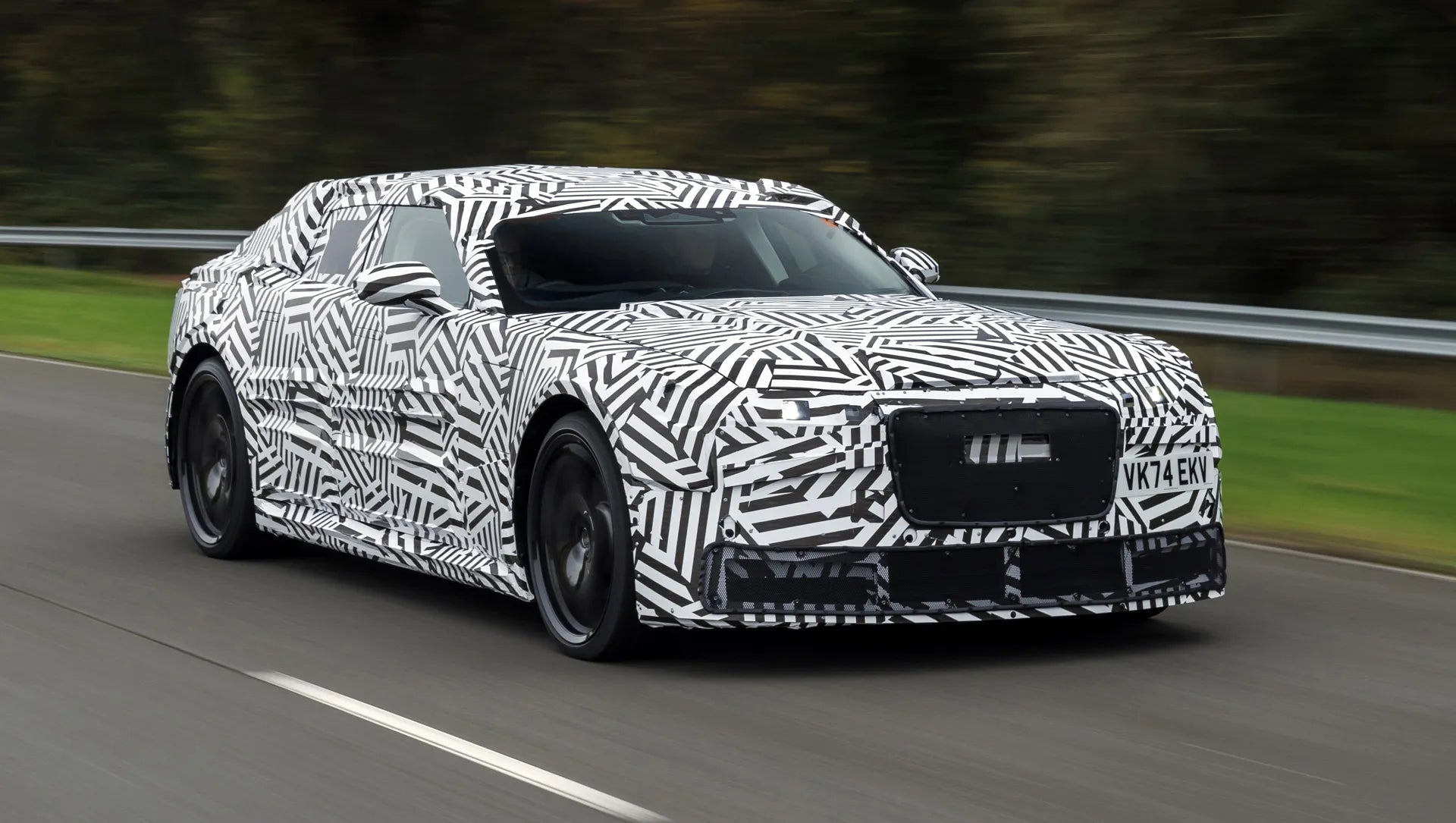
Jaguar’s dramatic brand reset and polarizing “Type 00” concept initially drew more criticism than praise. Yet as more industry insiders experience the car in motion, opinions are beginning to shift. Beneath the controversial styling and marketing noise, Jaguar’s upcoming electric flagship appears to deliver something increasingly rare in the EV space: exceptional ride comfort combined with genuine driving character.
Early prototype rides suggest the production version may be far more impressive than its first impressions implied.

A Concept That Looked Divisive but Drives Differently
The Type 00 concept was never intended to be subtle. Its long, low proportions and uncompromising design language marked a clean break from Jaguar’s recent past. While the visuals sparked debate, feedback from recent prototype evaluations has focused less on appearance and more on how the car behaves on real roads.
According to early impressions from experienced automotive editors, the vehicle’s ride quality stands out even among top-tier luxury cars, positioning it closer to ultra-premium sedans than to conventional electric competitors.
Chassis Engineering Focused on Comfort First
At the core of the car’s refinement is a platform engineered with rigidity and suspension control as top priorities. The prototype combines an extremely stiff structure with a three-chamber adaptive air suspension, allowing each wheel to be managed independently.
This setup adjusts spring rates and damping in real time, smoothing broken pavement at low speeds while maintaining composure at higher velocities. The result is a ride that remains calm and controlled across a wide range of road surfaces, without drifting into the detached feel that affects many large EVs.
Jaguar appears to be prioritizing traditional luxury values—comfort, isolation, and stability—rather than chasing artificial sportiness.
High Power, Rear Bias, and Unexpected Playfulness
While comfort is central to the car’s character, performance has not been overlooked. The prototype uses a tri-motor electric drivetrain producing more than 1,000 horsepower, with the majority of output directed to the rear wheels.
This rear-biased configuration, combined with precise torque vectoring, gives the car a surprising sense of balance and control. Despite its size and weight, early testers report that the vehicle can be driven with confidence at the limit, delivering predictable responses rather than feeling numb or inert.
The emphasis is not on outright aggression, but on controlled power delivery that enhances driver engagement.
Proportions That Break From Modern EV Norms
Even under camouflage, the production-intent sedan makes a strong visual statement. Its long wheelbase, short front overhang, and rearward-set cabin evoke classic luxury car proportions rather than the cab-forward stance common among modern EVs.
Jaguar has intentionally avoided maximizing interior volume at the expense of aesthetics. The result is a silhouette that feels closer to historic grand touring sedans than to contemporary electric designs, reinforcing the brand’s push toward emotional appeal over packaging efficiency.
A Low Seating Position That Feels Unusual for an EV
Inside, the driving position further separates the car from most battery-electric rivals. Instead of sitting high above the battery pack, occupants are placed noticeably lower, creating a sense of being in the car rather than on top of it.
This contributes to both comfort and driver confidence, especially at higher speeds. Combined with strong sound insulation, the cabin reportedly remains quiet and composed even during sustained high-speed cruising, reinforcing its role as a long-distance luxury vehicle.
Sound, Sensation, and Driver Feedback
Jaguar is also exploring how sound can shape the driving experience. Rather than adopting futuristic tones, the company is reportedly developing a more natural acceleration sound, intended to complement the car’s character without becoming intrusive.
The goal appears to be subtle enhancement rather than spectacle—adding feedback without undermining the refinement expected at this price point.
Range, Weight, and Realistic Expectations
The production version is expected to feature a battery of roughly 120 kWh, enabling a projected range of more than 400 miles. That capacity comes with mass, and the car is expected to weigh well over 5,000 pounds.
Jaguar is not positioning the vehicle as a lightweight sports sedan. Instead, it aims to deliver engagement relative to its size, building on the brand’s reputation for chassis tuning established by earlier EVs like the I-Pace.

What Comes Next for Jaguar
Jaguar is expected to reveal the production-ready version of the Type 00 next year, likely under a new name. Pricing is anticipated to start above $130,000, firmly placing it in the high-end luxury segment.
If early driving impressions translate into the final product, Jaguar’s controversial electric reboot may gain credibility where it matters most: on the road.
Recommend Reading: Audi Concept C Redefines EV Sports Car Design


Aktie:
Jaguar Commits to an All-Electric Future Despite Market Doubts
2026 Cadillac Optiq: Compact Luxury EV with Strong Value