





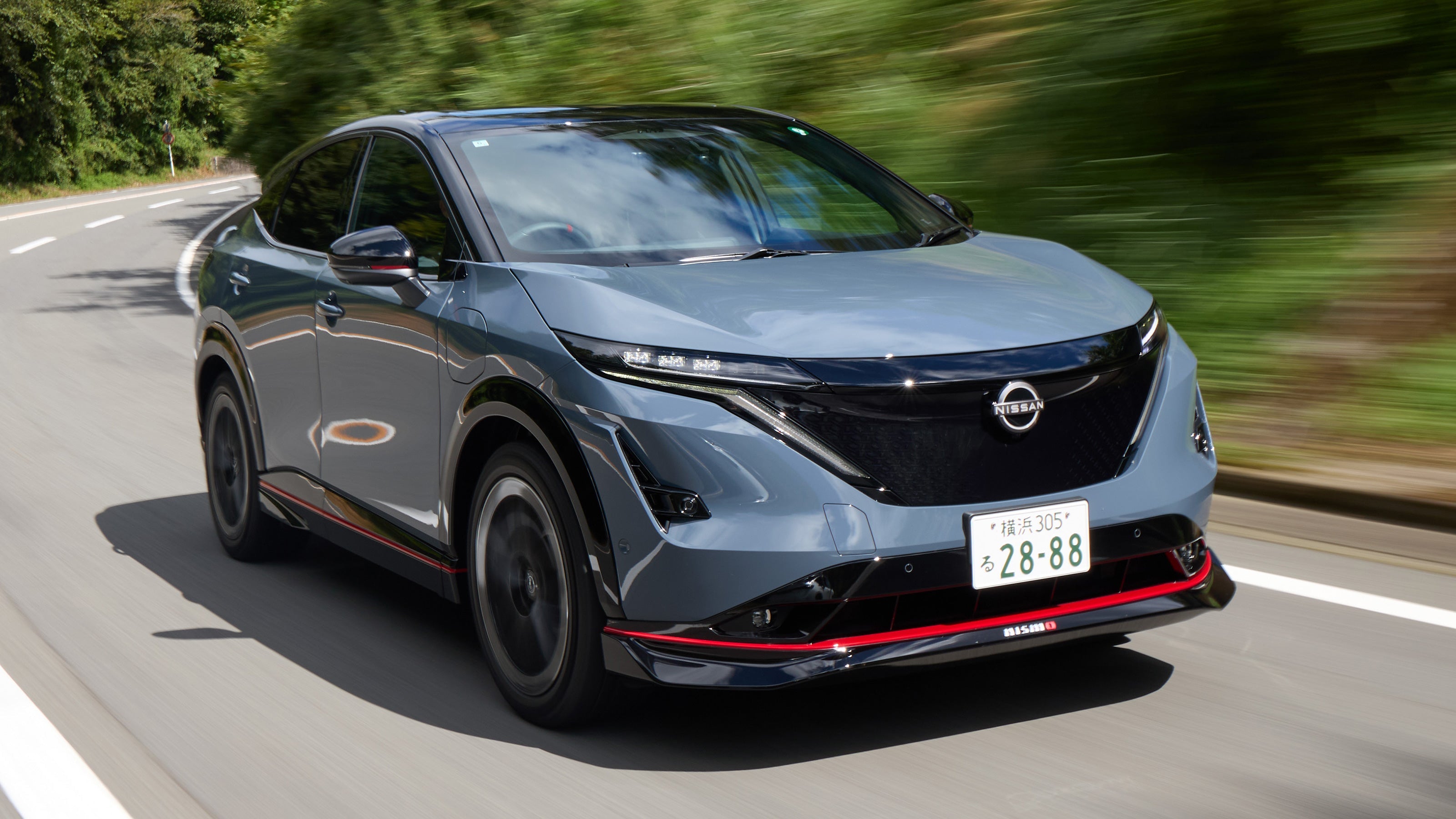
Adding solar panels to electric vehicles has long been an appealing idea, but practical results have often fallen short of expectations. Nissan is now revisiting that concept with a one-off Ariya prototype, aiming to test whether onboard solar energy can meaningfully reduce charging needs in real-world driving.

A Solar-Equipped Ariya Concept Explained
Nissan’s experimental Ariya prototype integrates solar panels across the hood, roof, and tailgate, covering approximately 40.9 square feet (3.8 square meters). These panels generate direct current electricity that feeds directly into the battery, bypassing the need for external charging equipment.
Developed in collaboration with solar EV specialist Lightyear, the prototype represents a technical exploration rather than a production-ready vehicle. Under ideal sunlight conditions, Nissan says the system can generate enough energy to add up to 14.3 miles of driving range per day.
Real-World Range Gains Vary by Location
As expected, solar output depends heavily on climate and parking conditions. In testing scenarios, Nissan estimates the Ariya prototype can gain around 13.2 miles per day in sunny regions such as Dubai. In contrast, cloudier environments like London reduce the benefit to approximately 6.3 miles per day.
During a two-hour, 50-mile drive on a sunny day, Nissan reports the system added 0.5 kilowatt-hours of energy to the battery. That equates to just under 2 miles of additional range, a modest gain but one achieved without plugging in.
Impact on Charging Frequency Over Time
While daily gains may seem small, Nissan argues the cumulative effect can be meaningful. Over the course of a year, the solar system could reduce charging frequency by 35% to 65%, depending on driving habits, sunlight exposure, and whether the vehicle is regularly parked outdoors.
For drivers with short daily commutes or limited access to home charging, even incremental solar input could help offset standby losses and reduce reliance on public chargers.
Why Solar Panels Are Rare on Production EVs
Despite the appeal, factory-installed solar panels remain uncommon in mass-produced EVs. The core challenge is efficiency: the energy generated by vehicle-mounted panels is often too limited to justify the added cost, complexity, and weight.
Most EVs already prioritize aerodynamic efficiency and cost control. Integrating large solar surfaces can conflict with these goals, especially when the real-world range gains are measured in single digits per day.
How Other Automakers Have Approached Solar EVs
Several manufacturers have experimented with smaller solar installations. Hyundai previously offered an optional solar roof on the Ioniq 5 in select markets, claiming up to 3 miles of added range per day under ideal conditions. Owners, however, often reported lower real-world gains.
Toyota’s bZ4X features a solar roof option in some regions, which Toyota says can add around 1,118 miles per year in areas with strong sunlight. That averages to roughly 7 miles per day, assuming optimal exposure.
Limited Consumer Availability for Now
Nissan has no plans to bring full-vehicle solar panels to its global EV lineup in the near term. However, the company is exploring consumer-facing solutions in Japan. One example is the Ao-Solar Extender for the Nissan Sakura kei EV, a roof-mounted solar shade that could add up to 1,860 miles per year in ideal conditions.
Pricing and availability for this accessory have not yet been announced.

What This Prototype Signals for the Future
Solar-powered EVs have struggled to move beyond niche concepts, with startups like Lightyear and Sono Motors failing to reach sustained production. Even so, Nissan’s Ariya prototype shows steady progress in integrating renewable energy directly into vehicles.
While solar panels are unlikely to replace traditional charging anytime soon, they may gradually become a supplementary energy source, especially as panel efficiency improves and urban charging infrastructure remains uneven.
For now, Nissan’s experiment suggests that solar-assisted EVs remain more incremental than transformative—but closer to reality than they were just a few years ago.
Recommend Reading: Nissan Introduces 2026 Rogue Plug-In Hybrid With Key Compromises










Share:
EV Battery Health After 150,000 Miles: What Real-World Data Shows
Used Electric Vehicles Emerge as the Lowest-Cost Cars Over Time