





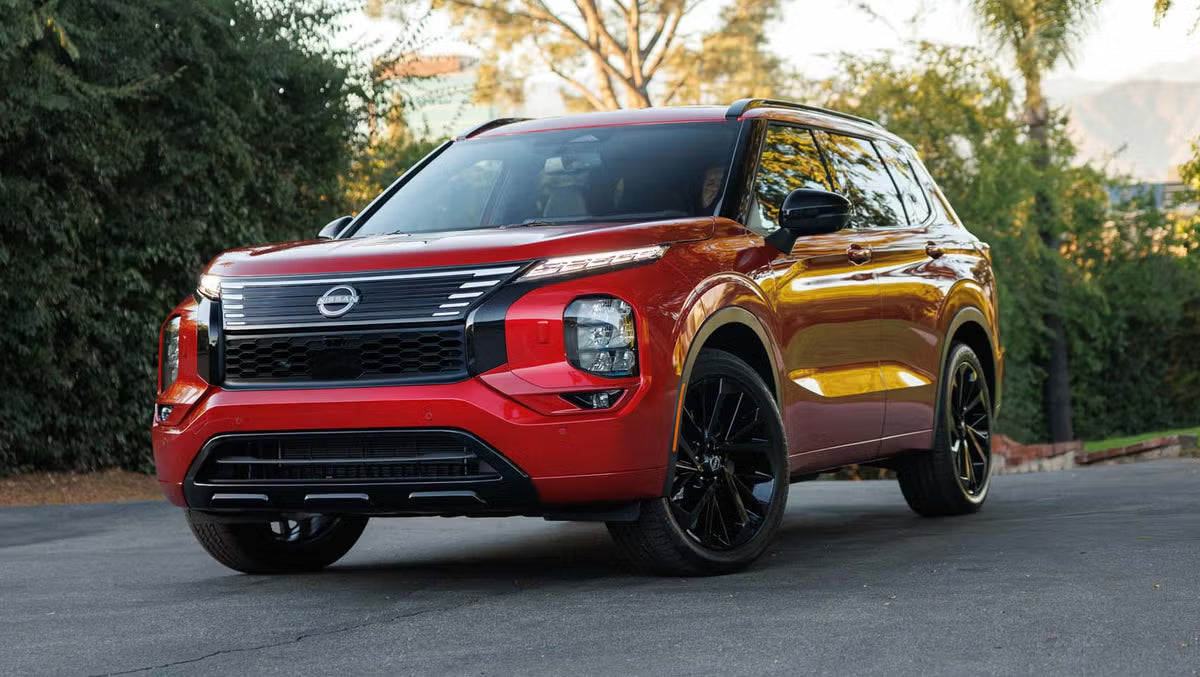
Nissan Brings Its First U.S. PHEV to Market
Nissan is entering new territory in the United States with the 2026 Rogue Plug-In Hybrid, the company’s first plug-in hybrid vehicle to be sold domestically. The launch represents a significant strategic move for a brand working to regain momentum in a fiercely competitive SUV market.
This new model owes its existence largely to Nissan's long-running partnership with Mitsubishi. Rather than building a PHEV from the ground up, Nissan opted for a rebadged version of the Mitsubishi Outlander PHEV, an SUV that has become one of America’s best-selling plug-in hybrids.

A Shared Platform With Mitsubishi
Although it carries the Rogue name, this new PHEV has no mechanical relationship with the gasoline-powered Rogue currently sold in the U.S. Instead, it retains nearly all of the Mitsubishi engineering underneath. The collaboration goes both ways: Mitsubishi is preparing its own new EV based on a rebadged Nissan Leaf, extending the shared-development strategy between the two brands.
By leveraging an existing platform, Nissan minimizes development costs while gaining entry into the growing plug-in hybrid segment. Given the Outlander PHEV’s strong U.S. sales, the approach could pay off—though not without trade-offs.
Two Missing Features Limit Its Appeal
Despite the solid foundation, the Rogue Plug-In Hybrid lacks two major features that could have made it more competitive:
-
A larger battery
Both features are available on the European-market Outlander PHEV but were omitted from the U.S. version Nissan chose to adopt.
Battery and Powertrain Specifications
Instead of Mitsubishi’s 22.7-kWh European pack, Nissan uses the same 20-kWh battery found in the U.S.-spec Outlander PHEV. Power comes from two electric motors working alongside a 2.4-liter gasoline engine, producing a combined 248 horsepower and 332 pound-feet of torque.
On a full charge, the Rogue PHEV can drive up to 38 miles on electricity, matching its Mitsubishi counterpart. While the electric range is competitive for the segment, a larger battery could have extended this figure significantly.
Charging Limitations Without DC Fast Charging
The second missing feature is arguably more impactful. Mitsubishi equips its European PHEV with CHAdeMO DC fast charging, allowing the battery to charge at 50 kW and reach a full charge in around 38 minutes.
Nissan removed this capability entirely, leaving only a Type 2 port paired with a 3.5 kW onboard charger. As a result:
-
A full Level 2 charge takes about 7.5 hours
-
A Level 1 household outlet requires roughly 16 hours
While CHAdeMO stations are scarce in the U.S., the lack of fast charging may be a sticking point for buyers seeking more convenient long-distance capability.
Driving Modes, Range and Efficiency
All-wheel drive is standard, supported by three powertrain modes (EV, Save and Charge) and seven drive settings, including Tarmac, Gravel, Snow and Mud. With both the battery and fuel tank full, the seven-seat SUV offers 420 miles of total driving range and an estimated 64 MPGe combined. When operating solely on gasoline, efficiency drops to 26 MPG.
Exterior and Interior Features
The Rogue PHEV includes a solid suite of standard equipment. Exterior features include LED headlights, automatic high beams, heated mirrors and 20-inch alloy wheels with all-season tires.
Inside, the cabin offers a 12.3-inch digital instrument cluster, a 9-inch touchscreen with wired Android Auto and wireless Apple CarPlay, and an eight-way power driver’s seat.
The higher Platinum trim adds leather seating, a panoramic sunroof, a heated steering wheel and a nine-speaker Bose audio system.

Pricing Still Unknown
Nissan has not yet announced pricing for the 2026 Rogue Plug-In Hybrid. The comparable Mitsubishi Outlander PHEV currently starts at $42,675 with destination, so Nissan’s pricing strategy will be closely watched. Its position relative to Mitsubishi will likely shape early demand and buyer perception.
Recommend Reading: Nissan Targets 2028 Launch for Solid-State Batteries That Could Double EV Range


Share:
Volkswagen ID. Polo Prototype Shows a Clear Shift in VW’s EV Strategy