



Community Complaints Intensify in Santa Monica
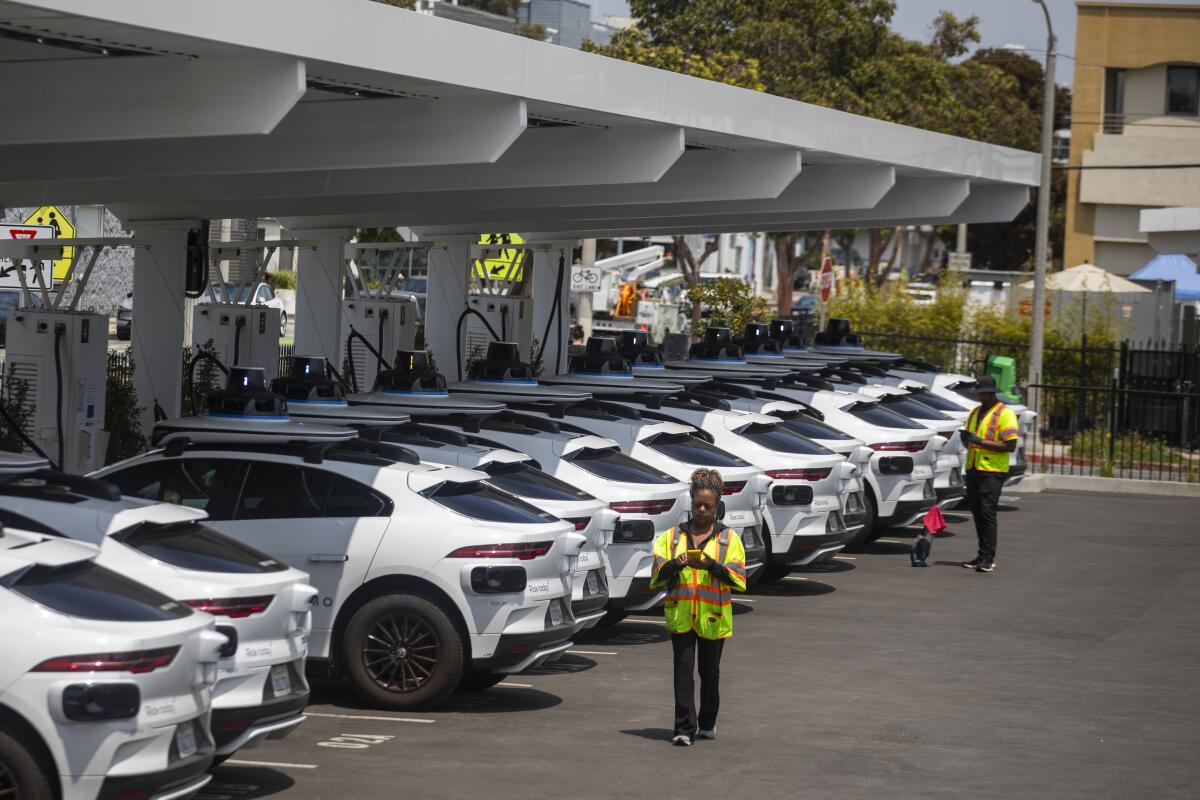
Residents living near Broadway and 14th Street in Santa Monica say their nights have become anything but quiet. The neighborhood is home to two outdoor charging hubs for Waymo’s autonomous taxi fleet, and locals report months of late-night disturbances as vehicles return from service. According to local coverage, up to 56 vehicles regularly charge at the two sites, creating a cycle of beeping sensors, equipment noise, cleaning activity, flashing lights and traffic congestion.
This week, the Santa Monica City Council issued a decisive response. In a unanimous vote, officials ordered Waymo to stop overnight charging operations at the two depots, citing a large volume of noise complaints. In a formal notice, the city wrote that residents’ sleep and quality of life had been “very disruptive” due to Waymo’s nighttime activity.
Waymo and its charging partner Volterra have not confirmed whether they will comply. In comments to the Los Angeles Times, company representatives suggested the city misunderstood the existing operating permits, adding only that they had adjusted some procedures based on resident feedback.

A Local Dispute With Industry-Wide Implications
The conflict arrives at a moment when the autonomous vehicle sector is accelerating toward broader deployment. As fleets grow, so do the logistical challenges—especially the question of where large volumes of electric robotaxis should charge without creating new neighborhood tensions.
From an operational standpoint, the ideal AV charging hub would be a large facility filled with fast chargers, situated far from residential areas. But the economics of autonomous ride-hailing push companies in the opposite direction. Long distances between depots and service zones add costly deadhead miles, during which vehicles earn no revenue. Because these fleets are electric, strategically placed chargers also help minimize energy loss and keep vehicles on the road longer.
These constraints explain why companies like Waymo prefer urban or near-urban charging locations. But as Santa Monica’s situation shows, placing high-volume charging operations next to homes can have serious consequences for the surrounding community.
Other Cities Have Seen Similar Issues
This isn’t the first time Waymo has faced public irritation. In San Francisco’s SoMa district, residents complained last year about Waymo vehicles honking repeatedly as they attempted to position themselves at staging areas—sometimes in the early morning hours. In Palo Alto, locals have reported long AV convoys moving through quiet neighborhoods. And in San Francisco’s Inner Richmond, residents have put up signs urging people not to summon Waymo cars at night due to noise concerns.
These incidents illustrate a recurring pattern: robotaxi operations can impose burdens that traditional ride-hailing services do not, particularly when large fleets concentrate in a small area.
Why AV Charging Noise Is a Unique Challenge
A typical public EV charger rarely serves more than a few vehicles at once, and any noise it generates is minimal. Waymo’s facilities, however, are fundamentally different. They are designed to support dozens of vehicles charging, cleaning, and repositioning throughout the night, creating a much denser and noisier cluster of activity.
Even beyond charging hardware noise, the repeated beeping from low-speed maneuvering, the traffic flow at shift changes, and the constant arrival and departure of vehicles compound the disturbance. For residents living nearby, this can mean hours of nightly noise between 11 p.m. and 6 a.m.

An Issue the AV Industry Must Solve
Waymo remains committed to expanding its robotaxi network, and similar services from competitors are expected to grow rapidly. That means the underlying challenge—how to build dense, high-capacity charging depots without disrupting the communities around them—will become increasingly urgent.
A long-term fix may require new zoning approaches, improved acoustic design, or entirely new charging strategies that reduce noise and traffic clustering. For now, Santa Monica’s ruling highlights a reality that AV companies cannot ignore: the future of autonomous mobility depends not only on technology, but on coexistence with the cities they serve.
Recommend Reading: Waymo’s New Zeekr-Built Robotaxi Emerges Ahead of Wider U.S. Expansion


Aktie:
BYD Prepares Global Rollout of Ultra-Fast 5-Minute EV Charging
Tesla FSD Shows Surprising Defensive Maneuvers in Controlled Stress Test