



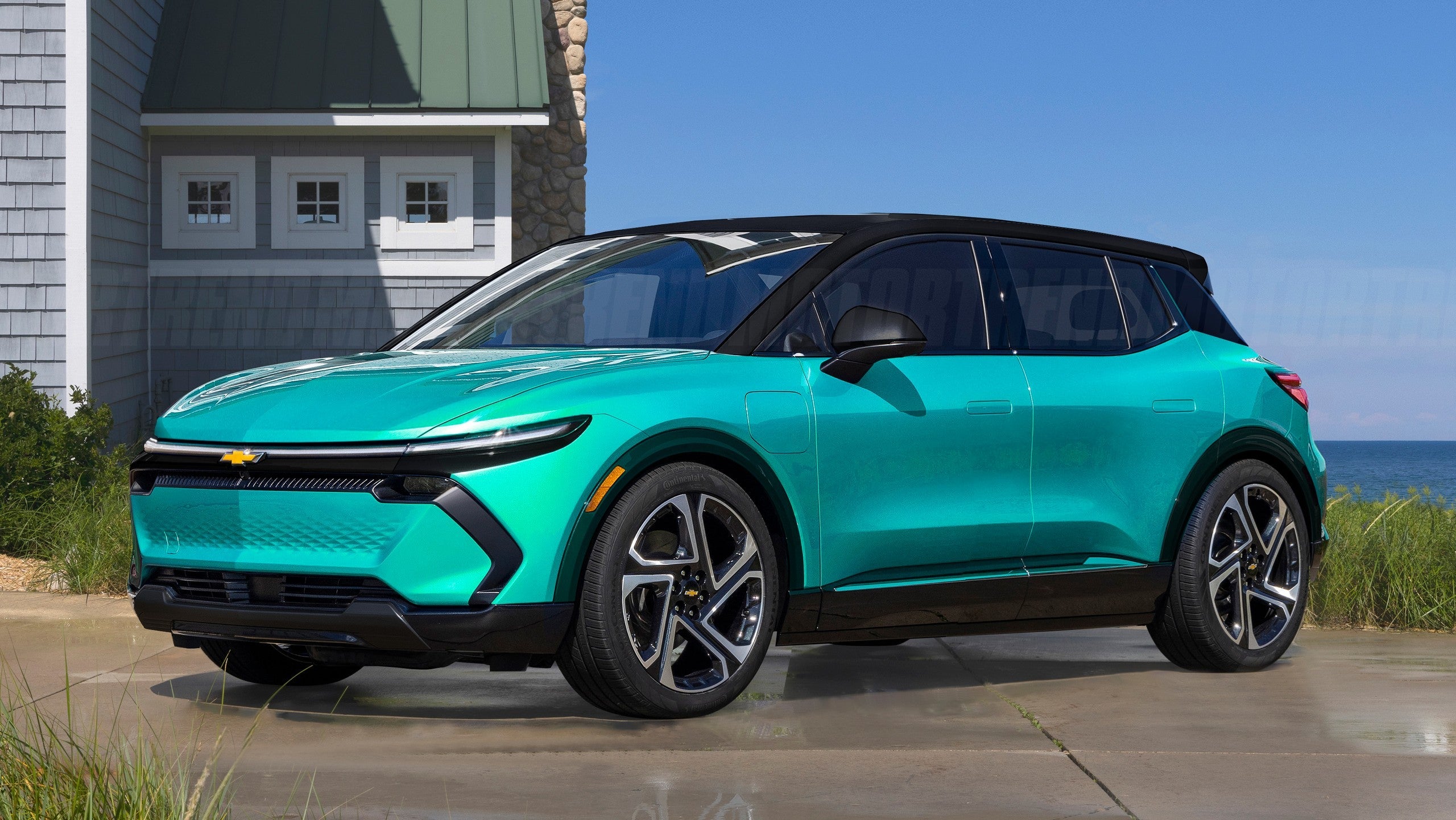
The Chevrolet Bolt is back, and for 2027 it arrives with a combination that remains rare in today’s electric vehicle market: a low entry price, familiar packaging, and now slightly more driving range. As the first units reach dealerships across the United States, General Motors is positioning the new Bolt as a practical counterweight to rising EV prices and shrinking federal incentives.
While the improvements are modest on paper, they matter in a segment where every mile and every dollar still count.

A Small Range Bump With Outsized Significance
General Motors has confirmed that the 2027 Chevrolet Bolt now carries an EPA-estimated range of 262 miles, up from the previous 255 miles. The increase comes from the same 65-kilowatt-hour lithium-iron-phosphate (LFP) battery, rather than a larger or fundamentally different pack.
This is not a dramatic leap, but it is meaningful in context. The Bolt’s original range had long trailed most versions of the Nissan Leaf. With this update, the Bolt now edges out the Leaf Platinum+, reclaiming a small but symbolic advantage in the affordable EV segment.
It is worth noting that the figure is EPA-estimated, not yet officially EPA-rated, and Chevrolet’s online configurator still lists the older number. Even so, GM’s confirmation suggests the increase is real, likely achieved through efficiency gains rather than hardware changes.
How the Bolt Stacks Up Against the Nissan Leaf
Range comparisons remain central to the Bolt’s appeal. While the updated Bolt now outpaces the top-trim Leaf Platinum+, it still trails the Leaf S+ and SV+, which offer 303 miles and 288 miles of range respectively.
However, those extra miles come at a cost. The Bolt undercuts every Leaf trim on price, reinforcing its role as the most affordable new electric car in the U.S.—at least for now. Nissan could eventually challenge that position with a lower-priced Leaf variant, but today, the Bolt holds the crown.
Pricing Keeps the Bolt in a Class of Its Own
The 2027 Chevrolet Bolt starts at $28,995 including destination, a figure that stands out sharply in a market where average EV prices remain far higher. Even after the expiration of the $7,500 federal tax credit, the Bolt remains within reach for buyers who might otherwise be priced out of electrification.
At this price point, GM is clearly prioritizing value and accessibility over premium features or cutting-edge performance. That strategy aligns with the Bolt’s long-standing reputation as a no-nonsense electric hatchback designed for everyday use.
Powertrain, Charging, and Core Features
Under the hood, the Bolt retains a front-mounted electric motor producing 210 horsepower, a familiar setup that delivers smooth, predictable performance rather than outright speed. Acceleration remains adequate for city and suburban driving, which is where most Bolts will spend their lives.
Charging capability is one of the more notable updates. The 2027 Bolt comes equipped with a Tesla-style NACS charging port, enabling access to a broader fast-charging network. DC fast charging peaks at 150 kilowatts, making it competitive within its class, even if it does not challenge higher-end EVs.
Inside, the Bolt features an 11.3-inch central touchscreen, but continues GM’s decision to omit Apple CarPlay and Android Auto. Instead, the system relies on built-in Google-based software. Standard equipment includes adaptive cruise control, while options such as heated seats, a heated steering wheel, and Super Cruise hands-free driving assistance are available on higher trims.
Adoption Challenges in a Post-Incentive Market
The Bolt’s timing is notable. With federal EV incentives gone and overall EV demand softening, affordable models like the Bolt and Leaf could play a disproportionate role in sustaining adoption. Both vehicles are shipping now, and both aim to lower the barrier to entry for first-time EV buyers.
However, GM has previously described the new Bolt as a “limited run model,” raising questions about long-term availability. If demand proves strong, production constraints could limit the Bolt’s broader impact.

A Modest Update With a Clear Purpose
The 2027 Chevrolet Bolt does not reinvent the formula, but it does refine it. A slight range increase, aggressive pricing, and improved charging access help keep it relevant in a market that has shifted away from budget-friendly EVs.
In a landscape dominated by larger, more expensive electric crossovers, the Bolt remains a reminder that incremental improvements—when paired with the right price—can still make a difference.
Recommend Reading: GM Confirms a New Line of Affordable EVs Beyond the Chevy Bolt



Partager:
Tesla Expands Model Y Lineup With 400-Mile Option in Europe
Rivian Recalls Nearly 20,000 R1T and R1S Models Over Suspension Service Issue