


Hands-Free Driving Sees Major Growth
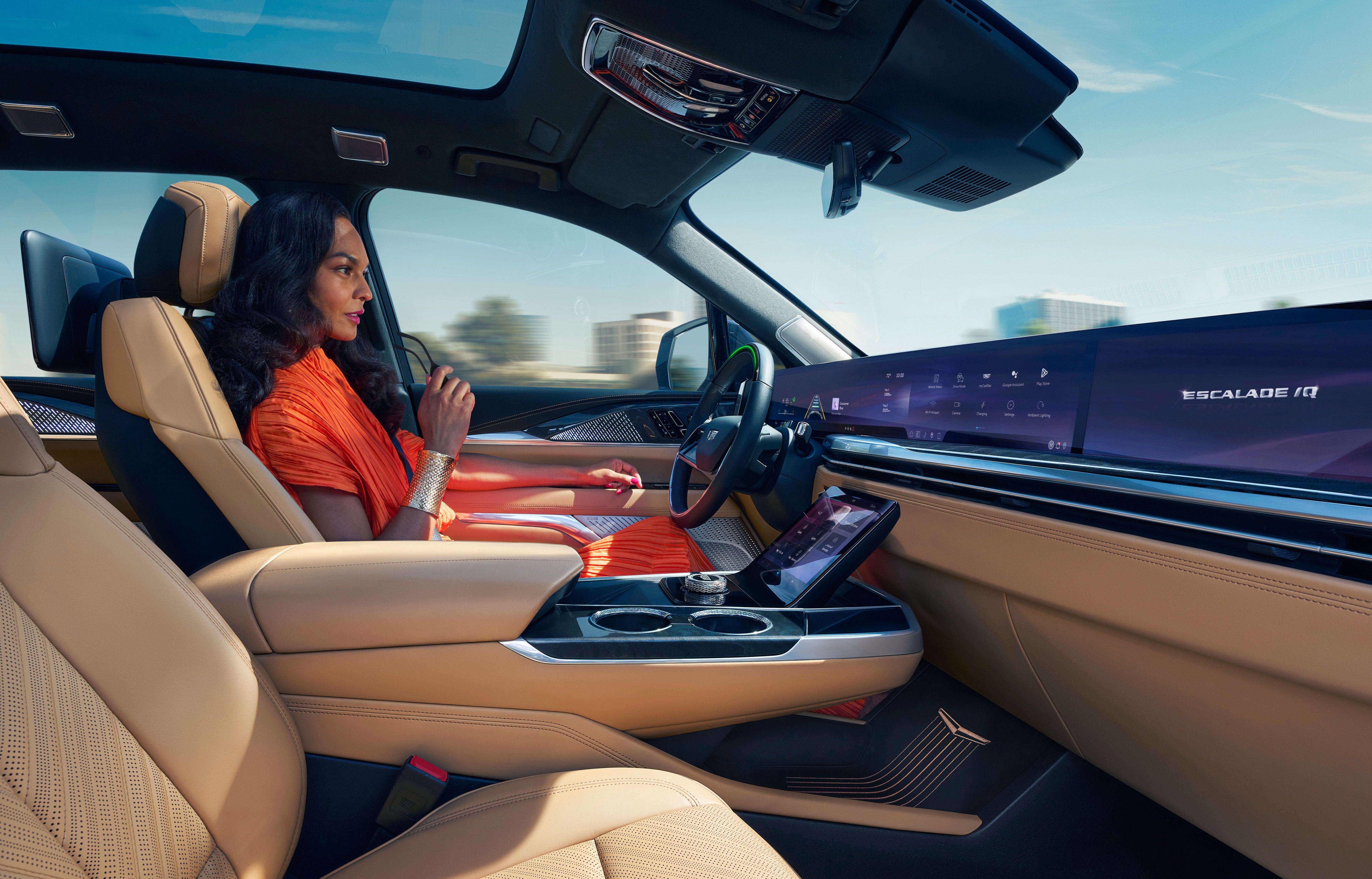
General Motors (GM) has announced a major milestone for its semi-autonomous driving technology, Super Cruise, confirming that it now has over 500,000 active users across the United States and Canada. The achievement coincides with a stronger-than-expected third-quarter earnings report, highlighting GM’s progress toward expanding its connected vehicle ecosystem.
Super Cruise enables hands-free driving on more than 750,000 miles of pre-mapped highways, making it one of the most advanced driver-assist systems currently available. According to GM, the number of active Super Cruise users nearly doubled compared to last year, reflecting the growing consumer confidence in semi-autonomous technology.

Strong Adoption and Future Revenue Potential
The company reported that the adoption rate of Super Cruise-equipped vehicles has accelerated sharply in 2025. GM expects to end the year with over 600,000 active users, which could generate more than $200 million in annual revenue.
While the system is offered as a three-year complimentary trial on all compatible vehicles, owners must pay $25 per month or $250 per year after the trial period. Interestingly, GM noted that 40% of users whose free trials expired in Q3 chose to continue paying for the service.
That figure suggests Super Cruise is quickly becoming a value-added feature—one that could help GM transition from a traditional automaker into a technology-focused mobility company.
Zero Crashes Reported After 700 Million Miles
Perhaps the most striking claim in GM’s report is that Super Cruise-equipped vehicles have driven over 700 million hands-free miles without a single crash linked to the system.
While these figures are self-reported, they underscore GM’s emphasis on safety and validation testing. The company said that continuous over-the-air updates, combined with robust driver-monitoring systems, have helped maintain reliability and driver engagement.
For context, Super Cruise requires the driver to keep their eyes on the road, monitored by an infrared camera. If the driver looks away for too long, the system issues alerts and can automatically disengage.
Super Cruise vs. BlueCruise and Autopilot
Super Cruise is often compared to Ford’s BlueCruise and Tesla’s Autopilot. Like BlueCruise, GM’s system relies on pre-mapped road data and GPS positioning, allowing the car to take over steering, braking, and lane-keeping duties on approved highways.
Tesla’s Autopilot, by contrast, relies entirely on real-time camera input rather than pre-mapped routes. That approach enables broader coverage but introduces more variables and inconsistencies in performance.
Unlike Tesla’s Full Self-Driving (FSD) feature—which attempts city-street autonomy—Super Cruise is limited to controlled-access highways, classifying it as a Level 2 system under the Society of Automotive Engineers’ standards. That means the driver remains responsible for vehicle operation at all times.
From Cadillac to the Entire GM Lineup
When Super Cruise first debuted in 2017 on the Cadillac CT6, it supported just 200,000 miles of highways. Since then, GM has rapidly expanded both its mapping coverage and vehicle availability. The feature now appears in most new Chevrolet, GMC, Buick, and Cadillac models.
Looking ahead, GM says 2026 model-year vehicles will feature automatic transitions between Hands-On Steering Assist and full hands-free mode, allowing for smoother operation on compatible stretches of highway.

A Glimpse Into GM’s Autonomous Future
As competition intensifies among automakers to define the next phase of driver automation, GM’s results offer a strong proof of concept. By pairing high safety records with growing subscription revenue, Super Cruise is laying the groundwork for future autonomy programs such as Ultra Cruise, which promises city-street operation.
With over half a million active users and zero confirmed system-related accidents, Super Cruise may represent a rare success story in the race toward safer, smarter, semi-autonomous mobility.
Recommend Reading: GM Confirms a New Line of Affordable EVs Beyond the Chevy Bolt

Partager:
Tesla Dominates Q3 EV Charger Expansion — Outpacing Every Rival Combined
Volvo Offers One Year of Free Home Charging for New EV Buyers in Sweden