

EV Sales Surge but Profits Don’t Follow

General Motors is selling more electric vehicles than ever before. In the third quarter of 2025, GM’s EV sales surpassed its total from all of 2024, thanks to growing demand for models ranging from the luxury GMC Hummer EV to the upcoming sub-$30,000 Chevrolet Bolt.

Despite this success, GM announced a $1.6 billion financial hit linked to its EV operations. The surprise announcement raised questions about how a company can sell more cars but lose more money.

Man driving GMC Hummer EV


The Cost of Adjusting to a Changing Market

In a recent filing with the U.S. Securities and Exchange Commission, GM said it expects slower demand for electric vehicles following the end of the federal EV tax credit. Without the incentive, sales are projected to cool rapidly, forcing the automaker to retool factories and reduce EV production capacity to prevent overstock.

The company reported $1.2 billion in non-cash impairment charges and another $400 million in contract-related costs, all tied to EV investments. These changes reflect how expensive it is for a large manufacturer to shift production strategies in real time.


Policy Reversals Bring Financial Whiplash

For years, GM and other automakers accelerated their EV strategies under Biden-era climate and energy policies, which included tax incentives and stricter emissions standards. But when the Trump administration rolled back those regulations and ended the EV purchase credits, it created a sharp market reversal.

As of September 30, 2025, buyers can no longer claim federal tax credits for EVs, and automakers face new tariffs on imported electric models. The sudden shift left companies like GM holding billions in EV investments while consumer incentives vanished overnight.

“This whiplash is expensive,” one analyst noted. “Automakers built for a future that Washington just canceled.”


GM Hits Pause — But Not Reverse

While some rivals are offering steep discounts to move unsold EVs, GM says it won’t engage in ‘irrational’ price cuts. Instead, it plans to balance EV production with continued gas and hybrid vehicle output, adjusting to the current demand curve.

Executives maintain that GM is still committed to an electric future but acknowledge that the transition will take longer without strong federal support. “We’re not abandoning EVs,” said a GM spokesperson, “but we’re pacing ourselves according to market realities.”


The Bigger Picture: U.S. Automakers Under Pressure

The $1.6 billion loss underscores the volatility of the U.S. auto industry’s shift toward electrification. While EV adoption continues to grow globally, American manufacturers now face higher production costs, supply chain tariffs, and weaker domestic incentives.

Industry analysts warn that scaling back EV investments could leave U.S. brands lagging behind faster-moving competitors from China and Europe. “Every slowdown in EV R&D gives international players a wider lead,” said one market observer.

At the same time, average new car prices have exceeded $50,000, undermining claims that deregulation will make cars cheaper for consumers.

cadillac escalade IQ


A Costly Lesson in Policy Uncertainty

GM’s $1.6 billion charge is more than just a financial write-off — it’s a reflection of how unpredictable policy shifts can reshape entire industries. The automaker’s EV expansion remains a long-term bet, but for now, it’s paying a high price for decisions made in Washington.

In short: GM is selling more EVs than ever, but changing federal policies have turned that success into a costly setback.

Recommend Reading: GM Sets EV Sales Record While Warning of Sharp Decline Ahead
FAQs - Best-Selling EVs in the U.S. (2025)

Which electric vehicles are the top-selling models in the U.S. market in 2025?

The most popular EVs in 2025 include the Tesla Model Y, Model 3, Ford Mustang Mach-E, Chevrolet Bolt EV, Hyundai Ioniq 5, and Kia EV6. These models dominate U.S. sales charts thanks to their combination of range, pricing, and availability.

What is the range and price of the Tesla Model Y?

The Tesla Model Y offers an EPA range between 318–330 miles (Long Range AWD) at a starting price around $46,000. The Performance version provides dual motor acceleration while maintaining a strong range, typically above 300 miles depending on driving conditions.

How much does the Ford Mustang Mach-E cost and how far can it go?

The Mustang Mach-E starts near $40,000–$45,000 for the standard range RWD version, with EPA-estimated range of 230–270 miles. The extended-range AWD and GT Performance variants offer improved range (up to 320 miles) and acceleration, justifying their higher price.

Is the Chevrolet Bolt EV still a good choice in 2025?

Yes. Priced under $30,000 after federal incentives, the Bolt EV offers a solid EPA range of ~260 miles, making it a budget-friendly, reliable compact EV ideal for urban and suburban commuters.

What makes the Hyundai Ioniq 5 stand out among EVs?

The Ioniq 5 is praised for its ultra-fast charging (800V architecture, 10-80% in ~18 minutes), spacious interior, stylish design, and EPA range of 220–303 miles depending on battery and drive combination. Pricing starts around $44,000 after incentives.

How does the Kia EV6 compare with the Ioniq 5?

The Kia EV6 shares many components with the Ioniq 5 but emphasizes a sportier look and driving experience. Range varies between 240–325 miles depending on trim, with pricing similar—typically in the $44,000–$55,000 range after incentives.

Which EV among the top models offers the best value for long-distance travel?

The Tesla Model Y Long Range offers the best all-around value for long trips due to its extensive Supercharger network, ~330 miles range, and advanced driving assistance. Hyundai Ioniq 5 and Kia EV6 also offer excellent efficiency with fast charging, making them strong alternatives.

How do these EVs compare in terms of charging compatibility and charging time?

Most models—Tesla (NACS), Mach-E / Bolt EV / Ioniq 5 / EV6 (CCS1)—are brightening compatibility. The Ioniq 5 and EV6 stand out with 800V fast charging up to 233 kW, allowing 10–80% in about 18 minutes. Mach-E and Bolt EV charge at slower rates (~150 kW). Tesla offers up to 250 kW via NACS Superchargers.

What is the total cost of ownership (TCO) like for these top-selling EVs?

Although prices vary, EVs like the Bolt EV and Ioniq 5 have some of the lowest TCO due to lower maintenance and energy costs. While Model Y and Mach-E have higher upfront costs, resale value and long-term savings on fuel can offset the initial expense over 5–10 years.

How do federal and state incentives impact the MSRP of these EVs?

Federal tax credit of up to $7,500 can significantly reduce the up-front purchase price. Additionally, many states offer rebates, HOV lane access, and utility discounts. For example, a Trim-level Mach-E or Model Y effectively costs $40–45k after combined incentives, increasing affordability.

EV News

View all

Tesla Drops Lane-Centering From New Model 3 and Model Y Orders in the U.S.

Tesla Drops Lane-Centering From New Model 3 and Model Y Orders in the U.S.

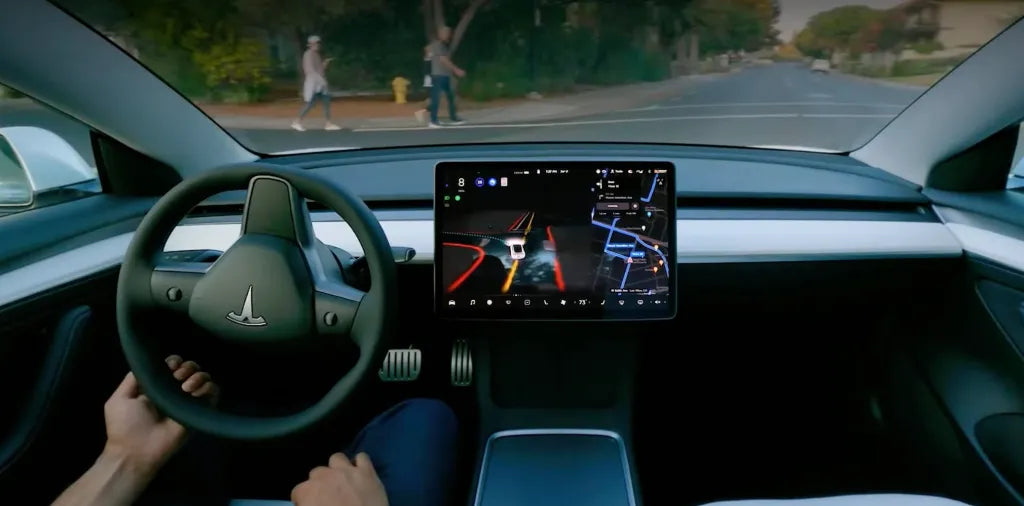
Tesla has removed Autosteer from all new Model 3 and Model Y trims in the U.S., leaving only adaptive cruise control as standard. The move pushes drivers toward Full Self-Driving subscriptions and has sparked backlash.

Read more

Mercedes GLC EV Demand Surges as Orders Stretch Into 2026

Mercedes GLC EV Demand Surges as Orders Stretch Into 2026

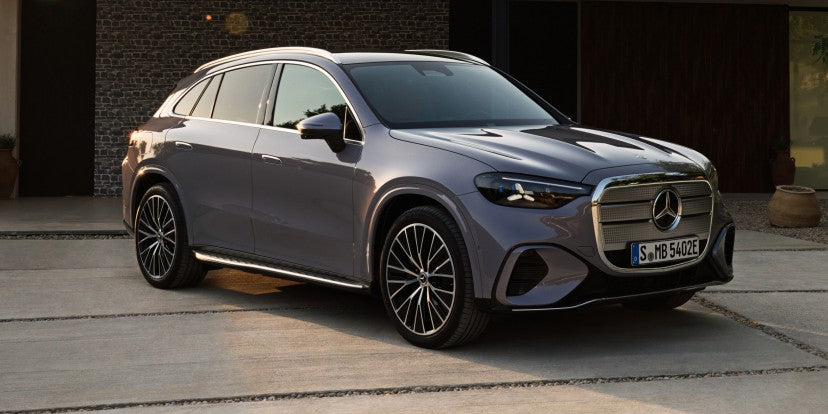
Mercedes-Benz’s new electric GLC SUV is off to a strong start, with demand exceeding expectations and orders extending into 2026, driven by long range, fast charging, and familiar premium appeal across key European markets.

Read more

Scout’s Direct Sales Plan Faces Legal Challenge Over Hybrid EV Definition

Scout’s Direct Sales Plan Faces Legal Challenge Over Hybrid EV Definition

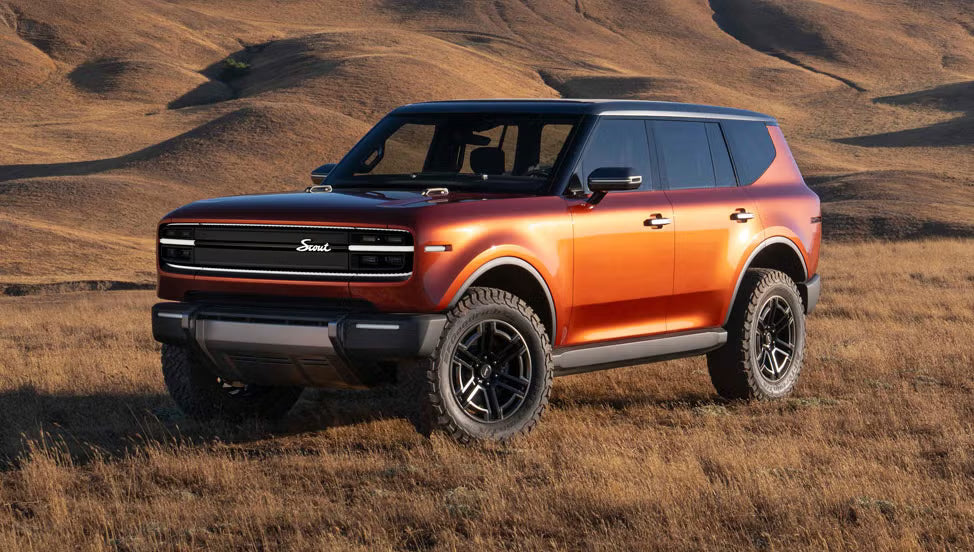
Scout Motors’ plan to sell extended-range electric trucks directly to consumers faces a legal challenge in Colorado, where dealers argue EREVs blur EV definitions and violate franchise laws, potentially reshaping direct sales rules.

Read more